Vegetables

You're Probably Killing Your Cucumber Harvest Before It Even Starts

James Calloway

James Calloway

Vegetable & Edibles Specialist · Updated April 2026

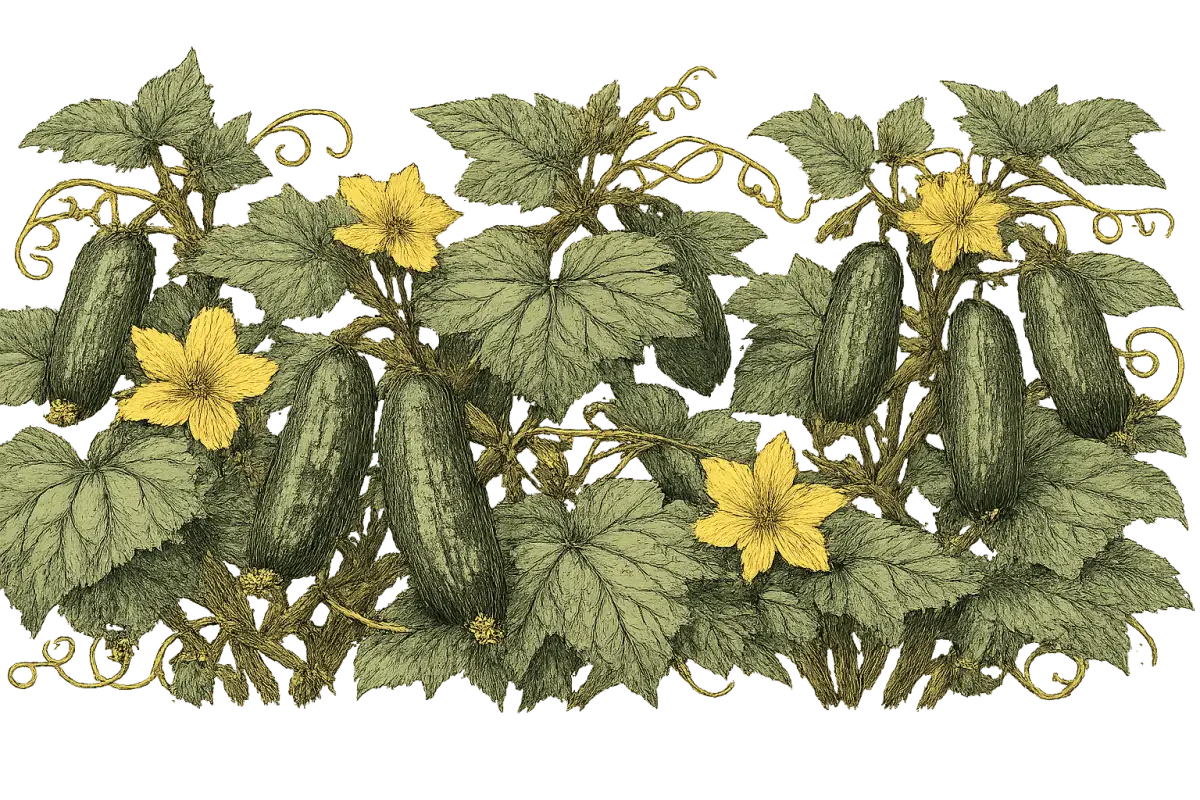
How to grow cucumbers — vintage botanical illustration showing the plant in detail

Cucumbers at a Glance

Sun

Sun

6-8 hours full sun

Soil pH

Soil pH

6.0-6.5

Water

Water

1-2 inches per week

Spacing

Spacing

12-36 inches depending on type"

Days to harvest

Days to Harvest

57-70 days

Height

Height

4-6 feet

Soil type

Soil

Deep

Lifespan

Lifespan

annual

Get your personalized growing data

Enter your zip code for frost dates, growing season, and soil type.


Most gardeners grow cucumbers wrong. Not catastrophically wrong — they plant them, they water them, a few cucumbers appear, and then everything kind of fizzles out by mid-July. They blame the heat. They blame the bugs. Some blame the seeds. Almost none of them blame themselves, which is a shame, because the fix is usually dead simple.

Here's the thing nobody tells you upfront: cucumbers are not a set-it-and-forget-it crop. They are needy, impatient, and surprisingly unforgiving about a narrow list of things — soil temperature, watering consistency, harvest timing, and variety selection. Nail those four things, and cucumbers are one of the most rewarding vegetables you can grow. Miss even one, and you get a handful of bitter, misshapen fruit, a plant that stops producing in August, and a quiet vow to grow tomatoes next year instead.

The most common failure I see? People plant too early, get hit by bitter fruit because of inconsistent watering, leave a few overripe cucumbers on the vine for too long, and watch their whole harvest collapse. Bitter cucumbers come from stress — primarily water stress — and a single drought-flood cycle is enough to pump cucurbitacin (the bitter compound) straight into the fruit. And leaving overripe cucumbers on the vine? That sends a signal to the plant that its reproductive job is done. Production stops. It's that fast. This guide is going to walk you through how to not do any of that.


Quick Answer: Cucumber Growing at a Glance

USDA Zones: 3 through 11 (warm-season annual; frost kills them)

Soil Temperature at Planting: 70°F minimum at 1-inch depth -- non-negotiable

Sun: 6-8 hours of direct sun minimum

Water: 1-2 inches per week; consistency matters more than volume

Soil pH: 6.0-6.5 (per University of Minnesota Extension)

Spacing: 12 inches along trellis, 3-4 feet between rows

Days to Harvest: 57-73 days depending on variety

Harvest Frequency: Every 1-2 days at peak season

#1 Cause of Bitter Fruit: Inconsistent watering

Best All-Around Variety: Marketmore 76

Best for Containers: Spacemaster 80


Key Insight: The Thing You're Almost Certainly Getting Wrong

Let's talk about bitterness, because this is the complaint I hear more than anything else, and it is almost entirely preventable.

Cucumbers produce a compound called cucurbitacin. In healthy, well-managed plants, cucurbitacin stays in the vegetative parts of the plant — the stems, the leaves, the roots — and out of the fruit. But under stress, especially water stress, that compound migrates into the fruit and makes it taste like you licked a tire. The plant doesn't do this to spite you. It does it because stress triggers a defense response, and cucurbitacin is part of that defense chemistry.

The number one trigger is inconsistent watering — drought followed by flooding, over and over. Your soil dries out, you notice and drench it, it dries out again, you drench it again. Every one of those swings is a stress event, and the cucurbitacin creeps a little further into the fruit each time. Temperature swings exceeding 20°F do the same thing. Extended heat waves contribute. Underfed plants, which are also stressed plants, are more prone. And old plants — the ones you're still harvesting from in week ten of the season — produce more bitter fruit than young ones, full stop.

The bitterness concentrates at two specific spots: the stem end and just under the skin. A mildly bitter cucumber can sometimes be salvaged by peeling it from the blossom end toward the stem end and cutting off the last inch at the stem. But prevention is the better play. Here's how you prevent it:

Mulch aggressively. Organic mulch applied after your soil reaches 75°F acts as a moisture buffer, dampening the wet-dry cycles that stress the plant. This one move probably does more to prevent bitter cucumbers than anything else in this list.

Water on a schedule. Not "when I remember." Not "when the plant looks sad." On a schedule. During the flowering and fruiting stage, that means watering 4-6 times per week — daily in hot weather, sometimes twice daily in containers. The top inch of soil should never be completely bone dry.

Succession plant so you always have young plants in production. Older plants produce more bitter fruit, accumulate more disease and pest pressure, and slow down. The fix is to have a new planting coming up behind them. More on this in the harvesting section.

Choose bitter-resistant varieties. Marketmore 76 is the gold standard. It's the variety that Extension services point to when they want a reliable, bitter-resistant benchmark. If you want to go further, Armenian cucumbers (which are technically a melon, but that's a conversation for the varieties section) are almost never bitter because they lack the cucurbitacin gene common in true cucumbers.

Harvest on time. Overripe cucumbers are more likely to be bitter, and they also send a "mission accomplished" signal to the plant that shuts down female flower production. The two problems compound each other in the worst way. Pick early. Pick often.

The good news: once you understand that bitterness is a stress response and not a random act of the universe, it becomes entirely manageable. Manage the stress, manage the bitterness.


Varieties by Zone

There is no single best cucumber variety. There's a best variety for your climate, your cooking style, your garden size, and your level of tolerance for garden theater. Let me break this down by what actually works where.

What zone are you in?

Enter your zip code for frost dates, growing season, and soil type.

What zone are you in?

Enter your zip code for frost dates, growing season, and soil type.

Zones 3-5 (Northern Short Season)

Your window is short, so every day to maturity matters. Bush types and fast-maturing varieties are your best friends. Spacemaster 80 (2-3 foot vines, 7.5-inch fruit) is the most popular container cucumber and a solid choice for northern gardens where you want compact, manageable plants that don't need elaborate trellising. For slicing, Marketmore 76 at 57 days is well-suited to mid-Atlantic and northern regions and delivers consistent results season after season. Plan on 2-3 succession plantings spaced 3-4 weeks apart to maximize your short season.

Zones 5-7 (Mid-Season)

You've got a genuine growing window here — enough for 3-4 succession plantings and the flexibility to grow most types. Marketmore 76 remains the standard workhorse, but you can also branch out. County Fair 83 is an excellent pickling hybrid with resistance to powdery mildew, downy mildew, scab, cucumber mosaic virus, AND bacterial wilt — one of the most disease-resistant pickling cucumbers available. For pickling, Arkansas Little Leaf at 59 days is compact, parthenocarpic, and disease resistant. Lemon cucumbers thrive here and are remarkably prolific producers that tend to surprise people who've never grown them.

Zones 7-9 (Long Hot Season)

Heat is your main adversary. Standard cucumber varieties struggle when temperatures spike and stay up. Suyo Long Asian (60 days, 15-18 inches long) is heat-tolerant with exceptional disease resistance and burpless fruit. Silver Slicer is powdery mildew resistant and warm-weather tolerant. But the real move in zones 8-9 is Armenian cucumbers — they thrive in extreme heat when true cucumbers throw in the towel, are almost never bitter, and produce generously through a long season. In the desert Southwest, Armenian cucumbers are basically the only thing worth growing when July hits. You can support 4-6 succession plantings in this zone, stretching from early spring through August.

Containers Anywhere

Spacemaster 80 is the go-to. Salad Bush (AAS winner) and Picklebush are also reliable. If you're growing on a patio or balcony, self-watering containers are worth every penny — the moisture consistency problem is the container grower's biggest enemy, and self-watering pots solve it elegantly. Use a minimum 5-gallon container; 10-gallon is better.


Quick Reference Table

VarietyTypeDays to MaturityBest ZonesNotable ResistanceNotes
Marketmore 76Slicing573-7CMV, bitter-resistantGold standard slicer
Spacemaster 80Bush/Slicing~60All--Best container variety
Suyo Long AsianBurpless/Slicing606-9Disease resistantHeat tolerant, 15-18 in
Silver SlicerSlicing~606-9PM resistantWarm weather tolerant
County Fair 83Pickling--5-8PM, DM, Scab, CMV, BWMost disease-resistant pickling
Arkansas Little LeafPickling594-8Disease resistantCompact, parthenocarpic
Boston PicklingPickling--4-7--Classic heirloom, very crispy
Lemon CucumberSpecialty655-8Low cucurbitacinProlific, harvest at 1.5-2 in
ArmenianSpecialty/Melon707-10Rarely bitterExceptional heat tolerance
DivaEnglish/Parthenocarpic--5-8--Works outdoors, no pollination needed
PicklebushBush/Pickling--AllCMV, PM2-ft vines, great for containers

Planting Guide

Timing by Zone

Soil temperature rules everything. If the soil at one inch deep hasn't hit 70°F, don't plant. Cucumber seeds in cold soil do one of two things: nothing, or they rot. Either way, you've wasted time and seeds. This rule applies to every single planting, including succession plantings later in the season.

  • Zones 3-4: Direct sow late May to early June, after last frost
  • Zones 5-6: Direct sow mid to late May; start transplants indoors early to mid-April
  • Zone 7: Direct sow as early as late April; indoor starts can go out in late April with protection
  • Zones 8-9: Earliest plantings in March with row cover protection; succession sow through August
  • Zone 10: Near year-round growing; Armenian cucumbers can go in much of the year

If you want to jump the season, black plastic mulch raised over the bed can push soil temperature up enough for earlier planting. Floating row covers raise air temperature around seedlings and protect from cold nights. Both tools extend your effective season at the front end. Just remember: row covers must come off when flowering begins to allow pollination — unless you're growing parthenocarpic varieties, which don't need pollinators at all.

Direct Sowing

Direct sowing is the preferred method. Cucumbers resent root disturbance, and starting in the ground means no transplant shock, no set-back from disturbed taproots, no fussing with peat pots. Wait until after last frost, soil is at 70°F, and then plant seeds about 1/2 inch deep. Sow 2 inches apart and thin to 8-12 inches after emergence. Alternatively, use the hill method: 3-4 seeds per hill, 5-6 feet between hills.

Transplanting

If you want the head start, transplant. But do it carefully. Start seeds indoors only 3-4 weeks before your transplant date — cucumbers grow fast and will outgrow their pots quickly. Use peat pots or plug trays to protect the taproot. Maintain 70°F+ daytime and 60°F+ nighttime temperatures during germination. Set transplants 12 inches apart after last frost when soil is warm. Transplants mature roughly 10 days faster than direct-seeded plants.

Soil Preparation

You want deep, fertile, well-drained soil with a pH of 6.0-6.5 (University of Minnesota Extension). Sandy loam to loam is ideal. Work in well-rotted compost or aged manure before planting — avoid fresh manure, which carries harmful bacteria. If you're dealing with heavy clay, amend it seriously or switch to raised beds. Do a soil test if you're starting fresh; guessing at pH and nutrient levels is a losing game.

Trellising

Trellis your cucumbers. I don't care if you think it's extra work — it isn't. A 4-6 foot trellis built from T-posts and trellis netting takes an hour to set up and pays dividends all season: better air circulation means less powdery mildew, cleaner and straighter fruit, easier harvesting, better pollinator access, and 30-40% more space efficiency compared to ground sprawling. You'll spot overripe cucumbers before they stall production. Fruit hangs at accessible height and doesn't get dinged up lying on the soil. Trellising is one of the highest-return investments in a cucumber patch.


Watering

Cucumbers are 95% water. That's not a gardening metaphor — that's their actual composition. So yes, they drink a lot, and they are deeply unforgiving about inconsistency.

The baseline requirement is 1-2 inches of water per week from rainfall or irrigation. But the schedule changes by growth stage. Pre-flowering, 2-3 waterings per week is fine while the root system is establishing. Once flowers appear and fruit sets, water demand roughly doubles — 4-6 times per week, daily in hot weather. Containers are the worst offenders: they may need daily watering, sometimes twice daily in summer heat. Inconsistent moisture in containers is the number one cause of bitter, misshapen fruit in container-grown cucumbers.

The best way to deliver water is drip irrigation. It keeps foliage dry — critical for preventing powdery mildew, downy mildew, and bacterial diseases — and delivers slow, consistent moisture right where the roots are. Soaker hoses are a solid home-garden alternative. Overhead sprinklers are the worst option. Wet leaves invite disease. If overhead watering is unavoidable, do it early in the morning so leaves dry out during the day. Never water in the evening.

Apply organic mulch — straw, shredded leaves, compost — after your soil has reached 75°F. Apply it before that and you'll slow soil warming. After that threshold, mulch is excellent: it buffers soil moisture, moderates temperature swings, and suppresses weeds. All three of those benefits directly translate to less cucurbitacin in your fruit. Think of mulch as cheap, passive stress reduction for the plant.

If you read one sentence in this entire guide, let it be this: inconsistent watering is the number one cause of bitter cucumbers. Not the variety. Not the weather. Not bad luck. Consistent, scheduled moisture is the single biggest lever you have over fruit quality.


Feeding

Cucumbers are heavy feeders. If you're underfertilizing, you'll see it in yellowing older leaves, stunted growth, and disappointing fruit. If you're over-fertilizing with nitrogen — which is extremely common — you'll see lush, dark green, gorgeous vines that produce almost no female flowers and almost no fruit. Both extremes hurt you. The balance matters.

The general framework: during vegetative growth, a balanced fertilizer like a 10-10-10 or 14-14-14 is appropriate. Once the plant shifts to flowering and fruiting, you want to switch to a formula where the first number (nitrogen) is lower than the last two (phosphorus and potassium) — something like a 5-10-10. Phosphorus supports flower and fruit production. Potassium is critical for fruit quality, disease resistance, and plant vigor. Nitrogen is important during early growth but becomes a liability in excess once fruiting begins.

Feeding schedule:

  • At planting: Work well-rotted compost or aged manure into the soil along with a balanced granular fertilizer to build baseline fertility.
  • 3 weeks after planting: First side-dress with composted manure or an all-purpose granular. This is when plants are establishing and starting to vine.
  • Every 3-4 weeks through the season: Continue side-dressing with granular fertilizer in bands applied 2-3 inches from plant bases. Note: cucumbers have shallow root systems, so cultivate shallowly when side-dressing.
  • At flowering: Switch to the higher phosphorus and potassium formula (5-10-10 or similar) to support fruiting over foliage.

For organic growers, fish emulsion or blood meal provides a nitrogen boost when plants start to vine. Bone meal is a good phosphorus source. Kelp meal and seaweed extract provide potassium and trace minerals. Worm castings are excellent in containers. Compost tea makes a good mid-season liquid boost.

Container plants need more frequent feeding because nutrients leach out with every watering. Use liquid fertilizer every 1-2 weeks, or work slow-release granular into the potting mix at planting and refresh it monthly. One fertilization mistake that deserves special mention: never use "weed and feed" products near cucumbers. They contain herbicides that will kill your vegetable plants. It happens every season to somebody who didn't read the label.

What zone are you in?

Enter your zip code for frost dates, growing season, and soil type.

What zone are you in?

Enter your zip code for frost dates, growing season, and soil type.


Pruning and Training

Cucumbers don't demand the same level of pruning attention as tomatoes, but there are some training practices that meaningfully improve yield and plant health — especially on a trellis.

The main job is guiding vines onto the trellis as they grow. Cucumbers are tendrils climbers, and they'll grab onto netting, wire, or string naturally. Give them a nudge in the right direction when they're young and they'll take care of the rest. On an A-frame trellis or cattle panel arch, you can train vines up both sides or let them arch over the top.

For gynoecious varieties — which produce mostly female flowers and therefore more fruit — some growers pinch the main growing tip once the vine reaches the top of the trellis. This encourages lateral branching, which multiplies the number of fruiting nodes. It's worth trying if your vertical space is limited.

The more universally applicable rule is removing dead, diseased, or damaged leaves promptly. Diseased leaves left on the plant become disease reservoirs. Powdery mildew, in particular, spreads aggressively from plant debris. Cut out affected leaves cleanly and dispose of them away from the garden — don't compost them.

For bush varieties grown in containers, minimal intervention is needed. Keep the plant tidy, make sure it isn't pressing its vines against container edges in ways that damage developing fruit (mechanical damage is a real cause of misshapen cucumbers), and make sure it has something to grab if it produces any tendrils.

One important note: cucumbers send out new roots from vine joints along the ground. If you're growing vines that lay on the soil, avoid stepping on or disturbing them. Those secondary root sites are contributing to the plant's water and nutrient intake.


Common Mistakes

Ranked by how badly they hurt your harvest:

1. Inconsistent watering (Severity: High)

Drought-flood cycles trigger cucurbitacin production and cause bitter, misshapen fruit. This is the single most consequential mistake in cucumber growing, and it's completely avoidable with a scheduled watering routine and mulch. No other mistake on this list reliably ruins as much produce as this one.

2. Leaving overripe fruit on the vine (Severity: High)

When a cucumber matures seeds, the plant interprets this as a successful reproduction event and shifts resources away from new flower and fruit production. A few missed cucumbers can dramatically reduce your total season yield. Harvest every 1-2 days during peak season. Remove any yellow, bloated, or leathery fruit immediately even if it's not usable. This single action often restarts stalled production.

3. Planting into cold soil (Severity: High)

If soil temperature at 1-inch depth is below 70°F, don't plant. Seeds won't germinate, or they'll rot. Transplants set into cold soil will stall. Impatience here costs weeks of growing time.

4. Excess nitrogen during fruiting (Severity: Medium-High)

Lush, deep-green vines with no female flowers is usually a nitrogen problem. Excess nitrogen suppresses female flower production and drives vegetative growth at the expense of the harvest you actually want. Switch to a low-nitrogen, high-phosphorus and potassium formula once flowering begins.

5. Discarding colored pollenizer seeds (Severity: Medium-High)

If you're growing a gynoecious variety, seed companies include monoecious pollenizer seeds in the packet, dyed a different color (pink, blue, or green). These provide the pollen that gynoecious plants need. Tossing them because they look different is a reliable way to get flowers with no fruit. Plant every seed in the packet.

6. Not trellising (Severity: Medium)

Ground-sprawling cucumbers have worse disease outcomes, dirtier and more misshapen fruit, and are harder to harvest — which means you miss more overripe ones. Trellis. It takes an hour. It's worth it.

7. Ignoring early-season male-only flowers (Severity: Low — but causes enormous panic)

Male flowers appear 7-10 days before female flowers in monoecious varieties. This is completely normal. The plant is not broken. Female flowers (with the visible miniature cucumber behind them) are coming. Wait 1-2 weeks before worrying. This is the most common "problem" that is not actually a problem.

8. Overhead watering in the evening (Severity: Medium)

Wet leaves overnight are an invitation for powdery mildew, downy mildew, and bacterial diseases. Water at soil level, or water overhead in the early morning so leaves dry during the day.


Harvesting

The harvesting section is short because the rules are simple. The hard part is actually following them.

Harvest every 1-2 days during peak season. Set a reminder if you have to. Frequent picking encourages more female flowers, maintains steady production, prevents overripe fruit from signaling the plant to stop, and keeps cucumbers from becoming bitter, seedy, and tough-skinned. Missing a few days during peak season can meaningfully reduce your total yield for the rest of the season.

Ideal harvest sizes by type:

  • Slicing types: 6-8 inches, before seeds enlarge and skins thicken
  • Pickling (dill size): 3-5 inches for whole dill pickles
  • Pickling (gherkin): 1.5-2 inches for cornichon-style
  • Lemon cucumbers: 1.5-2 inches — about the size of a small lemon. Don't let them get big.
  • Armenian: 12-15 inches, before they get seedy
  • English/greenhouse: 12-14 inches, while still firm and dark green

General rule: Fruit is ready approximately 8-10 days after the first female flowers open.

Harvesting technique: Use a sharp knife or pruning shears to cut the stem — don't pull or twist, which damages the vine. Harvest in the early morning when vines are cool for the crispest cucumbers and least plant stress. Leave a small stem (about 1/4 inch) attached to the fruit. Avoid harvesting when vines are wet to prevent spreading disease.

Signs of over-maturity: Yellow or white patches on skin, visibly swollen fruit, tough or leathery skin, color fading from dark green to yellow. Remove any overripe fruit immediately, even if you can't use it.

Storage: Refrigerator, about one week. Store unwashed; wash just before use. Wrap in a paper towel to absorb excess moisture. Do not store below 50°F — chilling injury is real. Keep cucumbers away from ethylene-producing fruits like tomatoes, bananas, and melons, which accelerate aging.

Succession planting and the longer harvest window: A single planting gives a concentrated burst and then fades. The solution is to stagger new plantings every 3-4 weeks throughout the season. New plantings should go in when the previous planting reaches 80% emergence (summer) or when first true leaves appear on the previous sowing (spring). For your last planting date, take your first frost date, subtract days to maturity for your variety, and subtract two additional weeks as a buffer.

For Zone 7 as an example: with a first frost around October 14, a Marketmore 76 at 57 days plus a 14-day buffer puts the last practical sowing date at around August 6. That's a genuinely long season if you succession plant from March through August, which this zone supports. University of Minnesota Extension and other services recommend succession planting specifically for maintaining continuous harvest and reducing the impact of disease accumulation on older plants.


Companion Planting

Cucumbers get along with quite a few garden neighbors, and a few of those neighbors actively improve the cucumber patch rather than just coexisting with it.

Beneficial companions:

Sunflowers, zinnias, oregano, basil, and dill planted near cucumbers attract more pollinators to the area. Cucumber pollination requires a minimum number of pollen grains transferred per flower for marketable fruit. Penn State research documented honey bees as the dominant pollinator at approximately 3.8 visits per 10 minutes, with 28 bee species total visiting cucumber flowers in the US. More pollinators mean better pollinated fruit, which means straighter, fuller, better-developed cucumbers and significantly less misshapen fruit.

Basil in particular has a long reputation as a beneficial cucumber neighbor — it attracts pollinators, and many gardeners report that it may deter aphids, though the evidence for pest deterrence is largely anecdotal. Dill similarly attracts beneficial insects including parasitic wasps that prey on aphid populations.

Black-eyed Susans, native to much of North America, support habitat for wild bees and other native pollinators. In a garden with good pollinator habitat, the difference in cucumber fruit set is visible.

Companions to avoid:

Keep cucumbers away from other cucurbits (squash, melons, pumpkins) where possible, or at least manage the spacing, because shared pest and disease pressure — cucumber beetles, bacterial wilt, powdery mildew — concentrates when the entire cucurbit family grows in a dense block. Rotation helps here too: avoid succession planting in the exact same spot to prevent soilborne disease accumulation.

Row cover interaction: If you're using floating row covers to protect young plants from cucumber beetles (which transmit bacterial wilt, a fatal disease with no cure), remember that covers must come off once flowering begins to allow bee access. The exception is parthenocarpic varieties, which don't need pollination — you can keep them covered if your cucumber beetle pressure is severe enough to justify the trade-off.

What zone are you in?

Enter your zip code for frost dates, growing season, and soil type.

What zone are you in?

Enter your zip code for frost dates, growing season, and soil type.


FAQ

Q: My cucumbers are flowering but not producing fruit. What's wrong?

Probably nothing — at least not yet. For monoecious varieties (most heirlooms and open-pollinated types), male flowers appear 7-10 days before female flowers. For every female flower, 10-20 male flowers are produced. If you're early in the season and seeing only male flowers (slender stems, no miniature cucumber at the base), wait 1-2 weeks. Female flowers are coming.

If female flowers are appearing but fruit isn't setting, the likely cause is insufficient pollination. Cold, rainy, or cloudy weather reduces bee activity. Excessive heat decreases pollen viability. Pesticide applications during bloom kill pollinators. The fix: plant flowering companions to attract more bees, hand-pollinate using a small paintbrush or by picking a male flower and rubbing its pollen directly onto the female flower's stigma, and avoid any pesticide applications when flowers are open.

If you have a gynoecious variety that isn't fruiting, check whether you planted the colored pollenizer seeds that came in the packet. Gynoecious varieties produce mostly female flowers, which is great for yield, but they need pollen from a monoecious plant. The seed companies include monoecious seeds dyed a different color in the packet. If you didn't plant those, that's your problem.

Q: My cucumbers taste bitter. How do I fix it?

Bitterness comes from cucurbitacin, which concentrates in fruit under stress. The most common culprit is inconsistent watering — alternating drought and flooding stresses the plant and drives cucurbitacin into the fruit. Other contributors include temperature swings exceeding 20°F, overripe fruit, old plants, low soil fertility, and extended heat waves.

For mild bitterness, peel from the blossom end toward the stem and cut off the last inch at the stem end — bitterness concentrates at the stem end and just under the skin. For prevention going forward: mulch to buffer soil moisture, water on a consistent schedule, switch to Marketmore 76 or Armenian cucumber types (both are notably bitter-resistant), succession plant to keep younger plants in production, and harvest promptly.

Q: What's the difference between monoecious, gynoecious, and parthenocarpic cucumbers?

Monoecious varieties produce both male and female flowers on the same plant. Female flowers have a visible miniature cucumber (ovary) at their base; male flowers don't. Most heirloom varieties — Marketmore 76, Boston Pickling, Straight Eight — are monoecious.

Gynoecious varieties produce mostly female flowers. More female flowers means earlier and heavier yields. Most modern hybrids are gynoecious. The catch: gynoecious plants produce few or no male flowers, so pollen must come from a monoecious companion plant. Seed companies address this by including monoecious pollenizer seeds (dyed a different color) in gynoecious seed packets. Don't throw those away.

Parthenocarpic varieties set fruit without pollination at all, producing seedless cucumbers. Most parthenocarpic varieties are also gynoecious — the ideal combination for high yield without needing bees. The trade-off: parthenocarpic cucumbers must be isolated from non-parthenocarpic varieties, because cross-pollination causes seeded, misshapen fruit. In greenhouses, keep pollinators out entirely.

Q: Can I grow cucumbers in containers?

Yes, with the right variety and the right setup. Use a minimum 5-gallon container, 10-gallon is better. The container must have drainage holes — waterlogged roots are fatal. Use fresh potting soil, not garden soil.

Bush varieties are the natural choice for containers: Spacemaster 80 (2-3 foot vines, 7.5-inch fruit), Salad Bush (2 feet, AAS winner), Picklebush (2 feet, 4-5 inch pickling fruit), and Patio Snacker are all well-suited. Vining types can also work in large containers if you provide a trellis attached to a wall, fence, or railing.

The main challenge with container cucumbers is watering. Containers dry out dramatically faster than ground beds — daily watering is often needed, twice daily in summer heat. Inconsistent moisture in containers is the primary cause of bitter and misshapen container-grown cucumbers. Self-watering containers solve this problem elegantly and are worth the investment. Feed with liquid fertilizer every 1-2 weeks, since nutrients leach with every watering.

Q: When should I stop worrying about wilting plants?

Afternoon wilting during summer heat is normal. If the plant recovers by morning, you can relax. If plants are wilted in the morning and stay wilted, you have an actual problem.

The most serious cause is bacterial wilt, transmitted by cucumber beetles. There's a simple diagnostic: cut a wilted stem near the base. Pull the two cut ends slowly apart. If white, sticky strings of sap stretch between them, that's bacterial wilt. There is no cure. Remove infected plants immediately and destroy them — don't compost. The only prevention is keeping cucumber beetles off plants, ideally with row covers on young plants (removed when flowering begins).

Fusarium wilt causes gradual yellowing, stunting, and runner death. It's a soilborne fungus that can survive for years. Plant resistant varieties and rotate crops. Squash vine borers cause sudden wilting of specific vine sections — look for sawdust-like frass and entry holes at the base of the stem. You can sometimes save the plant by slitting the stem, removing larvae, and covering the cut section with soil to encourage re-rooting.

Q: How do I know when to make my last succession planting?

Take your expected first frost date. Subtract the days to maturity listed on your seed packet. Then subtract two more weeks as a buffer for the inevitable slowdowns that come with cooler fall temperatures. That date is your last practical sowing date.

Using Zone 7 as an example (first frost approximately October 14): Marketmore 76 at 57 days, plus a 14-day buffer, puts the last sowing date at approximately August 6. It's worth calculating this properly rather than guessing, because late plantings that don't have time to mature are a waste of seeds and soil space. Use fast-maturing, disease-resistant varieties for your final plantings — later plantings face accumulated pest and disease pressure, so resistance codes on the seed packet matter more in August than they did in May.


Bottom Line

Cucumbers are not a difficult crop. They are a specific crop. Get the soil temperature right before you plant, water consistently with mulch doing the heavy lifting, trellis the vines, pick every 1-2 days without fail, and succession plant every 3-4 weeks so you've always got young, vigorous plants coming into production. Do those five things and you'll have more cucumbers than you know what to do with from early summer through fall frost.

Most of the problems people blame on weather, bad seeds, or bad luck are actually watering problems or harvest timing problems in disguise. Solve those two things first. Everything else is fine-tuning.

Now go plant something.


Sources: University of Minnesota Extension cucumber growing guide; Penn State research on cucumber pollination and bee visitation; wiki source material on cucumber types and varieties, planting and growing, watering and fertilization, harvesting and succession planting, pollination, and common problems.

Where Cucumbers Grows Best

Cucumbers thrives in USDA Zones 5, 6, 7, 8. Explore each zone's complete guide for growing tips, companion plants, and seasonal advice.

Also possible in: Zone 4, Zone 9 (challenging but possible with the right conditions).

Not sure of your zone? Look it up by zip code →