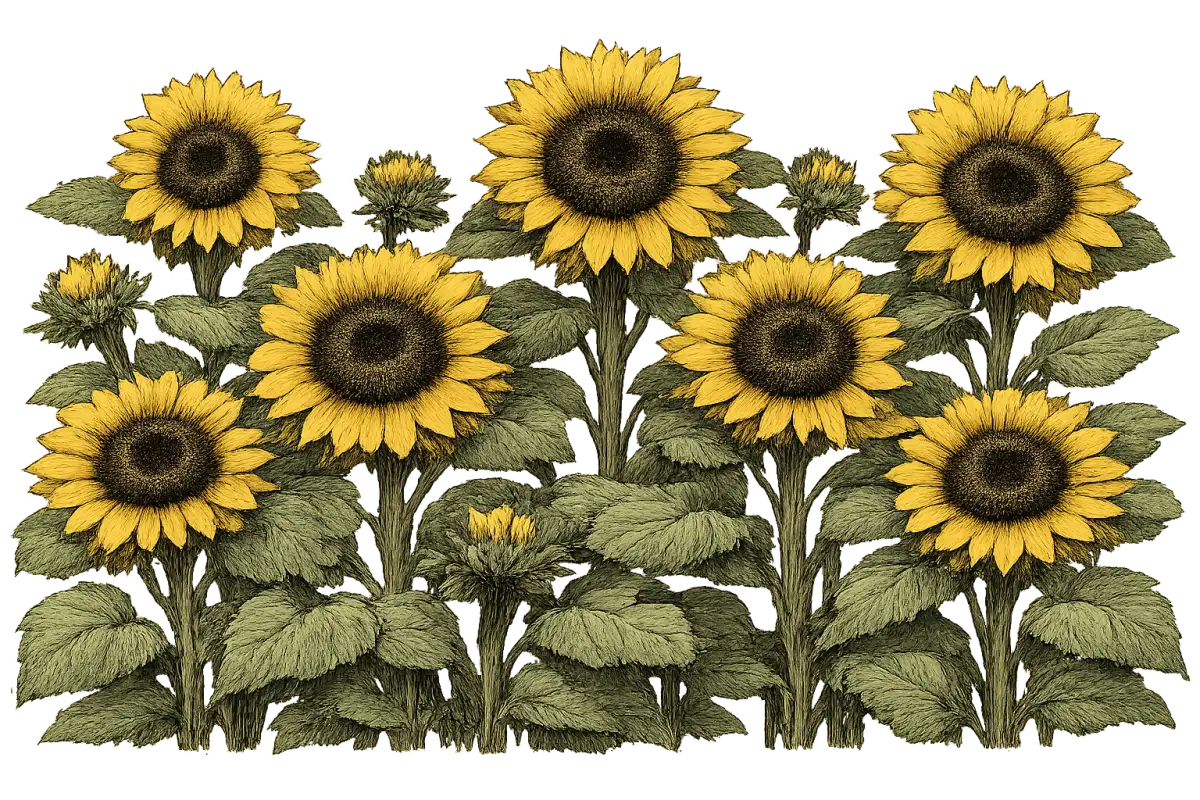
Dense Spacing for Long Stems
The counterintuitive trick of cut flower production is intentional crowding. Space single-stem varieties just four to six inches apart in rows two feet wide. At that density, plants compete for light and stretch upward, producing stems three to five feet long with smaller, bouquet-proportioned heads — three to five inches across — that are ideal for arrangements. Wider spacing produces larger heads but shorter, thicker stems that are harder to use in a vase.
Branching varieties need the reverse: eighteen to twenty-four inches apart so lateral stems have room to develop.
Harvest Timing: The Window Is Narrow
Harvest timing is the single most important factor in vase life, and the window is genuinely narrow. Cut as soon as the first petals begin to unfurl from the central disk — petals should be just starting to lift, not fully open and not still flat against the disk. Too early and the flower may not fully open after cutting. Too late and vase life is drastically shortened, with petals dropping within days.
Cut in the early morning near sunrise, when stems are fully turgid. Afternoon-harvested flowers are often wilted from the day's heat and recover poorly even with good conditioning.
Post-Harvest Conditioning
Conditioning is what separates a seven-to-fourteen-day vase life from a flower that wilts by day three.
Immediately after cutting: strip the bottom three-quarters of leaves from the stem. Make a fresh angled cut with clean, sharp tools — this removes any air bubble that entered the cut end during harvest. Remove all foliage that will fall below the waterline.
Place stems in a deep bucket filled at least halfway with clean, cool water. Rest in a cool location — ideally 35 to 40°F, or the coolest room available — for at least four hours, overnight is better. Plain water works well for sunflowers; flower preservative is optional.
Once arranged, refresh the water daily (sunflowers are heavy drinkers), re-trim stems every two days, and keep the vase away from direct sun, heat sources, and ripening fruit. Ethylene gas from fruit accelerates petal drop. Cool overnight storage when flowers are not on display dramatically extends their life.
Properly handled ProCut and Sunrich varieties last seven to fourteen days in the vase. Branching varieties run five to ten days.
Harvesting Seeds: From Head to Kitchen to Next Year's Garden
There is something deeply satisfying about completing the full cycle — harvesting seeds you grew yourself, roasting them the same afternoon, and saving a packet for next spring. It is one of the things sunflowers do that almost no other ornamental plant can offer.
Reading the Signs of Maturity
Seeds are ready approximately thirty to forty-five days after the flower blooms. Total time from sowing to seed harvest is typically seventy to one hundred days depending on variety. Iowa State Extension describes the ready head precisely: facing downward, with easily removed inner petals and a lemon-yellow back.
All of these signals together indicate readiness: foliage has yellowed and died back, petals have fallen completely, the back of the head has turned from green to yellow to brown, the head droops facing the ground, and seeds look plump with hardened shells. Press a seed with a fingernail — it should feel firm, not soft.
Do not harvest early. Underdeveloped seeds shrivel during drying and are poor for eating and even worse for replanting.
Protecting Heads Before Harvest
Birds begin competing for your seeds before they are fully mature, often before the head has drooped. Start protection early. Drape paper bags with ventilation holes cut into them over individual heads, or use cheesecloth tied loosely at the base. Loose is critical — tight coverings trap moisture and cause the mold you were trying to prevent. Commercial bird netting works as well. Whatever you use, secure it before the head droops, not after.
Drying and Extracting
Cut the stalk twelve inches below the flower head — the long stem handle makes drying easier and reduces seed spillage. The recommended drying method is hanging upside down: bundle heads loosely with twine, hang in a warm dry area with good airflow (a barn, garage, or covered porch), and place newspaper or a container below to catch falling seeds. Alternatively, hang each head inside a paper bag so seeds drop directly into the bag. Allow at least four to five days; longer in humid climates.
Once dry, hold the head over a bucket and rub the seed face firmly with your palm — seeds release in large batches. Rinse in a colander under running water, discard debris and shriveled seeds, and spread in a single layer on paper towels to dry overnight before storage.
Storage and Saving for Replanting
For eating: store in an airtight container at room temperature for two to three months, refrigerated for up to six months, or frozen for up to a year.
For replanting: seeds must be completely dry before storage — a properly dry seed snaps cleanly; a damp one bends. Store in paper envelopes or glass jars in a cool, dark, dry location, labeled with variety, harvest date, and any notable traits of the source plant. Properly stored seeds remain viable for two to five years, though germination rates decline each year. Test a sample before committing to a full planting.
One important note: pollenless varieties will not produce seeds unless pollen-bearing sunflowers grow nearby. For seed saving, choose open-pollinated heirloom varieties — Mammoth Russian and Mammoth Grey Stripe breed true. Most ProCut and Sunrich varieties are hybrids and will not reliably reproduce to type from saved seed.
Roasting
Home-roasted sunflower seeds are in a different category from anything sold in a bag. Soak seeds overnight in six cups of water with a quarter cup of salt (or simmer for one to one and a half hours if short on time). Drain and pat dry, then spread in a single layer on a baking sheet. Bake at 325°F for twenty-five to thirty minutes, stirring every ten minutes, until lightly golden-brown and fragrant. Cool completely before storing — the seeds crisp further as they cool. For seasoned variations, toss with olive oil and spices after draining but before roasting.
The Problems Worth Knowing About
Sunflowers are genuinely forgiving plants. Most problems are either preventable with good siting decisions or easy to diagnose once you know what to look for.
Lodging: Plants Falling Over
Tall plants toppling over — broken at the base or leaning at severe angles — is the most visible failure mode in a sunflower garden, and it is almost always preventable. The causes in order of frequency: excess nitrogen producing soft, fast growth that lacks structural strength; insufficient spacing causing plants to grow tall and thin competing for light; wind after rain when soil is soft and root anchorage is weakened; and top-heavy seed-laden heads on giant varieties.
Stake at two to three feet tall, before plants become top-heavy. Use soft ties, tied loosely — a tight tie girdles the stem. For giant varieties in exposed sites, mound soil against the base before summer storms to improve root anchorage. Site tall varieties along south- or west-facing fences or buildings where the structure provides wind shelter.
If a plant has bent but not snapped, carefully re-stake and tie within a day. A bent stem will often recover.
Head Rot
Soft, brown, mushy areas on the back of the flower head — sometimes with visible white mold — are the signature of head rot. The most common cause is Sclerotinia sclerotiorum (white mold), a fungal pathogen that thrives in wet conditions below 85°F. Rhizopus head rot requires a wound to enter — insect damage, bird pecking, or hail — and is most common when sunflower moth larvae have been active.
Prevent both by maintaining proper spacing for airflow and choosing resistant varieties when available. Sclerotinia sclerotia persist in soil for years; rotate away from infested areas for five to eight years. There is no effective spray treatment once symptoms appear in a home garden. Your best protection is reducing the insect damage that creates entry points for Rhizopus.
Failure to Germinate
The most common cause is cold soil — below 50°F, seeds rot rather than germinate. The fix is simply waiting. Re-sow at the correct depth (no more than two inches in heavy soil) and cover with row cover until emergence to exclude birds, which commonly scratch up freshly sown seeds in the first week. If you are working with seeds more than three to five years old, viability drops significantly — test a sample on a damp paper towel before committing to a full bed.
Birds and Squirrels
A sunflower head is exactly what both species are looking for: a concentrated, high-calorie food source. For birds stealing seeds before harvest, see the protection methods above. For squirrels climbing stalks, wrap the lower stalk in smooth aluminum foil or install a baffle guard similar to those used on bird feeders — the slippery surface impedes climbing. Deer fencing around the planting area addresses both squirrels and deer browse on young plants simultaneously.
Frequently Asked Questions
Do Sunflowers Come Back Every Year?
Standard sunflowers (Helianthus annuus) are annuals — they complete their entire life cycle in one season and do not return. You will need to replant each year. However, if you allow heads to fully dry on the plant and the seeds drop naturally, you may see volunteer seedlings the following spring. These are unpredictable in color and form (especially from hybrid varieties) but can be a pleasant bonus. For reliable replanting, harvest and store seeds from open-pollinated heirloom types like Mammoth Russian.
Can I Grow Sunflowers in Containers?
Yes, with the right variety. Teddy Bear, Elf, and Munchkin are genuinely well-suited to container culture. Use a pot at least twelve inches in diameter with drainage holes. Standard potting mix is fine — sunflowers are not pH-demanding the way blueberries are. Water more frequently than you would for in-ground plants, since containers dry out faster. Giant varieties in containers are a losing battle — their root systems and eventual weight will overwhelm any reasonable pot size.
Why Are My Sunflowers Not Flowering?
In nearly every case, the cause is excess nitrogen. Dense, lush, dark-green foliage on tall thick stems with delayed or absent flowering is the classic presentation. The plant is allocating resources to vegetative growth rather than reproduction. The secondary possibility is insufficient sunlight — sunflowers genuinely need six to eight full hours daily and will prioritize stem elongation over flowering in shadier conditions. Rule out both before looking at other causes.
How Do I Keep My Cut Sunflowers Lasting Longer?
Strip the bottom three-quarters of leaves immediately after cutting, re-cut the stem at an angle, and condition overnight in a deep bucket of cool water before arranging. Once in the vase: refresh the water daily, re-trim stems every two days, and keep away from heat, direct sun, and ripening fruit. ProCut and Sunrich pollenless varieties are specifically bred for vase longevity and will regularly give you seven to fourteen days with this care routine.
What Is the Easiest Sunflower to Grow for Beginners?
Sunrich Summer Provence for cut flowers — reliable, classic-looking, pollenless (no staining), and genuinely hard to fail with. Velvet Queen for the ornamental border if you want something with more color complexity than standard yellow. Mammoth Russian if you want the full experience: dramatic height, edible seeds, and the satisfaction of saving seed for next year. All three are forgiving, well-documented performers that will not punish a first-time grower.
The Arrangement Perspective: Combining Sunflowers with Other Plants
I want to leave you with something that rarely appears in growing guides — a note on how sunflowers actually live in a garden and in a vase alongside other plants.
In the border, the warm tones of Velvet Queen and Chianti reach their full potential against silver foliage — lamb's ear, artemisia, or Russian sage. The creamy whites (Italian White, Moonshadow, ProCut White Lite) work in more refined settings alongside phlox, echinacea, and tall cleome. The burnt oranges and burgundies of the autumn-toned varieties belong in late summer with ornamental grasses, dahlias, and the last of the rudbeckia — a combination that makes September gardens look intentional rather than winding down.
In arrangements, the ProCut color range is a designer's tool. ProCut Red alongside deep purple lisianthus and steel-blue eryngium is unexpected and sophisticated. ProCut Lemon with white cosmos and dusty miller reads as light and airy. ProCut Plum paired with blush-toned zinnias and copper foliage is rich without being heavy. Sunflowers are not a one-note plant — they are a framework around which an entire seasonal palette can be built.
The plants that perform best alongside sunflowers in the garden, from a structural standpoint, are those that share their enthusiasm for full sun and lean soils: zinnias, cosmos, celosia, and tithonia. Tall ornamental grasses make excellent companions for the giants, providing scale without competing for attention. Avoid heavy feeders with incompatible soil preferences in the same bed.
Where to Begin
Pick one variety from each category you care about. If you want drama in the border and seeds for the kitchen: Mammoth Russian in the back, Velvet Queen in the middle, Teddy Bear at the front edge. If you want a cutting garden that produces stems from July through September: Sunrich Summer Provence as your reliable base, Ruby Eclipse for color variation, sown in waves two weeks apart starting after last frost.
Direct sow after soil reaches 50°F. Skip the fertilizer unless your soil is genuinely poor. Stake the tall ones early. Harvest cut flowers at first petal unfurl in the morning. Protect the seed heads you want to keep. The rest, honestly, takes care of itself.
Sunflowers are the most generous plants in the summer garden. They ask for sun and warmth and almost nothing else, and in return they give you months of color, seeds for the kitchen, flowers for every vase in the house, and the particular pleasure of watching goldfinches work the drying heads on an October afternoon. There is a reason they have been cultivated on this continent for thousands of years.
Grow them. You will not regret it.
This guide was developed from research compiled across university extension service publications including UMN Extension, Iowa State Extension, and Cornell High Tunnels program, combined with variety trial data from Johnny's Seeds and commercial cut flower production records.
 Where to Plant