Fruits

How to Grow Blueberries: The Complete Guide (From Someone Who's Seen 1,000 Bushes Die)

Sarah Whitfield

Sarah Whitfield

Fruit & Berry Specialist · Updated April 2026

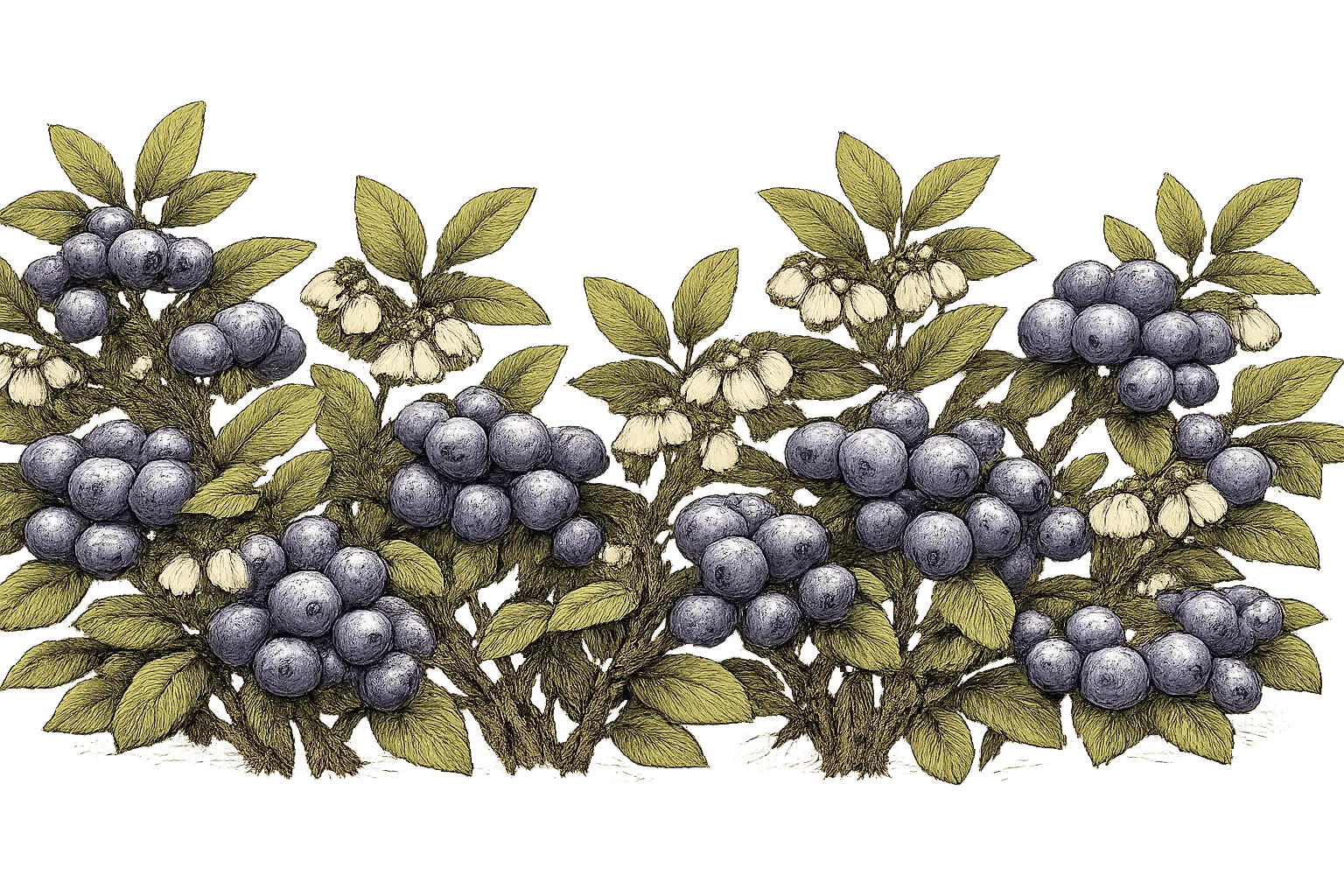
How to grow blueberries — vintage botanical illustration showing the plant in detail

Blueberries at a Glance

Sun

Sun

6-8 hours full sun

Soil pH

Soil pH

4.5-5.5

Water

Water

1-2 inches per week during growing season

Spacing

Spacing

4 ft

Days to harvest

Days to Harvest

Year 3-4 for first meaningful harvest; berries ripen June-August

Height

Height

4-6 feet

Soil type

Soil

Well-drained

Lifespan

Lifespan

perennial

Get your personalized growing data

Enter your zip code for frost dates, growing season, and soil type.

Most blueberry bushes die within two years of planting. That is not a scare tactic. It is what we see over and over again when our research team reviews home-growing outcomes across the country.

The frustrating part? Blueberries are not difficult plants. They live for decades when their basic needs are met. A single mature bush can produce 8 pounds of berries per year -- roughly $50 to $70 worth at grocery store prices. Four bushes, properly maintained, will bury you in fruit every summer for 20+ years.

So why do so many fail?

Because the number one thing blueberries need is the number one thing most gardeners get wrong. It is not sunlight. It is not water. It is not fertilizer. It is soil pH. Most garden soil sits at pH 6.5 to 7.0. Blueberries need 4.5 to 5.5. That gap is the difference between a thriving bush loaded with berries and a yellowing skeleton that barely survives its first summer.

This guide is everything we have learned from synthesizing extension service research across 13 universities, decades of cultivar trial data, and the hard-won wisdom of growers who have kept bushes alive through zone 3 winters and zone 10 heat. We will tell you exactly which varieties to plant in your zone, the mistakes that kill the most bushes, and the myths that waste your time and money.

Let's get your blueberries right the first time.


Quick Answer: Blueberry Growing at a Glance

USDA Zones: 3 through 10 (with the right variety)

Sun: 6-8 hours of direct sunlight daily

Soil pH: 4.5-5.5 (test before planting -- this is non-negotiable)

Spacing: 4-5 feet between plants

Water: 1-2 inches per week; frequent small amounts, not occasional soaking

Fertilizer: Ammonium sulfate (21-0-0) if pH is above 5.0; urea if below

Cross-pollination: Plant at least 2 different varieties

First harvest: Year 3 (small); full production by Year 6

Mature yield: 5-10 pounds per plant per year


The Soil pH Problem (Why Most People Fail)

I need you to understand this section before anything else in this guide matters.

Blueberries require soil pH between 4.5 and 5.5. Most garden soil is 6.5 to 7.0. On the pH scale, that is not a small gap -- pH is logarithmic, meaning 6.5 is roughly 10 to 100 times less acidic than what blueberries need. Planting a blueberry in unamended garden soil is like planting a cactus in a swamp.

Here is what happens at the wrong pH, according to Cornell's Berry Diagnostic Tool: at pH above 5.2, iron becomes unavailable to the plant. You will see classic interveinal chlorosis -- yellow leaves with green veins -- and most gardeners assume it is a nutrient deficiency. They add fertilizer. The plant gets worse. The iron is in the soil. The plant simply cannot access it because the pH is wrong.

It gets worse. At pH above 5.5, soil bacteria convert ammonium nitrogen (the only form blueberries can absorb) into nitrate nitrogen (which is essentially useless or even toxic to them). So even if you feed the plant perfectly, the soil chemistry converts its food into a form it cannot use.

The fix is elemental sulfur, applied months before planting. Test your soil first. If your pH is 6.5, you need to bring it down by a full point or more, and that takes time -- sulfur reacts with soil bacteria over weeks to months. Start 6-12 months before planting if possible.

For maintenance, the University of Connecticut recommends 1/2 pound of sulfur per 100 square feet in spring and fall as needed. Test your pH annually. Even correctly acidified soil drifts upward over time, especially if your irrigation water is alkaline (common with well water).

Debunking the Coffee Grounds Myth

This one will not die. "Spread used coffee grounds around your blueberries to acidify the soil." We hear it constantly.

Used coffee grounds have a near-neutral pH of 6.5 to 6.8. The acidity went into your coffee, not the grounds. Spreading them around your blueberries does essentially nothing for pH. Fresh unbrewed grounds are more acidic but decompose to near-neutral quickly, and the quantity you would need creates nitrogen tie-up and compaction problems.

While we are debunking: do not use aluminum sulfate either. Yes, it lowers pH. But as the University of Maryland Extension explicitly warns, blueberries are sensitive to excess aluminum. At low pH, aluminum becomes soluble in soil and damages roots. Aluminum sulfate compounds this risk. It works for hydrangeas. It is inappropriate for blueberries.

Use elemental sulfur. Plan ahead. There are no shortcuts.


Best Blueberry Varieties by Zone

Choosing the right variety for your zone is the second most important decision you will make (after fixing your soil pH). Get this wrong and you will spend years nursing a plant that was never going to thrive in your climate.

What zone are you in?

Enter your zip code for frost dates, growing season, and soil type.

There are four main blueberry types, and each belongs in specific zones: half-high hybrids for extreme cold (zones 3-4), northern highbush for the broad middle of the country (zones 4-7), rabbiteye for the Southeast (zones 7-9), and southern highbush for warm climates (zones 7-10). Let me walk you through what to plant where.

Cold Zones (3-5): Where Winter Is the Boss

If you are in zones 3 or 4 -- the upper Midwest, northern Great Plains, northern New England -- you want University of Minnesota half-high hybrids. Full stop. These were specifically bred to survive winters that hit -40F, and they have the most cold-zone performance data of any blueberry varieties in existence.

Northblue is the most reliable zone 3 producer we have seen. It was released by UMN in 1983, produces 3-9 pounds per plant, and has excellent winter hardiness. Pair it with Polaris for the best flavor among half-highs -- crisp, intense, aromatic berries that ripen early, giving you early-to-mid season coverage.

If you want higher yields and have a bit more space, Chippewa is outstanding -- sweet, medium-large berries, excellent hardiness, and it was the 1996 UMN release that solved the "half-highs are too small" problem.

Once you reach zone 5, northern highbush opens up. Duke is the workhorse -- consistent yields up to 20 pounds per mature plant, and Penn State research shows it does not even need cross-pollination (though it still benefits from it). Bluecrop is the most widely planted blueberry variety in the world for a reason: it just works. Add Elliott for a very late harvest that extends your season into August. Duke + Bluecrop + Elliott is the zone 5 power trio.

Skip southern highbush varieties in zone 5. The GrowingFruit.org community consensus is clear on this: low-chill southern varieties bloom too early and get destroyed by late frosts. If climate change concerns you, choose late-flowering northern varieties like Legacy and Nocturne, not southern types. Legacy has complex flavor that improves as the plant matures, and its late flowering naturally dodges spring frosts. Nocturne -- an intriguing newer option -- produces dark, almost black berries with rich flavor and has 8+ seasons of proven hardiness data.

Standard Zones (6-7): The Sweet Spot

Zone 6 is blueberry paradise. You have the widest selection of any zone and the most forgiving growing conditions for northern highbush.

For a June-through-August harvest, plant four varieties across the season: Earliblue (first to ripen, opens the season), Bluecrop (mid-season industry standard), Darrow (late season, among the largest berries of any variety), and Elliott (very late, extends into August). Rutgers University recommends planting at least two varieties 3-4 feet apart, but we recommend four for season-long harvests.

Zone 7 is the most versatile zone in the country. Northern highbush, southern highbush, and rabbiteye all succeed here. Your choice depends on your priorities. For maximum yield with minimum effort, plant rabbiteye: Climax paired with Premier for early sweetness, add Powderblue for mid-season (rain-resistant, light blue), and Ochlockonee for late. For the best fresh-eating quality, northern highbush still works if you verify your local chill hours are adequate -- you need 600-800 hours in most of zone 7.

If you want to try southern highbush in zone 7, Camellia is a standout: large, firm berries, vigorous growth, and it has superior aluminum tolerance (an unusual trait that gives it extra resilience in marginal soils). Rebel produces large fruit with excellent color and needs only 400-450 chill hours.

Warm Zones (8-9): Chill Hours Become the Limiting Factor

Zone 8 is rabbiteye territory. Alabama Extension recommends planting early, mid, and late varieties together. Climax (12-25 pounds at maturity, concentrated sweet ripening) paired with Premier covers early season. Powderblue or Tifblue handles mid-season. Centurion or Baldwin extends into late summer.

Southern highbush adds an earlier harvest window before rabbiteye ripens -- April through May in Florida -- but Alabama Extension recommends small-scale testing first before committing to large plantings.

Zone 9 is where chill hours become your primary constraint. Most rabbiteye and all northern highbush fail here. Sunshine Blue is the universal recommendation across every source we reviewed -- lowest chill requirement (150 hours), tolerates pH up to 6.8 (more forgiving than any other variety), and it is self-pollinating. Pair it with Emerald (UF release, vigorous, high yield, large berries) or Jewel (excellent berry quality, very early) for cross-pollination and extended harvest.

Hot Zones (9-10): Container Growing Is Near-Mandatory

Zone 10 -- south Florida, Southern California coast, Hawaii -- is the hardest zone for blueberries. Container growing is almost required because native soils are nearly always too alkaline. Sunshine Blue is the first choice here too. Pair it with Misty (proven in SoCal coastal conditions) or Sharpblue (described in extension literature as the most adaptable low-chill variety worldwide).

Expect inconsistent years. Zone 10 coastal areas sometimes fail to deliver even 150 chill hours in warm winters, meaning poor bloom and reduced crops. Plan for it rather than being surprised by it.

Southern California-specific advice from a decade of San Diego County growing experience: Sunshine Blue, Misty, Jewel, Emerald, and Pink Lemonade all work. Plan 8 plants for a family of five. Use sulfur pellets annually for pH maintenance. And give them full sun -- do not follow the occasional advice to provide afternoon shade in hot climates.

Quick Reference Table: Top Picks by Zone Group

Zone GroupTop 3 VarietiesTypeWhy
3-4Northblue, Polaris, ChippewaHalf-highUMN-bred extreme cold hardiness
5-6Duke, Bluecrop, ElliottN. HighbushSeason-spanning coverage; proven yields
7Climax, Premier, PowderblueRabbiteyeMaximum yield, minimum effort
8-9Sunshine Blue, Emerald, BrightwellS. Highbush / RabbiteyeLow chill; heat-tolerant
10Sunshine Blue, Misty, SharpblueS. HighbushUltra-low chill; container-friendly

When and How to Plant

Timing by Zone

In zones 3-6, plant in early spring as soon as the ground is workable. Dormant bare-root plants establish best when the soil is cool but no longer frozen.

In zones 7-8, either early spring or late fall works. Fall planting gives roots a head start during winter dormancy before the demands of spring growth.

In zones 9-10, plant in late fall through early winter. This gives the plant maximum time to establish roots before the heat arrives.

Site Selection

Choose a spot with 6-8 hours of direct sunlight. Southern California growers: full sun is correct despite occasional advice to provide shade in hot climates. A decade of San Diego County growing experience confirms this.

Avoid low-lying areas where water collects after rain. Blueberries cannot tolerate standing water. If your soil drains poorly, build raised beds with an acidic soil mix. Sandy loam is the ideal native soil type.

Keep blueberries at least 50 feet from any walnut, butternut, or hickory trees. These emit juglone, a compound toxic to blueberry roots.

The Planting Process

Step 1: Dig the hole. Make it twice as wide as the root ball and the same depth. Blueberries should sit at the same level they were growing in their nursery pot -- do not bury the crown.

Step 2: Amend the soil. Mix the removed soil 50/50 with peat moss or aged pine bark to improve acidity and drainage. If you amended with sulfur months ago, your pH should already be in range. If not, incorporate sulfur now and know that it will take time to react.

Step 3: Plant and water. Set the plant in the hole, backfill with your amended mix, and water deeply to settle the soil and eliminate air pockets.

Step 4: Mulch immediately. Apply 3-4 inches of organic mulch -- wood chips, pine bark, aged sawdust, or pine needles. Wet the soil before applying mulch. Extend the mulch ring at least 2 feet beyond the plant in all directions to protect the shallow root zone.

Step 5: Space plants 4-5 feet apart within rows. This gives mature bushes room to spread without crowding.

Step 6: Cut back the top third to half of each cane at planting time. This feels destructive but it redirects energy to root establishment, which is exactly what you want in year one.

Step 7: Remove all flower buds. Every one. We know this hurts. Do it anyway. We will explain why in the common mistakes section.

What zone are you in?

Enter your zip code for frost dates, growing season, and soil type.


Watering: The Narrow Margin Between Too Dry and Too Wet

Blueberries have a unique problem in the plant world: they have no root hairs. Those microscopic extensions that most plants use to dramatically increase water absorption? Blueberries do not have them. Their root system is also concentrated in the top 8-12 inches of soil.

This creates a dangerously narrow margin between too dry and too wet. Precise watering is not optional for blueberries -- it is a survival requirement.

The Fundamental Rule

Water frequently in small amounts, not infrequently in large amounts. Blueberries need 1-2 inches per week during the growing season. A single heavy soaking pushes water below the shallow root zone, wasting it. Multiple small waterings keep moisture where roots can actually access it.

Drip Irrigation Is the Way

The University of Maryland Extension recommends drip or trickle irrigation over overhead watering for home growers. Drip keeps leaves dry (reducing disease), delivers water efficiently to the root zone, and prevents the soil saturation that causes root rot.

Set up two drip lines per row with emitters spaced 12-18 inches apart. Each plant should receive water from at least two emitters delivering 1-2 gallons per hour.

The Overwatering Trap

Here is the counterintuitive truth: overwatering kills more blueberry bushes than underwatering. When roots sit in saturated soil, Phytophthora root rot takes hold. Oxygen is displaced from soil pores. Roots suffocate. The Phytophthora water mold thrives in exactly these saturated conditions. The roots decay. The plant wilts -- because damaged roots cannot absorb water even in wet soil. The gardener sees wilting, adds more water, and accelerates the death spiral.

If your blueberry is wilting, check the soil moisture before you water. The problem may be too much water, not too little.

The target moisture range is 50-75% of field capacity. Below 50%, drought stress begins. Above 75%, oxygen displacement becomes a risk. If you want precision, deploy moisture sensors at two depths: 2-4 inches (tells you when to start watering) and 8-12 inches (tells you when to stop -- water has reached the bottom of the root zone).

Seasonal Adjustments

Water needs change through the year. During spring fruit formation, plan on 1-1.5 inches per week. Summer is peak demand -- mature plants use roughly 2 gallons per day. Reduce gradually in fall. By October, drop to about 60% of summer rates. Dormant plants in winter need minimal water but should not completely desiccate.

Watch Your Water pH

If you use well water, test its pH annually. Water above pH 7.0 gradually raises your soil pH with every watering event. Over months and years, this can push carefully acidified soil out of the 4.5-5.5 range. If your water is alkaline, you may need to inject sulfuric acid to lower it before it reaches your plants.


Feeding Schedule: The Ammonium Sulfate Rule

Blueberry nutrition boils down to one critical fact: blueberries are ammonium-obligate. Their roots are biochemically adapted to absorb ammonium nitrogen. They cannot efficiently use nitrate nitrogen, and nitrate-form fertilizers can be directly toxic to them.

This means most "all-purpose" garden fertilizers are wrong for blueberries. Common 10-10-10 formulations frequently contain nitrate nitrogen. Check the guaranteed analysis label -- if "nitrate nitrogen" is listed, do not use it on blueberries.

What to Use

The choice between the two safe nitrogen sources depends on your current soil pH:

  • Ammonium sulfate (21-0-0): Use when soil pH is above 5.0. It has an acidifying effect and also supplies sulfur.
  • Urea (46-0-0): Use when soil pH is at or below 5.0. It is pH-neutral and avoids further acidification.

Do not keep using ammonium sulfate if your pH is already below 5.0. Further acidification risks aluminum and manganese toxicity, which can kill plants. This is a common mistake -- growers hear "blueberries like acid" and keep pushing the pH lower.

How Much, When

Year 1: No fertilizer (University of Maryland recommendation), or minimal 1-ounce applications of a complete fertilizer starting 3-4 weeks after planting.

Year 2: Two ounces of ammonium sulfate per plant, applied twice -- once during bloom in April, and again three weeks later.

Years 3-5: Increase by one ounce per year over the previous rate, split into 2-3 applications in spring.

Year 6 and beyond: Eight ounces total per plant annually, split into 2-3 applications between bud break and early July.

Stop all fertilizer by mid-July. Late feeding stimulates tender new growth that will not harden off before winter, leading to cold injury.

Application Method

Scatter granular fertilizer in a ring 12-18 inches from the plant crown. Never pile it against the base -- that burns the crown. Water in after application. Split the total annual amount into 2-3 smaller doses rather than one large application to prevent nutrient leaching and root burn.

A Counterintuitive Timing Note

A UF/IFAS study found that young blueberry plants draw from stored root and stem reserves for spring growth, with minimal uptake from spring fertilizer. Peak nitrogen uptake actually occurs from late summer through mid-fall. This means spring fertilizer on young plants is partly wasted. Fall applications build the reserves that fuel the following spring. This is counterintuitive but well-documented.

For mature plants, Michigan State recommends a post-harvest application of straight nitrogen (urea or ammonium sulfate) specifically to build reserves for the following year.

Also Avoid

Never use muriate of potash (KCl) -- blueberry roots are chloride-sensitive. Use potassium sulfate instead. Never use fresh manure (burns roots, raises pH). Never use mushroom compost (strongly alkaline).


Pruning Basics

Prune in late winter while plants are fully dormant. Without leaves, you can clearly see the plant structure and distinguish between plump, round flower buds and slender, pointed leaf buds.

Young Plants (Years 1-3)

Year 1: Remove all flower buds. All of them. This is the single most important action for a new blueberry plant. Cut back the top third to half of each cane at planting to redirect energy to roots.

Year 2: Continue removing most flowers -- allow no more than a cluster or two. Remove dead, weak, or crossing canes.

Year 3: If the plant is growing vigorously, allow limited fruiting. If growth is still weak, keep removing buds.

Mature Plants (Year 6+)

A well-maintained bush should have approximately 18 canes of varying ages, with no cane older than 6 years. The math is simple: 3 canes per age class across 6 age classes. Each late winter, remove the 3 oldest canes at ground level and select 3 vigorous new canes to replace them.

Remove dead, diseased, or damaged wood first. Then low-growing branches near the ground. Then weak, spindly interior shoots. Then crossing or rubbing branches, keeping the stronger one.

If your bush has been neglected for years, cut it back hard -- remove at least a third of all old wood. You will lose a year or two of production, but the plant will regenerate. Ensure pH is correct before attempting rejuvenation; it fails if the soil is wrong.

The best pruning advice comes from Stark Bro's: "It is probably better in most instances to prune too lightly than too heavily." Some pruning is vastly better than none.

What zone are you in?

Enter your zip code for frost dates, growing season, and soil type.


The Top Mistakes That Kill Blueberry Bushes

We have ranked these by how frequently they cause plant death, based on diagnostic guides from university extension services across the country. If you only fix one thing, fix the first one.

Mistake #1: Ignoring Soil pH

This one kills more blueberry bushes than any disease. We covered it in depth above, but it bears repeating: test your soil before planting. Do not guess. Do not assume. A $15 soil test saves a $25 plant and years of frustration.

The insidious version is pH drift. You set the pH correctly at planting, then never test again. Alkaline irrigation water, natural soil buffering, and certain mulches slowly push the pH upward. By the time you see yellow leaves with green veins (the classic iron chlorosis symptom), the plant has been struggling for months. Test annually.

Mistake #2: Overwatering and Poor Drainage

Overwatering causes Phytophthora root rot, which can kill a plant within a single growing season. It is worse than underwatering because the symptoms look like drought stress (wilting), prompting more watering and a faster death spiral. We covered the fix above: drip irrigation, frequent small amounts, check soil moisture before watering a wilting plant.

Never plant in areas where water puddles after rain. If your soil is heavy clay, build raised beds.

Mistake #3: Letting New Plants Fruit

You paid money for a blueberry plant to get blueberries. It flowers in its first spring. Everything in your brain says "let it fruit." This is the gardening equivalent of eating your seed corn.

Allowing first-year fruiting steals energy from root and shoot development, crippling the plant's long-term productivity. The lifetime yield of the plant is diminished. It may add a full year to reaching productive maturity. Remove all flowers in year 1, most in year 2, and allow full fruiting only from year 3 onward if the plant is growing vigorously.

Mistake #4: Planting a Single Bush

Many varieties benefit significantly from cross-pollination. Rabbiteye varieties cannot self-pollinate at all -- a single rabbiteye bush will produce zero fruit no matter how healthy it is. Even self-fertile varieties like Duke and Sunshine Blue produce substantially more and larger berries with a different variety nearby.

Plant at least two different varieties with overlapping bloom times. Space them 4-5 feet apart. Your yield will improve dramatically.

Mistake #5: Using the Wrong Fertilizer

Common "all-purpose" fertilizers contain nitrate nitrogen, which can be directly toxic to blueberry roots. We see this constantly: a well-meaning gardener feeds their blueberry with 10-10-10 and wonders why it declines.

Use ammonium sulfate or urea only. Check the guaranteed analysis label on any fertilizer before using it on blueberries. If "nitrate nitrogen" appears, put it back on the shelf.

Mistake #6: Skipping Mulch

Blueberry roots are shallow (top 8-12 inches), hairless, and utterly dependent on surface moisture. Without 3-4 inches of organic mulch, the surface soil dries rapidly, temperature extremes stress fine roots, and grass invades the root zone. Grass is arguably the worst neighbor for blueberries -- it competes aggressively for water and nutrients and is extremely difficult to remove once established.

Mulch is essential infrastructure, not optional decoration. Wood chips, pine bark, aged sawdust, and pine needles are all good choices. Replenish annually as they decompose. And remember: pine needles are an excellent mulch for blueberries, but they do not meaningfully acidify soil despite their reputation. They retain moisture, suppress weeds, and allow good air exchange -- just do not rely on them as a pH amendment.


Harvesting: When Blue Does Not Mean Ready

Here is the harvesting fact that changes everything: blueberries do not ripen after picking. They are non-climacteric fruit, unlike tomatoes or bananas. A berry that is not fully ripe when you pick it will never get sweeter. This is why home-grown blueberries taste dramatically better than supermarket ones -- they were picked at peak ripeness, not for shipping durability.

The tricky part: berries turn blue on the outside 3-6 days before they reach maximum sweetness. The color change happens outside-in, so a blue berry may still have unripe tissue near the stem. Check the stem end -- if there is any hint of red or purple, wait a few more days.

How to Pick

Use the thumb-flick technique: gently flick the berry off the plant into a bucket. Ripe berries release with minimal pressure. If you have to tug, it is not ready.

Harvest in the morning after dew has evaporated. Morning-picked berries are firmer and last longer in storage. Pick every 5-7 days during the ripening window -- a single bush produces its crop over about 3 weeks.

Storage

Do not wash berries after picking -- washing removes the protective waxy bloom and accelerates spoilage. Refrigerate immediately at 32-34F. They will keep 7-14 days.

For freezing (blueberries freeze better than most fruit): spread berries in a single layer on a baking sheet, freeze until solid, then transfer to freezer bags. They maintain quality for 6-12 months. Single-layer freezing prevents the stuck-together clump problem.

What to Expect

A mature highbush plant yields 5-10 pounds per year (6-8 typical). That is 7-9 pints annually from a single bush. Four mature bushes at retail organic prices ($6-9 per pound) produce $192-288 worth of berries per year. Over a 20-year productive life, that is $3,800-5,700 from a $50-150 initial investment.

Install bird netting before berries begin to color, not after. Raise it on a frame -- do not drape it directly on the bush. Birds peck through draped netting.


Companion Planting: What Works and What to Avoid

The right companion plants provide three concrete benefits: pollinator attraction (more bees equals more berries), weed suppression over the shallow root zone, and space efficiency.

Best Companions

For pollinators: Bee balm, borage, and lavender draw bees to the area during blueberry bloom. Heather and heath thrive in the same acidic soil conditions.

For ground cover: Strawberries make an excellent edible ground cover with similar acid tolerance. Creeping thyme suppresses weeds and deters some pests. Red clover fixes nitrogen and attracts pollinators with its blooms.

Acid-loving shrubs: Rhododendron, azalea, and holly thrive in pH 4.5-5.5 soil and make natural companions.

What to Keep Away

Raspberries: They prefer alkaline soil and spread aggressively via underground runners into blueberry territory. The pH requirements are fundamentally incompatible.

Grass: The silent killer. It spreads quickly, competes fiercely for water and nutrients, and is extremely difficult to remove once established in the blueberry root zone. Use ground cover plants or mulch instead.

Walnut trees: They emit juglone, which is toxic to blueberry roots. Maintain 50+ feet of distance.

Nightshades (tomatoes, peppers) and asparagus: Different pH needs. Grow them separately.


Frequently Asked Questions

Can I Grow Blueberries in Alkaline Soil?

Yes, but you must amend it first or grow in containers. Blueberries require pH 4.5-5.5, and alkaline soil (pH 7.0+) will kill them without intervention. For in-ground planting, apply elemental sulfur 6-12 months before planting and test the pH to confirm it has dropped into range. For a faster solution, especially in zones 9-10 where native soils are often very alkaline, grow in containers using an acidic potting mix (peat-based or pine bark-based). Container growing gives you complete control over soil chemistry and is the recommended approach in hot, alkaline-soil zones.

Do Blueberries Need Two Plants to Produce Fruit?

It depends on the variety, but plant two anyway. Rabbiteye varieties are completely self-incompatible -- a single bush will produce zero berries and you need at least two different cultivars. Northern highbush varieties like Duke are technically self-fertile, and Sunshine Blue is self-pollinating. However, even self-fertile varieties produce measurably more fruit with larger berries when cross-pollinated by a different variety. Our recommendation: always plant at least two different varieties with overlapping bloom times. The yield increase more than justifies the second plant.

How Long Until Blueberry Bushes Produce Fruit?

Expect your first meaningful harvest in year 3, with 0.5-2 pounds per plant. Production ramps up each year: 1-3 pounds in year 4, 3-6 pounds in year 5, and full production of 5-10 pounds per plant by year 6. The critical caveat: you should remove all flowers in year 1 and most in year 2 to allow the plant to establish strong roots and canopy. Skipping this step weakens the plant and actually delays full production. We know it is hard to strip flowers off a new plant. Do it anyway. Your future self, buried in berries in year 6, will thank you.

Why Are My Blueberry Leaves Turning Yellow?

In nearly every case, the answer is soil pH. Yellow leaves with green veins (interveinal chlorosis) is the classic symptom of iron unavailability caused by pH above 5.2. The iron is in your soil -- the plant just cannot access it. Test your pH before adding any fertilizer or amendments. If pH is above 5.5, apply elemental sulfur to bring it down. For immediate relief while waiting for sulfur to react, apply EDDHA chelated iron as a foliar spray (use this specific chelate type -- other chelates break down above pH 6). If the yellowing is on older leaves with green veins in a "Christmas tree" pattern, suspect magnesium deficiency and apply Epsom salt (magnesium sulfate) at 10 ounces per 100 square feet.

Can I Grow Blueberries in Pots?

Absolutely, and in zones 9-10 it is actually the preferred method. Use a container at least 18-24 inches in diameter with drainage holes. Fill with an acidic potting mix -- peat-based or pine bark-based, not standard potting soil which is usually too alkaline. Sunshine Blue and Bountiful Blue are the best container varieties: compact (3-4 feet), low chill requirement (150-200 hours), and Sunshine Blue is self-pollinating. Container blueberries need more frequent watering than in-ground plants since the root zone dries out faster. Feed with ammonium sulfate and monitor pH -- even container mixes drift over time with alkaline tap water.

What Is the Best Low-Maintenance Blueberry Variety?

If we had to pick one variety for the widest range of growers, it would be Sunshine Blue. It tolerates the widest zone range (5-10), has the lowest chill requirement (150 hours), tolerates higher pH than any other variety (up to 6.8 -- still test and amend, but you have more margin for error), is self-pollinating, stays compact at 3-4 feet, and works in both containers and in-ground plantings. For cold-climate growers in zones 3-5, Bluecrop is the low-maintenance pick -- it is the most widely planted blueberry in the world because it is consistently productive with minimal fuss.


The Bottom Line

Growing blueberries is not hard. It is specific. Get the soil pH right, pick varieties that match your zone, water carefully, and resist the urge to let new plants fruit. Do these four things and you will have productive bushes for decades.

The payoff is real: a mature bush produces 5-10 pounds of berries per year -- fruit that tastes noticeably better than anything you can buy in a store, because you picked it fully ripe instead of picking it for shipping durability. Four bushes will keep a family in fresh blueberries all summer and frozen ones all winter.

Start with a soil test. Pick two or three varieties from the recommendations for your zone. Plant them right. Be patient. The berries are worth the wait.

Our research team synthesized data from 13 university extension services to create this guide, including Clemson, UF/IFAS, Rutgers, Alabama Extension, University of Minnesota, Michigan State, Cornell, University of Maryland, and UConn. Variety recommendations are based on published cultivar trial data and field performance records.

Where Blueberries Grows Best

Blueberries thrives in USDA Zones 4, 5, 6. Explore each zone's complete guide for growing tips, companion plants, and seasonal advice.

Also possible in: Zone 3, Zone 7 (challenging but possible with the right conditions).

Not sure of your zone? Look it up by zip code →