 Where to Plant
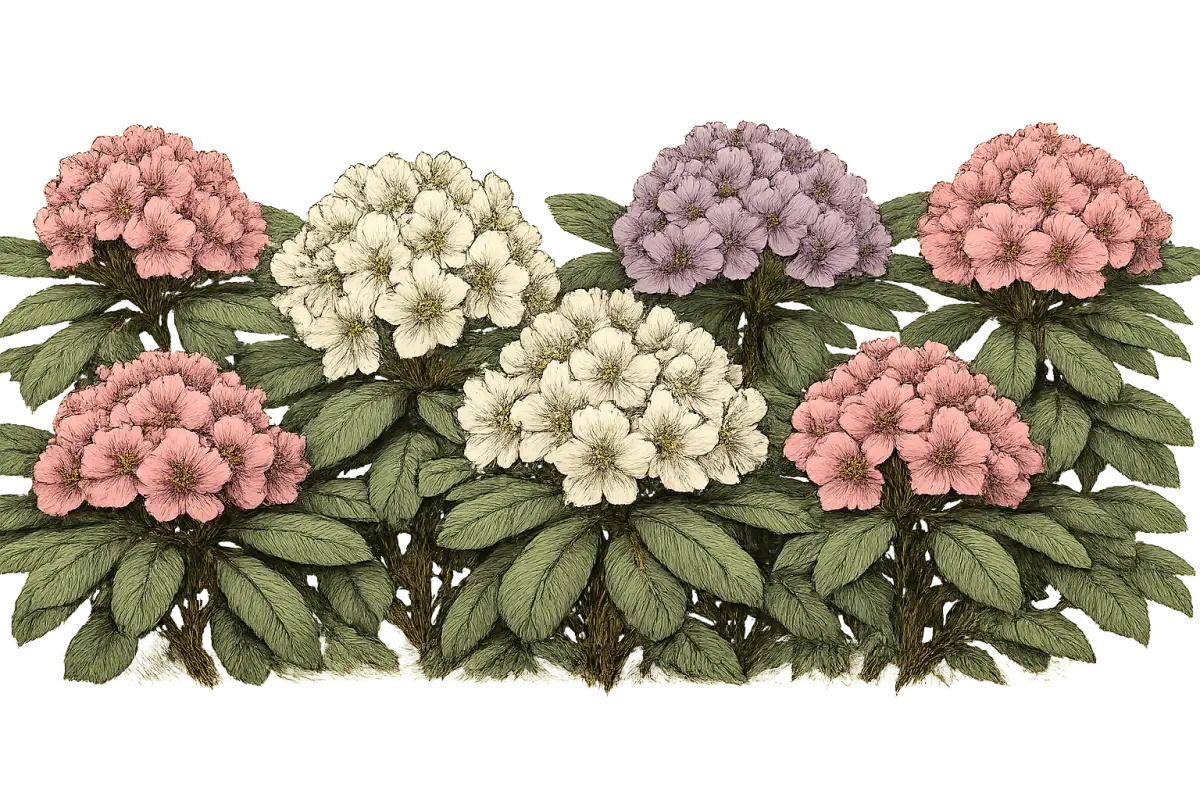


I want to tell you about a rhododendron I saw last spring. It was planted against a north-facing wall of a house in suburban Connecticut -- filtered morning light, good air circulation, a thick blanket of pine bark mulch extending all the way to the drip line. The owner had lived there for nineteen years. The plant had been there for eighteen. It was eight feet tall, dense as a hedge, and covered with so many pink trusses it looked almost theatrical. The homeowner admitted she had never read a single thing about how to grow it. She had just put it in the right place.
That is both the promise and the frustration of rhododendrons. Get the fundamentals right -- the right spot, the right soil, the correct planting depth -- and they will outlive the fence posts in your yard, require almost nothing from you, and bloom with a reliability that few flowering shrubs can match. Get those same fundamentals wrong and you will spend money replacing a plant that should have thrived for two decades.
The mistakes that kill rhododendrons are almost always made on planting day. Not in year three. Not after the first hard winter. On the day you put them in the ground. Planting too deep, ignoring soil pH, dropping a rootball into unimproved clay and hoping for the best -- these decisions are set in motion in the first hour and can take a year or two to fully reveal themselves. By then the connection between cause and effect is hard to see, and the plant gets blamed for being "difficult."
Rhododendrons are not difficult. They are specific. This guide covers what they specifically need -- by zone, by soil type, and by the mistakes that get good gardeners every time.
Quick Answer: Rhododendron Growing at a Glance
USDA Zones: 3 through 8 (variety-dependent)
Light: Filtered shade or morning sun with afternoon shade; avoid full afternoon sun
Soil pH: 4.5-6.0 (non-negotiable; test before planting)
Planting depth: Crown at or ABOVE soil level -- never buried
Drainage: Excellent drainage required; raised beds or mound planting in clay
Water: 1 inch per week during growing season; check soil before watering
Fertilizer: Acid-forming fertilizer (azalea/rhododendron formula) once in spring, after bloom
Mulch: 3-4 inches of pine bark or pine needles; keep 2-3 inches away from trunk
Most important annual task: Deadheading spent flower trusses after bloom
Pruning window: Immediately after flowering (within 2-3 weeks); never after mid-June
Mature size: 2 feet (Ramapo) to 15 feet (R. maximum) depending on variety
The Planting Depth Problem (The Number One Killer of New Rhododendrons)
Before we talk about variety selection, zones, or any of the pleasant parts of growing rhododendrons, I need you to understand one thing. It is not glamorous. It is not complicated. But it is the single most common reason newly planted rhododendrons die, and most people who make this mistake never figure out what went wrong.
Rhododendrons die when planted too deep.
This sounds almost too simple to take seriously. It is not. Rhododendrons have fine, fibrous, shallow root systems that grow in the top 6-12 inches of soil. They need oxygen at the root zone. When the crown -- the point where trunk meets roots -- is buried beneath the soil surface, it stays permanently moist, oxygen is cut off, and crown rot begins. The plant declines over weeks or months. By the time you notice something is wrong, the damage is usually irreversible.
Why does this happen so often? Because most garden plants are set slightly below grade when planted, with soil mounded up around the base. That is the standard technique for trees, for perennials, for most shrubs. Gardeners apply that muscle memory to rhododendrons and accidentally kill them.
The fix is this: set the root ball so the top sits level with or slightly above the surrounding soil surface. In heavy soil, plant 2-3 inches high above grade. The root flare -- where the trunk widens into roots -- must be visible at the soil surface after planting. If you cannot see it, the plant is too deep.
There is a related trap specific to clay soils called the bathtub effect. You dig a nice wide hole in clay, fill it with beautiful amended soil, and plant your rhododendron at what looks like the right height. What you have actually built is a bathtub. Water drains into the amended hole from the surrounding clay but cannot drain out. Within a season, the root ball is sitting in standing water. Phytophthora root rot follows, and the plant dies. The solution to this is not careful watering -- it is raised beds or mound planting, which we will cover in the soil section.
When you buy a balled-and-burlapped rhododendron, remove the burlap and wire basket completely before planting. Some older advice says to leave burlap in place because it will decompose. Modern synthetic burlap does not decompose and will permanently restrict root expansion. Take it off. Gently loosen any circling roots. Make 3-4 vertical cuts through the outer root layer if the root ball is very tight.
Soil: The Other Half of Planting Day
Rhododendrons evolved in acidic woodland soils. Their root systems are adapted to extract nutrients at low pH. When soil pH rises above 6.0, iron becomes chemically unavailable -- the plant develops what looks like a nutrient deficiency even when the soil is loaded with nutrients it simply cannot access.
The target is pH 4.5-6.0. Most garden soil runs 6.0-7.0. That gap is the difference between a flourishing shrub and a slowly yellowing one.
Test your soil before you plant. Home test kits cost $10-15 at any garden center. County extension offices offer more accurate lab analysis for $10-20. Do not skip this step on the assumption that your soil is "probably fine." If the pH is between 6.0 and 6.5, apply elemental sulfur 3-6 months before planting -- sulfur requires time for soil microbes to convert it. At pH 6.5-7.0, add raised beds to your correction plan. Above 7.0, a raised bed with imported acidic soil mix is the only reliable solution; in-ground amendment at that pH is a losing battle.
Elemental sulfur application rates depend on soil type: roughly 1 pound per 100 square feet in sandy soil, 1.5 pounds in loamy soil, and 2 pounds in clay to lower pH by approximately one unit. Do not exceed 2 pounds per 100 square feet in a single application -- it can burn roots. Retest annually; pH correction is not permanent. Soil naturally buffers back toward its native level over time.
For ongoing maintenance, the best acidifying mulch materials are composted pine bark, pine needles, and oak leaves. They decompose slowly and acidify as they do. Use them as your standard mulch and you are doing soil maintenance and moisture management simultaneously.
What to keep away from rhododendrons entirely: Lime or dolomite raises pH dramatically. Wood ash runs pH 10-12 and will devastate a rhododendron bed. Bone meal is alkaline. Concrete foundations leach lime into adjacent soil for several feet -- leave a buffer zone of at least 3 feet from any concrete. Municipal tap water is typically pH 7.5-8.5, and years of irrigation with alkaline water gradually raises your soil pH despite all your amendments. If your established rhododendrons suddenly develop iron chlorosis (yellow leaves with green veins) after years of health, alkaline irrigation water is a strong suspect. Collecting rainwater -- naturally pH 5.5-6.0 -- is ideal if practical.
When the Soil pH Is Already Wrong
Iron chlorosis -- yellow leaves with persistently green veins, new growth affected first -- is the visible signal that pH has climbed too high. Chelated iron in the EDDHA form provides fast temporary symptom relief, and iron sulfate provides both iron and a modest pH reduction. But these are band-aids. The only lasting fix is correcting the pH with elemental sulfur and acidifying mulch.
If you are building a new planting area from scratch, the target soil mix is: 40% composted pine bark fines, 30% peat moss, 20% quality compost, and 10% perlite. This same mix works for azaleas, blueberries, camellias, mountain laurel, and pieris -- all acid-loving plants that group naturally together. Build one dedicated acid garden bed and plant them all in it. Managing one bed with the right pH is far simpler than managing scattered acid-loving plants across a landscape with different soil conditions.
Best Rhododendron Varieties by Zone
Variety selection is the second most consequential decision you will make, right after getting the soil and planting depth right. A variety bred for the moist, mild conditions of the Pacific Northwest will collapse in an Alabama summer. One bred to survive Finnish winters will shrug off a Minnesota January that kills everything else in the garden. Get this match right and the plant practically takes care of itself.