Vegetables

Why Your Broccoli Turns Into Yellow Flowers — And How to Actually Grow a Head Worth Eating

James Calloway

James Calloway

Vegetable & Edibles Specialist · Updated April 2026

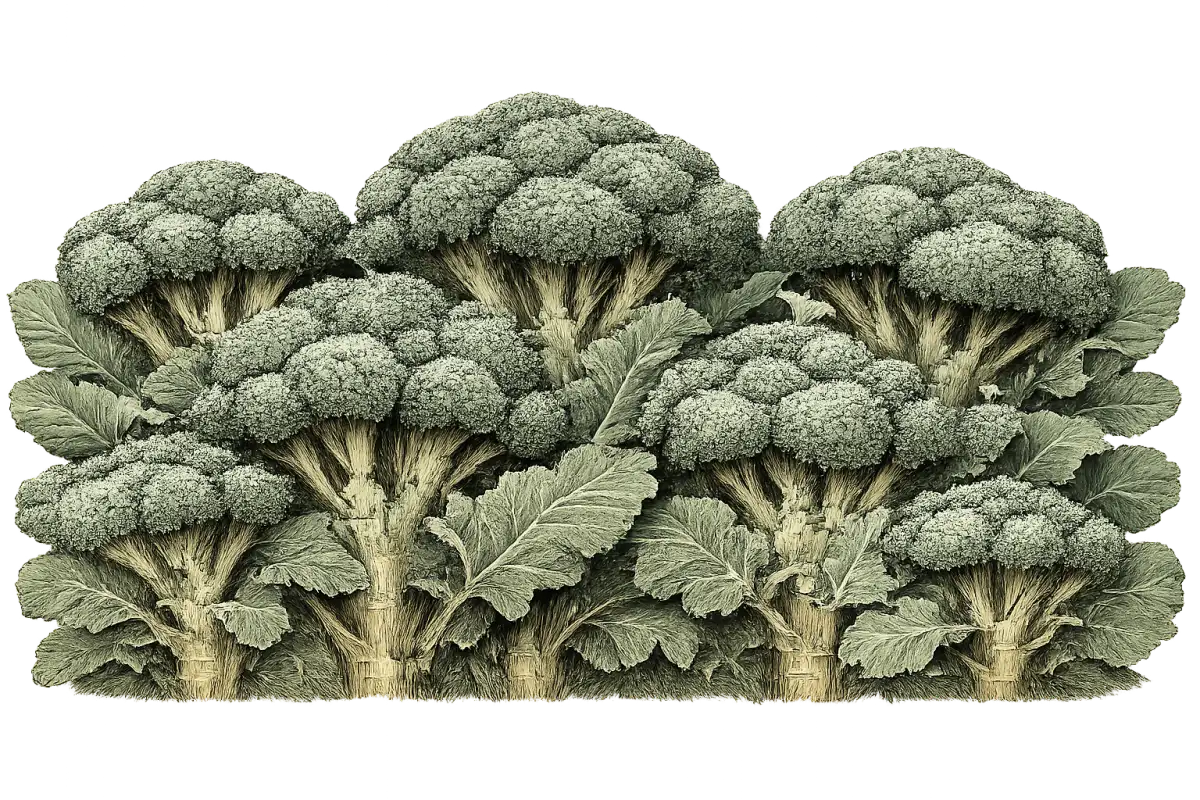
How to grow broccoli — vintage botanical illustration showing the plant in detail

Broccoli at a Glance

Sun

Sun

6-10 hours full sun

Soil pH

Soil pH

6.0-7.0

Water

Water

1-1

Spacing

Spacing

18 in-row, 24-30 between rows"

Days to harvest

Days to Harvest

55-65 days from transplant

Height

Height

18-24 inches

Soil type

Soil

Well-drained sandy loam to clay loam

Lifespan

Lifespan

annual

Get your personalized growing data

Enter your zip code for frost dates, growing season, and soil type.


Most home gardeners have experienced it. You plant broccoli in March, watch it grow all spring, and then — right when it looks like it's about to do something — it explodes into a bouquet of tiny yellow flowers and turns bitter. You did not grow broccoli. You grew a very expensive and disappointing ornamental.

Here is what nobody tells you upfront: broccoli is not a hard crop. It is a timing crop. The plant has one job — form a tight head of flower buds before conditions trigger reproduction — and your job is to make sure conditions cooperate long enough for that to happen. Miss the window by two weeks and you get flowers. Hit the window correctly and you get one of the most productive vegetables you can grow, one that keeps delivering side shoots for a month and a half after the main harvest. That is a huge yield from a single plant, and most gardeners walk away from most of it.

The other thing nobody explains clearly is that broccoli is not really a spring crop. Not for most of the country, anyway. Zones 6 through 10 — that is most American gardeners — grow better broccoli in fall than in spring, by a wide margin. Fall broccoli develops into cooling weather, which is exactly what it wants. Spring broccoli races against heat. When you understand that, you stop fighting the plant and start working with it. This guide is going to make sure you understand it.


Quick Answer: Broccoli Growing at a Glance

USDA Zones: 2 through 10 (cool-season crop; fall is superior in zones 6+)

Sun: 6 hours minimum, 8-10 hours preferred

Soil pH: 6.0-7.0 (target 6.5)

Water: 1-1.5 inches per week; consistency is critical

Temperature: 60-70°F ideal for head development; bolting begins above 80°F

Spacing: 18 inches in-row, 24-30 inches between rows

Days to Maturity: 48-90 days depending on variety (most heading types 55-65 days)

Crop Rotation: No brassicas in the same spot for 3-4 years minimum

Best Spring Varieties: Green Magic, Packman, Di Cicco

Best Fall Varieties: Waltham 29, Arcadia, Belstar

Yield: 1-2.5 lbs per plant (main head plus side shoots)


The Key Insight: You Are Racing a Clock, and the Clock Is the Thermometer

Here is the number one thing people get wrong about broccoli, and I want to spend real time on it because everything else flows from this.

Broccoli does not fail because of bad soil, wrong fertilizer, or pest pressure — though those things matter. It fails because the head tries to form when temperatures are too high, and the plant bolts instead. Bolting is not a disease. It is not bad luck. It is a biological response: the plant senses heat stress, decides its window of survival is closing, and converts its energy from building the vegetable head you want into building flowers and seeds. Once that switch flips, it cannot be unflipped. There is no product you can spray, no fertilizer you can apply, no trick you can use to turn a bolting plant back into a heading plant. You either harvest whatever is there immediately, or you lose it.

UMN Extension puts the critical thresholds plainly: head development stops entirely when daytime temperatures exceed 86°F and nighttime temperatures exceed 77°F. But the degradation starts earlier — head quality begins declining around 75°F, and active bolting risk kicks in above 80°F. That is not a wide operating window. In most of the country, spring temperatures cross from 75°F into 80°F and beyond within a matter of weeks. If your broccoli is not already forming a head when that happens, it is too late.

So how do you solve this? You work backward from temperature, not forward from a calendar. Here is how that calculation works: find your zone's historical date when daytime highs reliably exceed 80°F. Now subtract your variety's days-to-maturity. Now subtract 2 weeks for transplant establishment. That is your transplant date. If that date is in January, that is when you transplant. If it is in late February, that is when you transplant. Most gardeners wait until it "feels like spring" to put broccoli in the ground. By then they are already behind.

For fall crops, the calculation runs in reverse and is far more forgiving. You count back from your first expected frost date: days to maturity plus two weeks for establishment equals the minimum number of days before frost that you need to transplant. The beauty of fall is that temperatures are falling during head development — exactly what broccoli wants. There is no race. The plant relaxes into cooler and cooler weather, the buds tighten, and light frosts actually improve flavor by converting starches to sugars. Many experienced gardeners consider fall broccoli unambiguously superior in taste, yield, and ease. I am one of them.

There is a second, related failure mode worth understanding: buttoning. This is different from bolting and causes a lot of confusion. Bolting gives you a full-sized plant that erupts into flowers. Buttoning gives you a plant that forms a tiny head — sometimes just an inch or two across — and stops growing. The cause is cold stress, not heat. Specifically, Clemson Extension identifies 10 or more consecutive days at 35–50°F as the trigger. Young transplants hit by a prolonged cold snap think winter has come and gone and trigger a reproductive response before they have any business doing so. This is what happens when you rush spring transplants into the garden too early, or when you use transplants that are too old and large and have already been stressed.

The fix for bolting is timing and variety selection. The fix for buttoning is also timing — don't put plants out too early — plus using young, healthy transplants with 4–6 true leaves, no more. Both problems are almost entirely preventable. And both are almost always the result of the same underlying mistake: not respecting what the thermometer says.

What zone are you in?

Enter your zip code for frost dates, growing season, and soil type.

What zone are you in?

Enter your zip code for frost dates, growing season, and soil type.


Varieties by Zone

There are five distinct types of broccoli, and they behave quite differently in the garden. Heading broccoli — the classic grocery-store type — is what most people grow, and it is the best choice for home gardens: one large central head followed by 4–6 weeks of side shoot production. Sprouting broccoli skips the central head entirely and instead produces dozens of small florets over a long season, but it requires vernalization (6–8 weeks at or below 50°F) and a 150–220-day growing window — a serious commitment for zones that can pull it off (7–9 for outdoor overwintering). Broccolini is a hybrid of heading broccoli and Chinese broccoli, faster and more bolt-prone, with edible stalks. Broccoli rabe is not truly broccoli at all — it is a turnip relative grown for its bitter buds and leaves. Romanesco is closer to cauliflower, with dramatic fractal heads and even more temperature sensitivity than standard types; it belongs in experienced hands in consistently cool climates.

For most readers, heading broccoli is your answer. Here is how to pick the right variety for your zone. [callout]

What zone are you in?

Enter your zip code for frost dates, growing season, and soil type.

Zones 3–4: Short Season, Maximize Both Windows

Spring is viable but tight — the season goes from late spring to a brief warm summer and falls cool fast. Fall has a narrow window too, but both seasons are workable with the right varieties.

Spring: Packman (50 days) is the right call here — one of the earliest reliable heading varieties with simultaneous main-head maturity across a planting. Di Cicco (48–65 days, variable) is the fastest option if you can find seed, and it produces side shoots long after everything else has quit.

Fall: Waltham 29 (74 days) is the cold-weather standard — dense, blue-green heads with excellent cold tolerance and a long side-shoot season. This is an open-pollinated heirloom, so you can save seed. Start seeds indoors in early to mid-June, transplant in late July to early August, harvest September–October.

Top picks: Packman (spring), Waltham 29 (fall)

Zone 5: The Dual-Season Sweet Spot

Zone 5 is probably the most versatile broccoli zone. Spring works well with quick varieties; fall is excellent and extends into November. You can run both seasons if you want.

Spring: Green Comet (55 days) is an All-America Selections winner — large, tight, dark-green heads with good heat tolerance. USU Extension recommends it specifically for this zone.

Fall: Arcadia (63–68 days) is one of the best fall performers in this zone — uniform small-beaded, purplish-green heads with strong cold tolerance. Belstar (65 days) is the other top choice: beautiful blue-green tight heads with good performance in both spring and fall.

Top picks: Green Comet (spring), Arcadia or Belstar (fall)

Zone 6: Fall Is Better, But Spring Is Doable

A good zone for broccoli, but spring requires heat-tolerant varieties and discipline about timing. Fall is reliably excellent.

Spring: Green Magic (57 days) is Clemson Extension's top pick for spring — heavy, uniform domed heads with very good heat tolerance and abundant side shoots. You want this variety for spring in zone 6. Gypsy (58 days) is a solid backup with good side shoot production.

Fall: Belstar and Arcadia both shine here. Light frosts in October and November sweeten the heads. Waltham 29 works here too for gardeners who want an open-pollinated option.

Top picks: Green Magic (spring), Belstar (fall)

Zone 7: Fall or Nothing (For Most Gardeners)

Spring in zone 7 is possible but genuinely difficult. Heat arrives fast, the window is narrow, and you need everything to go right. Fall is long, cool, and excellent — harvests run November into December in most of this zone.

Spring: Heat-tolerant varieties are not optional here. Green Magic and Di Cicco are the best choices. Get transplants in the ground in March and accept that you are running against the clock.

Fall: This is your season. Arcadia (63–68 days), Waltham 29 (74 days), and Marathon (68 days) all perform well. Start seeds in July; transplant late August to mid-September; harvest November into December.

Top picks: Green Magic (spring), Arcadia or Marathon (fall)

Zones 8–10: Broccoli Is a Winter Vegetable Here

This is the re-framing that changes everything for southern and warm-coastal gardeners. Stop trying to grow broccoli in spring. You are growing it in winter. Transplant after the summer heat breaks — daytime highs need to be below 85°F before you put transplants in the ground — and plan for a December–March harvest.

The varieties: Imperial (65–70 days) is the go-to for these zones — widely cited as one of the most heat-tolerant heading varieties, with dense dark blue-green heads and a preference for warmer conditions that makes it ideal for this season's shoulder periods. Sun King (55–60 days) is the other standout: large 6–8-inch heads on compact plants with abundant side shoots, even suitable for container growing.

Zones 9–10 only: Transplant September–November; harvest December–March. No spring broccoli in zone 9. In zone 10, even winter-season broccoli is a stretch and best suited to the coolest microclimates.

Top picks: Imperial, Sun King


Quick Reference Table

ZoneBest SeasonTransplant WindowTop VarietyDays to Harvest
3–4Spring & FallSpring: late Apr–mid-May / Fall: late Jul–early AugPackman (Sp) / Waltham 29 (Fa)50–74 days
5Both (Fall preferred)Spring: early–mid Apr / Fall: early–mid AugGreen Comet (Sp) / Arcadia (Fa)55–68 days
6Both (Fall preferred)Spring: late Mar–mid Apr / Fall: mid Aug–early SepGreen Magic (Sp) / Belstar (Fa)57–65 days
7Fall strongly preferredSpring: mid Mar–early Apr / Fall: late Aug–mid SepGreen Magic (Sp) / Marathon (Fa)57–68 days
8Fall/Winter onlySpring: late Jan–early Mar / Fall: Sep–mid OctImperial / Sun King55–70 days
9–10Winter onlyNov–Feb (once below 85°F daytime)Imperial / Sun King55–70 days

Planting Guide

Starting Seeds Indoors

Start seeds 6–8 weeks before your planned transplant date for spring crops. For fall crops, that means starting seeds in June or July — which feels counterintuitive but is correct. Use sterile seed-starting mix (never garden soil) in 1.5–2-inch cell trays. Sow 2–3 seeds per cell at 1/4–1/2 inch depth. Germination temperature is 65–75°F, with 70°F ideal; seeds typically emerge in 5–7 days. A heat mat helps if your house runs cool.

The step most beginners skip: immediately after germination, drop the temperature to 60–65°F. This is what produces the short, stocky transplants that actually thrive in the garden. Skip this step and you get tall, leggy seedlings that perform poorly from the start. The other critical factor is light — 12–16 hours per day with grow lights positioned 2–3 inches above the seedlings. Without enough light, broccoli seedlings stretch no matter what temperature you provide.

Thin to one seedling per cell when true leaves appear — cut, don't pull, to avoid disturbing the survivor's roots. Begin feeding with half-strength balanced liquid fertilizer weekly after the first true leaves develop. Increase to twice weekly after two sets of true leaves (UMN Extension).

Transplant Readiness and Hardening Off

Transplants are ready when they have 4–6 true leaves, are stocky, wider than they are tall, and have roots that fill but don't bind the cell. UC IPM is specific: "young plants with 4–6 true leaves, wider than tall, stocky, succulent." If your transplants have more than 6 leaves, circling roots, or a tall leggy profile, you've waited too long.

Hardening off is not optional. Moving indoor seedlings directly to the garden causes transplant shock that can set plants back weeks or trigger bolting. The schedule: Days 1–2 in sheltered shade for 2–3 hours; Days 3–4 with 4–5 hours and some morning sun; Days 5–6 for 6–8 hours; Days 7–8 for a full day outdoors; Days 9–10 overnight if temperatures stay above 25°F. Ten days total. Do not rush it.

Transplanting Into the Garden

Water seedlings 1–2 hours before transplanting. Set transplants slightly deeper than they grew in the cell — bury the stem to the first set of leaves, the same way you'd plant tomatoes. Firm soil around the roots and water immediately with a starter fertilizer solution (high-phosphorus; something like 10-52-10 works well). Transplant in the late afternoon or on a cloudy day to reduce heat stress at the moment of planting. Water daily for the first week until plants are established.

Spacing and Site

Give plants 18 inches in-row and 24–30 inches between rows. Closer spacing reduces head size, cuts side shoot potential, and invites disease by limiting air circulation. In raised beds, 15–18 inches equidistant grid spacing works well. Broccoli needs minimum 6 hours of direct sun per day; 8–10 hours is preferred (UMD Extension). In zones 8 and warmer, afternoon shade from a fence or structure to the west/southwest is actually beneficial — it reduces heat stress during the hottest part of the day without sacrificing morning sun.

Soil prep: target pH 6.0–7.0 (test first; never lime blindly). Work in 2–4 inches of compost. Incorporate a pre-plant balanced granular fertilizer — Clemson Extension recommends 10-10-10 at 2.5 lbs per 100 square feet, or UC IPM's approach of 5-10-5 at 1–2 lbs per 100 feet of row. If your soil already has adequate phosphorus (test to find out), skip additional phosphorus entirely.

Crop Rotation

Never plant any brassica where another brassica grew within the last 3–4 years minimum. UMN Extension recommends 4 years. If clubroot has been present, extend that to 6–7 years. This family includes broccoli, cabbage, cauliflower, Brussels sprouts, kale, kohlrabi, turnips, radishes, and mustard greens. Follow broccoli with legumes, corn, squash, or alliums.


Watering

UMN Extension states this without hedging: "The plants must not experience water stress." I'll say it just as plainly: inconsistent watering is one of the top causes of small, bitter, loose-headed broccoli. It also combines with heat to trigger bolting — drought stress plus high temperatures is nearly a guarantee of premature flowering.

The target is 1–1.5 inches of water per week (rainfall plus irrigation combined), increasing to 1–2 inches in sandy soils or hot weather. The delivery method matters: deep and infrequent soakings — once or twice a week — are far better than frequent light sprinklings that only wet the top inch. Keep soil moist to 6 inches depth but never waterlogged.

Drip irrigation is the ideal solution. It delivers water directly to the root zone, keeps foliage dry (reducing Alternaria leaf spot and downy mildew), and can be automated to eliminate the problem entirely. Soaker hoses accomplish the same thing at lower cost. If you use overhead irrigation, water in the morning so foliage dries before evening. Wet foliage overnight dramatically increases fungal disease risk.

Pay attention to timing within the season. During the first two weeks after transplanting, water daily or every other day until plants establish. During vegetative growth, maintain the 1–1.5 inch weekly schedule. During head development — the critical period — do not let plants stress for a single day. Water stress at this stage produces small, bitter, loose-budded heads. After the main head harvest, continue consistent watering to support side shoot production.

Apply 2–3 inches of straw, shredded leaves, or untreated grass clippings as mulch after transplants establish. Keep mulch 2 inches away from stems to prevent rot. Mulch is the moisture partner that makes consistent watering achievable — it reduces evaporation dramatically, keeps the root zone cooler (directly reducing bolting risk), buffers temperature swings, suppresses weeds, and reduces soil splash that transmits disease.


Feeding

Broccoli is a heavy feeder. That means it needs more total nitrogen than most vegetables — comparable to corn. What it does not mean is that you should dump a large amount of nitrogen at once. Excessive nitrogen causes hollow stems (rapid soft growth outpaces calcium transport), loose open heads instead of tight compact ones, delayed maturity, and disease-susceptible soft tissue. The approach is split applications of moderate, consistent fertility across the season.

Pre-plant: Incorporate compost or well-rotted manure. Apply a balanced granular fertilizer at planting — 10-10-10 at 2.5 lbs per 100 square feet (Clemson Extension) or 5-10-5 at 1–2 lbs per 100 feet of row (UC IPM).

At transplanting: A water-soluble starter fertilizer with high phosphorus (10-52-10 or similar) applied in the transplant hole supports root establishment. You can also mix 1 tablespoon of 10-10-10 into each planting hole.

First side-dressing (3–4 weeks after transplanting): This is the most important feeding event. Clemson Extension's preferred approach is calcium nitrate (15.5-0-0) at 2 lbs per 100 feet of row — elegant because it addresses both nitrogen demand and calcium need simultaneously. Band it 4–6 inches from plant stems and water in immediately. Alternatives include ammonium nitrate at 1 lb per 100 feet, or ammonium sulfate at 0.5 cup per 10 feet of row (USU Extension).

Second side-dressing (when head begins to form, quarter-sized): Same rate as the first. This fuels rapid final head expansion. Skipping this application produces undersized heads.

After main head harvest: A third nitrogen side-dressing immediately after cutting the main head fuels side shoot production. Without it, side shoots are small and production tapers quickly.

Organic approach: Pre-plant with composted manure. Side-dress every 3–4 weeks with blood meal (2 lbs per 100 feet for fast-release nitrogen), alfalfa meal (3 lbs per 100 feet), or composted poultry manure (3–4 lbs per 100 feet). Fish emulsion (5-1-1) diluted per label and applied weekly provides supplemental nitrogen.

Two micronutrients deserve specific attention. Calcium deficiency causes hollow stem and tip burn — address it with calcium nitrate side-dressings, and if your pH is already correct but calcium is still needed, use gypsum (calcium sulfate), which supplies calcium without raising pH. Boron deficiency — common in sandy, leached soils — produces brown spots on heads, hollow stems with dark brown interior, and brittle stems. If a soil test confirms deficiency, apply borax at 1 tablespoon per 100 square feet incorporated into soil before planting. The margin between deficiency and toxicity is narrow; test before you apply and never exceed the recommended rate.


Pest Management and Row Covers

Broccoli has one dominant pest group: the cabbageworm complex. Imported cabbageworm, cabbage looper, and diamondback moth caterpillars will find your plants. The familiar white butterfly you see fluttering around the garden is laying 200–300 eggs over its lifetime, specifically targeting brassica leaves. Caterpillar frass embeds in broccoli heads and is nearly impossible to fully remove. Heavy infestations defoliate plants and destroy heads.

The solution is simple and definitive: install a floating row cover or insect netting immediately after transplanting. Broccoli does not need insect pollination — we harvest the flower buds before they open — so covers can stay on from transplant through harvest. Hoop-supported tunnels are better than fabric draped directly on plants: less abrasion, better air circulation, easier to lift for inspection. Seal all edges completely; any gap is an invitation.

The difference between covered and uncovered broccoli is dramatic. Covered plants have virtually zero caterpillar damage, no frass in heads, and faster growth overall. The presoak in salt water before eating — that step you see in recipes — exists specifically because people didn't use row covers and need to drive out hidden worms. Use covers and skip the presoak.

If you choose not to use covers, the organic-approved alternative is Bt (Bacillus thuringiensis var. kurstaki) — a caterpillar-specific spray that does not harm beneficial insects. Apply every 7–10 days and after rain. It works but requires ongoing attention; the row cover solves the problem once.


Common Mistakes (Ranked by Severity)

1. Wrong Timing

This is the reason the majority of home broccoli fails. Planting too late in spring so the head forms during summer heat. Not adjusting for zone — following northern calendar dates in zone 7 or 8. Choosing a 75-day variety for spring in zone 6, where heat arrives before it can mature. Work backward from temperature thresholds, not forward from a calendar date. If your transplant-date math puts the harvest in July in zone 7, your approach is wrong.

2. Not Using Row Covers

The white butterfly in your garden is the enemy. A floating row cover installed immediately at transplanting eliminates the cabbageworm problem entirely. Most gardeners who skip this step spend the season hand-picking, spraying Bt, and finding worms in their harvested heads. Install the cover on transplant day. Done.

3. Missing the Side Shoots

You harvested the main head and pulled the plant. You just left 30–50% of your total yield in the ground. After the main head is cut, most heading varieties produce side shoots for 4–6 weeks. Cut the main head with a 5–6-inch stalk to preserve bud sites, side-dress with nitrogen immediately, keep watering, and harvest side shoots every 2–3 days when they reach 2–4 inches. Di Cicco and Packman growers who skip this miss their best weeks.

4. Root-Bound Transplants

Starting seeds on time but leaving transplants in small cells until they are 8+ weeks old, root-bound, and leggy. Root stress is a direct bolting trigger. Transplant at 4–6 true leaves. If the garden isn't ready, up-pot rather than letting roots circle. If transplants are already root-bound, gently tease apart the circling roots before planting — do not let them continue circling underground.

5. Leggy Seedlings From Indoor Starting

Starting seeds at room temperature (70–75°F) and not providing enough light. The fix is two steps: drop to 60–65°F immediately after germination, and provide 12–16 hours of grow light at 2–3 inches above the seedlings. Without both adjustments, you get tall, weak transplants before you've started.

6. Skipping Hardening Off

Moving indoor seedlings directly to the garden. Sunscald, windburn, and transplant shock follow, stressing plants and increasing bolting risk. Ten days of gradual transition. Non-negotiable.

7. Inconsistent Watering

Watering when convenient rather than consistently. Produces small, bitter heads; loose head structure; and directly contributes to bolting when combined with heat. One or two deep soakings per week. Mulch. Drip irrigation if you can swing it.

8. Ignoring Zone 7–10 Realities

Following northern spring-planting calendars in warm-climate zones. In zones 7–8, spring heats up too fast for reliable heading. In zones 9–10, spring broccoli is essentially impossible. These zones grow broccoli as a fall/winter crop. Adjust.

9. Too Much Nitrogen at Once

The "heavy feeder" label does not mean dump nitrogen. It means broccoli needs more total nitrogen than many vegetables — delivered across multiple split applications. One large nitrogen application causes hollow stems, loose heads, and delayed maturity. Calcium nitrate in split side-dressings is the approach Clemson Extension specifies, and it works.

10. Waiting Too Long to Harvest

Wanting the head to get just a little bigger. Broccoli development accelerates near maturity. A head that looked fine on Monday can be fully bolted by Wednesday in warm weather. Check heads daily once plants near their days-to-maturity date. Cut on bud tightness and color uniformity, not maximum size.

What zone are you in?

Enter your zip code for frost dates, growing season, and soil type.

What zone are you in?

Enter your zip code for frost dates, growing season, and soil type.


Harvesting

Reading the Main Head

The one non-negotiable rule: cut before any yellow appears. Once flower buds begin opening and showing yellow, the head turns bitter, the plant redirects energy to seed production, and you have lost your window. There is no recovery. Harvest immediately at the first sign of yellow anywhere on the head.

The correct harvest trigger is bud tightness, not size. Signs a head is ready: 4–8 inches in diameter (variety-dependent — some heading types produce up to 12-inch heads per USU Extension); individual flower buds firm, tightly closed, and uniform in size; color deep and uniform green or purplish-green across the entire surface; head feels dense and solid when gently squeezed. Harvest immediately if buds begin separating or elongating, the head feels soft or spongy, or outer buds are noticeably larger than inner buds.

Spring crops often mature faster because warmth accelerates development. Fall crops take longer but typically produce larger, denser heads. Check heads daily once plants approach their days-to-maturity date.

How to Cut

Use a sharp, clean knife — not scissors. A clean cut prevents disease entry. Cut the stalk 5–6 inches below the head. That length is not arbitrary: it preserves the side-shoot bud sites along the remaining stalk. Cut too close to the head and you eliminate those buds. Cut at a slight angle so water runs off the cut surface rather than pooling and causing rot. Harvest in the morning for maximum quality — broccoli retains the most moisture and crispness early in the day.

Leave the rest of the plant in the ground. The lower leaves, stalk, and root system remain intact. The plant has weeks of production left.

Side Shoots: The Extended Harvest

After the main head is cut, lateral buds at the leaf axils begin growing into smaller secondary heads. First side shoots appear 1–2 weeks after main harvest. They develop into mini heads 1–4 inches in diameter, and production continues for 4–6 weeks. Fall crops in ideal cool conditions can run longer. The cut-and-come-again dynamic is real: regular harvesting stimulates more production.

Maximize side shoot output by cutting the main head with the full 5–6-inch stalk (preserves bud sites), fertilizing with nitrogen immediately after the main cut, and continuing consistent watering. Harvest side shoots when they reach 2–4 inches and are still tight — every 2–3 days. Apply the same before-yellow rule. Side-shoot production varies significantly by variety: Di Cicco is the best producer, followed closely by Packman. Arcadia and Premium Crop are more moderate.

Yield and Storage

Per plant, expect 0.5–1.5 lbs from the main head and another 0.5–1.0 lbs from side shoots over 4–6 weeks — total of 1–2.5 lbs per plant. USU Extension puts row yield at 7–10 lbs per 10 feet. For fresh use only, plan 3–5 plants per person; for preservation, 5–10 plants per person.

Refrigerate unwashed heads in a perforated plastic bag. Storage at 32°F with 95% humidity gives 1–2 weeks (USU Extension); typical refrigerator temperatures (38–40°F) give 7–10 days. Do not store near ethylene-producing fruits — apples and bananas accelerate yellowing.

For freezing: soak heads in salt water (1 tablespoon per quart) for 30 minutes to drive out any hidden caterpillars. Cut into uniform florets. Blanch in boiling water — 3 minutes for small, 4 for medium, 5 for large. Plunge immediately into ice water for the same duration. Drain, pack in freezer bags with maximum air removed, and freeze at 0°F or below. Keeps 12+ months.


Companion Planting

Broccoli is one of the crops where companion planting has genuine, observable utility — not just gardening folklore. The cabbageworm complex responds to the presence of certain companion plants, and some companions actively recruit beneficial insects that prey on broccoli pests.

Plant these near broccoli:

Dill, cilantro, parsley are the most effective companions for broccoli because they attract parasitic wasps and tachinid flies — natural predators of the cabbage worm complex. If you grow broccoli without row covers, these companions should be planted nearby from the start. Let some go to flower; that is when they do their pest-control work.

Sweet alyssum is worth its own mention. It attracts hoverflies and parasitic wasps, serves as low-growing living mulch, and produces dense mats that crowd out weeds. Plant it around the perimeter of your broccoli bed and let it ramble.

Nasturtiums function as a trap crop — aphids preferentially colonize nasturtiums over broccoli, drawing pests away from your crop. They are also edible and striking, so this companion does double duty.

Thyme, rosemary, and sage are planted near broccoli on the theory that their strong scents confuse cabbage moths seeking brassica host plants. The evidence is anecdotal but the practice is widely used and costs nothing.

Beets, carrots, and lettuce make good space-sharing neighbors with different root depths, allowing intensive planting without significant competition.

Avoid these near broccoli:

Tomatoes and peppers compete for nutrients and may inhibit broccoli growth. Keep them on the other side of the garden.

Other brassicas in the same bed — cabbage, cauliflower, kale, kohlrabi — concentrate pest and disease pressure. If flea beetles or cabbage worms find one plant, every plant in the bed is exposed. Spread brassicas across the garden rather than grouping them.

Pole beans can shade and potentially inhibit broccoli growth. Keep them separated.

The row cover plus companion-planting combination is the most effective organic pest management strategy for broccoli. Use the cover as your primary defense and plant beneficial companions in the surrounding area.


FAQ

Q: My broccoli is making yellow flowers instead of a head. What happened?

Your broccoli bolted. This is almost always a timing problem — the head tried to form when temperatures were already too high, or the plant was stressed (drought, transplant shock, root binding) and switched to reproductive mode. Once bolting starts, it cannot be reversed. Harvest immediately whatever is there — even partially bolted heads with still-tight sections are edible. The flowers themselves are edible and have a mild broccoli flavor. Leave the plant for side shoots. For next season: work backward from temperature thresholds when calculating your transplant date, choose a variety with the right days-to-maturity for your zone, and use heat-tolerant varieties (Green Magic, Imperial) for spring in zones 6 and warmer.

Q: My broccoli made a tiny, golf-ball-sized head and stopped. Why?

That is buttoning, and it is different from bolting. The cause is cold stress — specifically, 10 or more consecutive days at 35–50°F (Clemson Extension) telling the plant that winter has passed and it should reproduce immediately, even though it is far too small. It can also be caused by root-bound transplants, transplant shock, or drought during early establishment. The fix for next season is to use young, properly-hardened transplants with 4–6 true leaves (not overgrown), avoid putting transplants out during extended cold snaps, and ensure soil is at least 40°F at transplant time.

Q: Is fall or spring better for broccoli?

Fall is better for most American gardeners — specifically anyone in zones 6–10. In fall, temperatures drop during head development, which is exactly what broccoli wants. Heads are tighter, flavor is better (light frosts increase sweetness), pest pressure is lower overall, and there is no race against summer heat. Spring broccoli races against rising temperatures, requires more precise timing, and produces heads that are more susceptible to looseness and bitterness. The exception is zones 3–5, where spring and fall are roughly equal and summer temperatures stay cool enough for a comfortable harvest window. If you are in zone 7 or warmer and your spring broccoli has been frustrating, switch to fall. You will grow better broccoli with less effort.

Q: Do I have to start seeds indoors, or can I direct-sow?

For spring crops in most zones, indoor starting gives you better control and earlier production. For fall crops, direct seeding outdoors in mid-summer works well — the soil is warm, germination is fast, and you skip the indoor-starting setup entirely. Broccoli rabe direct-seeds particularly well and resists transplanting. For fall heading broccoli in zones 5–7, you can start seeds indoors in June–July or sow directly outside in the same window. If you direct-sow, thin to 18 inches in-row when seedlings have 2–3 true leaves.

Q: What causes hollow stems in broccoli?

Two distinct issues produce hollow stems, and Clemson Extension distinguishes between them. Cultural hollow stem (stems hollow but with clean, white interior) is caused by excessive nitrogen, warm temperatures, excessive water, or low pH — essentially anything that drives rapid, soft growth faster than the plant's structural development can keep pace. The fix is split fertilizer applications, consistent (not excessive) watering, and maintaining pH above 6.0. Boron-deficiency hollow stem looks different: the hollow interior is dark brown and decaying, not clean white. This requires a soil test to confirm and careful application of borax (1 tablespoon per 100 square feet) pre-plant. The boron margin between deficiency and toxicity is narrow — test before you apply.

Q: How do I get more side shoots after the main harvest?

Three things determine side shoot production. First, cut the main head with a 5–6-inch stalk — that length preserves the bud sites along the stalk where side shoots emerge. Cut too short and you eliminate those sites. Second, immediately side-dress with nitrogen (calcium nitrate is ideal) right after the main harvest cut — without this feeding, side shoots are small and production tapers fast. Third, keep watering consistently. A dry plant does not produce side shoots. Beyond technique, variety matters: Di Cicco and Packman are the best side-shoot producers. Arcadia and Premium Crop are more moderate. If extended side-shoot harvest is a priority for you, choose Di Cicco — it keeps producing long after heat arrives in spring and well into fall.


Bottom Line

Broccoli is not a difficult crop — it is a specific one. Get the timing right and you have one of the most productive and versatile vegetables in the garden: a main head worth eating, four to six weeks of side shoot harvests, and the satisfaction of having figured out a crop that defeats most beginners. Get the timing wrong and you get yellow flowers and a bitter plant.

The two things that matter most: plant at the right time for your zone (which means thinking in temperature thresholds, not calendar months), and use a variety that matches your season. After that, consistent water, a row cover installed on transplant day, and a willingness to harvest promptly when heads are ready — that is the whole game. Broccoli rewards the gardener who pays attention. Check the heads daily as they approach maturity. Do not wait for bigger. Bigger is often yellow by the time you get there.

Fall is probably better than you think. Give it a try. You might stop growing spring broccoli entirely.


All facts and growing information in this article are drawn from the following sources: Clemson Cooperative Extension; University of Minnesota (UMN) Extension; University of California Integrated Pest Management (UC IPM); Utah State University (USU) Extension; University of Maryland (UMD) Extension.

Where Broccoli Grows Best

Broccoli thrives in USDA Zones 4, 5, 6, 7. Explore each zone's complete guide for growing tips, companion plants, and seasonal advice.

Also possible in: Zone 3, Zone 8 (challenging but possible with the right conditions).

Not sure of your zone? Look it up by zip code →