Vegetables

Why Your Beets Are Failing (And How to Finally Grow Them Right)

James Calloway

James Calloway

Vegetable & Edibles Specialist · Updated April 2026

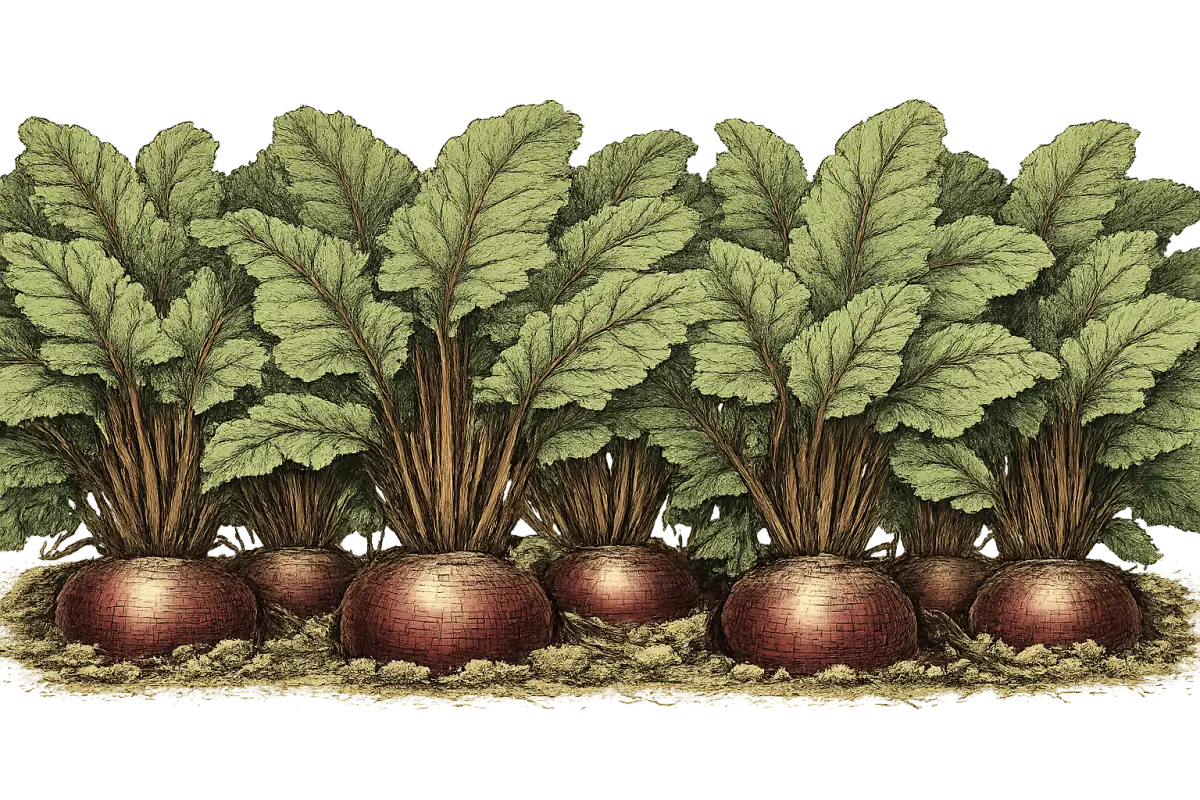
How to grow beets — vintage botanical illustration showing the plant in detail

Beets at a Glance

Sun

Sun

6+ hours direct sunlight

Soil pH

Soil pH

6.0-7.0

Water

Water

1 inch per week, consistent and even

Spacing

Spacing

3-4 inches between plants, 12-18 inches between rows"

Days to harvest

Days to Harvest

48-65 days

Height

Height

12-18 inches

Soil type

Soil

Sandy loam

Lifespan

Lifespan

annual

Get your personalized growing data

Enter your zip code for frost dates, growing season, and soil type.


Most people who tell me they "can't grow beets" are actually growing beets just fine. The greens look healthy. The plants are a normal size. Everything above ground looks exactly the way it should. Then they dig up what they think is a mature crop and find a tangle of marble-sized, usable-for-absolutely-nothing roots. They blame the variety, blame the soil, blame the weather. They never try again.

The real culprit is something that no seed packet bothers to explain clearly: a beet "seed" isn't a seed. It's a dried fruit cluster containing two to five individual seeds fused together into one lumpy little pellet. Every single spot you plant produces multiple seedlings. Every single one. And if you don't thin them aggressively — and most first-time growers don't, because nobody told them they had to — those seedlings fight each other for space and nutrients until none of them can produce a usable root. You end up with beet greens growing on top of what amounts to nothing. That's not bad luck. That's biology.

The other failure mode, almost as common, is getting the timing wrong. Beets are a cool-season crop that gardeners routinely plant too early, either triggering a cold-snap bolting event that turns roots woody and inedible, or harvesting too late after summer heat has done the same damage. Beets have a narrow window of peak quality and a specific list of requirements. Once you understand those requirements, they become one of the most productive and rewarding crops in the garden — a dual-harvest vegetable that delivers salad greens for weeks before yielding sweet, tender roots. This guide tells you exactly what you need to know.


Quick Answer: Beets Growing at a Glance

USDA Zones: 2 through 10 (cool-season crop, proper timing required for each zone)

Sun: 6+ hours direct sun minimum; afternoon shade beneficial in zones 8-10

Soil pH: 6.0-7.0 (ideal 6.5-6.8); unusually pH-sensitive compared to other vegetables

Sowing depth: 1/2 inch deep, 1-2 inches apart; direct sow only -- do not transplant

Thinning: Mandatory at 2-inch height (to 2 inches apart), then again at 4-5 inches (to 3-4 inches)

Water: 1 inch per week, consistent; inconsistency causes woody roots

Temperature: 60-75°F optimal; light frost improves sweetness

Days to Maturity: 48-60 days depending on variety

Harvest Size: 1.5-2 inches diameter for peak quality; above 3 inches, quality declines

Storage: 3-5 months in cold storage at 32°F


Key Insight: The Thinning Problem Nobody Talks About

Let me say this plainly, because it deserves more than a footnote: not thinning is the single biggest reason beets fail in home gardens. Not pH. Not pests. Not watering. Thinning — or the lack of it.

Here is the biology. What you buy in a seed packet and call a "beet seed" is technically a dried fruit cluster, or utricle. Inside that little wrinkled pellet are two to five individual true seeds fused together. There is no way to separate them without damaging them. So every single spot you press a seed into the ground will produce multiple seedlings. This is unique among common garden vegetables. Carrots don't do this. Beans don't do this. Beets do.

Now imagine what happens in an unthinned beet row. You have a seedling every inch or two. But at each spot there are actually three or four seedlings. That means you've got roots trying to develop every half-inch or less along the row. Beet roots are round. They need room to expand. In tight quarters, they push against each other and simply stop growing. The plants look fine from above because the foliage doesn't know anything is wrong. Underground, you have a bed full of small, knotted, essentially useless roots. Gardeners pull them at the end of the season and conclude that beets just don't work in their garden. They're wrong.

The fix is a two-stage thinning process. First thinning happens when seedlings hit 2 inches tall: thin to 2 inches apart. Second thinning happens when seedlings reach 4–5 inches: thin to 3–4 inches apart. That final 3–4 inch spacing is what allows roots to reach their full mature size of 1.5–3 inches in diameter. Use scissors or snip with your fingers at soil level. Never pull — pulling disturbs the roots of the seedlings you're keeping. And don't throw the thinnings away. Young beet greens are a legitimate gourmet salad ingredient. Thinning is a harvest.

If thinning is genuinely something you won't do consistently, the solution is easy: seek out monogerm varieties like Moneta or Solo. These are bred to produce a single seedling per seed, nearly eliminating the thinning requirement. They're less commonly available at garden centers, but a quick search of seed catalog suppliers turns them up. For gardeners who have failed with beets repeatedly, monogerm varieties are worth tracking down before writing off the crop entirely.

The secondary insight: beets also punish anyone who harvests too late. Bigger is not better. Roots above 3 inches in diameter routinely go woody, fibrous, and aggressively earthy in flavor. The sweet spot is 1.5 to 2 inches in diameter, which is genuinely not that large. Most gardeners leave them too long because they assume a bigger root means a better harvest. It does not. Harvest on time. When in doubt, harvest early. A slightly small beet is always better than a tough one.


Varieties by Zone

Beets are one of the most zone-flexible vegetables available. They grow successfully in zones 2 through 10. The key variable is not which variety will survive your zone — virtually all of them will — but when you plant and which variety best matches your seasonal window and what you plan to do with the harvest.

What zone are you in?

Enter your zip code for frost dates, growing season, and soil type.

What zone are you in?

Enter your zip code for frost dates, growing season, and soil type.

Here is a breakdown of the major varieties and how they map to different climates.

Detroit Dark Red is the universal benchmark. It is an All-America Selection winner for a reason: small, uniform, globular, deep red flesh throughout, 55–60 days to maturity. It pickles well, cans well, stores well (3–5 months in a root cellar), and it tastes good. Every other variety is measured against it. If you are growing beets for the first time and want one variety that works everywhere, this is it.

Early Wonder matures in 48–50 days, making it the fastest common variety by a meaningful margin. Semi-flat globe shape. Solid dual-purpose variety for both roots and greens. This is the go-to choice for zones 3–4 where the window between "soil warm enough" and "summer heat arrives" is uncomfortably short. It is also the best option for succession planting and for growers who prioritize greens production.

Chioggia is the Italian heirloom with candy-striped flesh — alternating red and white concentric rings. It is genuinely beautiful, especially raw in salads, and the flavor is sweet and tender. It matures in 50–55 days. One important caveat: cook it the right way. Baking retains the ring pattern. Boiling causes bleeding and the rings fade. Also, extreme heat mutes the contrast. In zones 7–8, this variety performs better in fall than spring.

Golden Beet (Burpee's Golden, Touchstone Gold) is the gateway variety. Bright yellow-orange flesh, mild and buttery, substantially less earthy than red beets. It does not bleed when cut or cooked — a major practical advantage for salads and mixed dishes. The greens are mild and excellent. Maturity is 55–60 days. The one catch: golden beets have noticeably lower germination rates than red varieties. Sow 20–30% more seed than you think you need. Be patient — they can take up to 17 days to emerge.

Cylindra (also called Formanova) is the canning specialist. Long cylindrical shape, 6–8 inches, about 1.5–2 inches in diameter. Every single slice is the same size. If you're pickling or canning, uniform slices matter and this variety delivers them. Sweet flavor, smooth texture, 55–60 days. It grows more outward than deep, so it works in shallower soils than you'd expect.

Bull's Blood is grown primarily for foliage — deep burgundy-red leaves that are beautiful both in the garden and on the plate. It is the best choice if greens are your primary goal. The roots are edible but secondary. It doubles as an ornamental edible in garden borders.

White varieties like Avalanche and Albino have the mildest flavor of any beets, no staining whatsoever, and are genuinely the best option for reluctant beet eaters and children. Less commonly available but worth finding.

Zone 3–4: Early Wonder is the safest bet at 48–50 days. Detroit Dark Red works if you plant on time. Golden beets are a risk here due to slower germination eating into the short window. Use row covers to extend both ends of the season.

Zones 5–6: The sweet spot for beets. All varieties perform well. Both spring and fall crops succeed. Experiment freely with Chioggia and Golden. Fall crops are typically sweeter than spring crops because cooling temperatures concentrate sugars.

Zones 7–8: Spring crops must mature before sustained heat above 80°F arrives. That means heat-tolerant varieties (Detroit Dark Red, Early Wonder) planted early. Fall planting is often more successful in these zones. Chioggia ring patterns can fade in heat.

Zones 9–10: Beets are a winter crop here. Plant October through February and harvest during the cool months. Avoid summer entirely. All varieties work during the mild winter window. Light frost improves sweetness.


Quick Reference Table

VarietyDays to MaturityBest UseZone NotesGerminationStorage
Detroit Dark Red55–60 daysAll-purpose: fresh, pickling, storageAll zones; reliable everywhereStrong, forgivingExcellent (3–5 months)
Early Wonder48–50 daysShort seasons, greens, successionZones 3–4 priority; good everywhereGoodGood
Chioggia50–55 daysFresh eating, salads, visual impactBest zones 5–6; heat mutes ringsGoodGood
Golden (Touchstone Gold)55–60 daysSalads, mild flavor, no bleedingAll zones; lower germination rateLower — sow 20–30% moreGood
Cylindra55–60 daysPickling, canning, uniform slicesAll zonesGoodGood
Bull's Blood55–65 daysGreens, ornamental, microgreensAll zonesGoodRoots secondary
White (Avalanche)50–55 daysKid-friendly, mild, no stainingAll zonesGoodGood

Planting Guide

Direct Sow Only

Do not start beets indoors. Do not transplant. The taproot is easily disturbed during transplanting and the result is misshapen, stunted roots. This is a direct-sow-only crop. Plant seeds where they will grow.

Seed Preparation

Soak seeds for 24 hours before planting. This is the single most effective germination booster. Beet seeds have a hard seed coat that slows water absorption. A pre-soak softens it significantly. This step takes almost zero effort and meaningfully improves germination rates, especially for golden varieties.

Sowing

Plant seeds 1/2 inch deep and 1–2 inches apart in rows 12–18 inches apart. You can also scatter-sow in wide beds and thin later — this works well and makes efficient use of space. Firm the soil gently over seeds for good seed-to-soil contact. Cover seeds with vermiculite or coarse sand rather than garden soil. These materials do not crust after rain and irrigation, which is important because a crusted soil surface is a germination killer — beet seedlings are weak emergers and cannot push through hardpan.

Germination

Expect germination in 5–17 days depending on soil temperature. The optimal soil temperature range is 50–85°F. Below 41°F, germination stops entirely. Above 85°F, germination rates decline. In practical terms: don't sow into cold soil and don't expect quick germination in early spring when temperatures are borderline. Keep the soil surface consistently moist from sowing through emergence. Once a day in cool weather, twice a day in hot weather if needed.

Timing by Zone

Spring planting: Sow 2–4 weeks before last expected frost date. Soil temperature should be at least 40°F, preferably 50°F or above.

Fall planting: Sow 8–10 weeks before first expected fall frost. Fall beets are often sweeter because cool weather concentrates sugars in the roots.

ZoneSpring SowingFall Sowing
3–4Late April – MayJuly – early August
5–6March – AprilAugust
7–8February – MarchSeptember – October
9–10October – FebruaryYear-round cool season

Succession Planting

For continuous harvest, sow new rows every 2–3 weeks until daytime temperatures regularly exceed 80°F (spring) or until you're 8 weeks from first frost (fall). This extends your harvest window from a few weeks to several months and is worth doing if beets are a staple in your kitchen.

Sunlight

Minimum 6 hours of direct sun per day. Full sun (8+ hours) produces the fastest root development. In zones 8–10, afternoon shade actually benefits beets by keeping temperatures below 80°F, the threshold where root quality starts declining. If you're in a hot zone, prioritize a location with morning sun and afternoon shade.


Watering

The cardinal rule for beet watering is not how much — it is how consistently. Beets punish inconsistency. An uneven wet/dry cycle is what causes internal zoning (the light and dark alternating rings you find when you cut open a beet), woody root texture, and cracking. A beet that develops during one dry week and one wet week will show those conditions in the flesh. You are, in a very real sense, what you drink.

Target 1 inch of water per week, total from rain and irrigation. Use a rain gauge or an empty tuna can to measure weekly rainfall. On dry weeks, supplement accordingly. In hot zones or sandy soils, you may need up to 1.5 inches.

Frequency matters. Deep, less frequent watering — two to three times per week — is better than shallow daily sprinkling. Deep watering encourages roots to grow downward seeking moisture. Shallow watering keeps roots near the surface and accelerates surface drying between sessions.

The three phases of beet watering:

Phase 1 — Germination (days 1–17): Keep the soil surface consistently moist. Water lightly and frequently, using a fine mist setting. The goal is to prevent the surface from drying out and crusting. This is the most moisture-critical phase and the one most gardeners underestimate.

Phase 2 — Active growth (weeks 2–8): Maintain 1 inch per week, consistently. Water deeply so moisture penetrates 6–8 inches. This is where root quality is determined. Even a single week of drought followed by heavy watering can cause visible zoning in developing roots. Mulch makes this phase dramatically easier to manage.

Phase 3 — Pre-harvest (final 1–2 weeks): Maintain normal watering. Don't taper off. Water the bed the day before harvest to soften the soil and make pulling easier. Do not waterlog the bed in the final few days if you're harvesting for storage.

Irrigation method matters. Use drip irrigation or soaker hoses. They deliver water at ground level, keep foliage dry, and dramatically reduce the risk of Cercospora leaf spot and downy mildew — both of which require wet foliage to spread. Overhead sprinklers are the worst method for beets. If they're your only option, water in the early morning so foliage dries before evening.

Mulch. Apply 1–2 inches of straw or shredded leaves around plants after seedlings are established (3–4 inches tall, thinning complete). Mulch reduces evaporation by 25–50%, moderates soil temperature, prevents crusting, and suppresses weeds. It is the single most effective passive watering tool available to a home gardener. Use straw (not hay — hay contains weed seeds) or shredded leaves. Pull mulch 1 inch back from plant stems to prevent moisture rot at the crown.


Feeding

Beets are moderate feeders. They benefit from a nutrient-balanced start but do not require heavy fertilization throughout the season. Get the soil right before planting and beets mostly take care of themselves.

Before planting, work 2–3 inches of well-aged compost into the top 6–8 inches of soil. Compost is the foundation — it improves drainage in clay soils, improves water retention in sandy soils, and provides balanced, slow-release nutrients throughout the growing cycle. If you do one soil preparation step, this is it.

For targeted nutrients, beets benefit most from phosphorus for root development (bone meal or rock phosphate at planting) and potassium for root quality (wood ash or kelp meal). Nitrogen should be moderate. Too much nitrogen pushes lush leafy growth at the expense of root development, which is the opposite of what you want in a root crop.

Boron is often overlooked and genuinely important. Beets have a higher boron requirement than most vegetables. Boron deficiency causes black heart — internal black spots and corky patches inside the root — which only becomes visible when you cut the beet open. It is more common than most gardeners realize, particularly in sandy soils (where boron leaches out easily), alkaline soils (where boron becomes less available above pH 7.0), and soils that have been heavily limed. Apply borax at 1 tablespoon per 100 square feet dissolved in water as a precautionary measure, or use a fertilizer that includes trace minerals. Do not over-apply — boron toxicity occurs at surprisingly low levels.

Do not add fresh manure to beet beds. This point deserves strong language: never, ever apply fresh manure before planting beets. Fresh manure causes two specific and serious problems. First, the excess nitrogen causes root forking — the taproot branches into multiple misshapen roots instead of forming one smooth globe. Second, fresh manure promotes the organisms that cause scab, which creates rough, corky patches on root surfaces. If you want to use manure, it must be well-composted — aged at least 6 months, preferably 12 months. Alternatively, apply fresh manure to a different crop bed the season before and plant beets there the following year.

If your plants show signs of nutrient deficiency mid-season — pale growth, slow development — a dilute liquid fertilizer balanced for root crops can help. Avoid high-nitrogen liquid feeds. Fish emulsion or a balanced granular fertilizer scratched into the soil surface is appropriate.


Common Mistakes (Ranked by Severity)

These are the mistakes that most reliably destroy a beet crop, ranked by how badly they damage your yield.

What zone are you in?

Enter your zip code for frost dates, growing season, and soil type.

What zone are you in?

Enter your zip code for frost dates, growing season, and soil type.

1. Not thinning. Already covered in depth. This is the #1 cause of beet failure in home gardens. No exceptions, no workarounds (except monogerm varieties). Thin to 3–4 inches final spacing or accept unusable roots.

2. Ignoring soil pH. Beets are unusually pH-sensitive. Below pH 6.0, strongly acidic soil locks up boron and calcium, causing measurable growth reduction and small, poorly formed roots. The optimal range is 6.0–7.0, with the sweet spot at 6.5–6.8. Soils above pH 7.5 cause scab. A $10–$15 soil test from your county extension office is not optional for beets — it is the most important soil prep step. The University of Minnesota Extension and Penn State Extension both offer reliable soil testing services. If your soil is too acidic, apply lime 2–3 months before planting.

3. Harvesting too late. Roots above 3 inches in diameter go woody. Full stop. There is no recovering a woody beet. The ideal harvest window is 1.5–2 inches in diameter. Check size by brushing away soil around the root shoulder. When the shoulder is visible above the soil line and the root feels firm, it is ready.

4. Planting too early and triggering bolting. Beets are a cool-season crop, but prolonged exposure to temperatures below 50°F vernalizes young seedlings. When warmth arrives, the plant shifts into reproductive mode — it bolts, flowers, and produces seeds. Once a beet bolts, the root becomes woody and inedible. The plant is done. To avoid this, sow 2–4 weeks before last frost, not earlier. In zones 3–4, err on the side of waiting.

5. Inconsistent watering. As discussed at length. Internal zoning, woody texture, cracking — all caused by wet/dry moisture swings during active growth. Mulch and a consistent watering schedule solve this.

6. Using fresh manure. Root forking and scab, both of which ruin the cosmetic and structural quality of the root. Compost only. Well-aged, at least 6 months.

7. Stripping too many greens. More than one-third of foliage removed at one time stunts root development. Take only 1–2 outer leaves per plant per harvest. If you want heavy greens production, grow a dedicated greens row separately.

8. Soil surface crusting. Heavy rain or overhead watering followed by sun and wind creates a hard cap that prevents weak beet seedlings from emerging. Cover seeds with vermiculite or coarse sand, not garden soil. Keep the surface moist from sowing through emergence.

9. Too much shade. Beets need a minimum of 6 hours of direct sunlight. Insufficient sun produces plants that look healthy above ground while producing stunted roots below. This is easy to overlook if you're visually checking progress by leaf appearance.

10. Expecting the same germination from golden varieties. Golden beets germinate at noticeably lower rates and more slowly than red varieties. Sow 20–30% more seed. Be patient. They can take up to 17 days to emerge. Do not replant too soon and double up on seedlings.


Harvesting and Storage

Harvesting Roots

The ideal harvest size is 1.5 to 2 inches in diameter. Check by brushing away soil around the root shoulder — this does not harm the plant. When the top of the beet is visible above the soil line and feels firm under gentle pressure, it is ready. Harvest in the morning for best quality, when temperatures are lower and sugar content is highest.

To harvest: water the bed the day before to soften soil. Grasp the plant at the base of the greens where stems meet the root crown and pull straight up with a gentle twist. In heavy or compacted soil, use a garden fork to loosen alongside the root before lifting. Avoid cutting or puncturing the root during harvest — damaged roots bleed, rot faster, and store poorly.

Days to maturity by variety: Early Wonder 48–50 days, Chioggia 50–55 days, Detroit Dark Red 55–60 days, Golden 55–60 days (possibly longer if germination was slow), Cylindra 55–60 days (check length rather than diameter), Bull's Blood 55–65 days.

Fall-harvested beets are sweeter than spring beets. Cool weather during root development concentrates sugars, and light frost improves sweetness further by converting starch to sugar. If you have the option, a fall crop is worth prioritizing.

Harvesting Greens

The first greens harvest comes with thinning. After that, take 1–2 outer leaves per plant, never more than one-third of total foliage. Stop harvesting greens about 2 weeks before planned root harvest to allow maximum root sizing. Leaves become tough and less palatable once blades exceed 6 inches.

The nutrition note worth knowing: beet greens are more nutritious than the roots, with excellent levels of Vitamin A, calcium, iron, and Vitamin C. Discarding beet greens — which a surprising number of people do — wastes the more nutritious half of the plant.

Storage

Preparing roots for storage: Cut greens off (do not twist) leaving 1–2 inches of stem attached. Do not cut into the root itself — this causes bleeding and creates an entry point for rot. Do not wash the roots. Leave soil on; it acts as a natural protective barrier. Sort out any roots with cuts or pest damage for immediate use. Let roots air dry in shade for 1–2 hours to allow the stem end to start sealing.

Long-term cold storage (3–5 months): 32°F with 95% relative humidity. Layer beets in a box separated by damp sand, sawdust, or peat moss so roots don't touch. An unheated garage, basement, or root cellar that stays near 32°F without freezing is ideal. Freezing damages cell structure and causes mushiness. Detroit Dark Red and Lutz Green Leaf have particularly good storage lives.

Refrigerator (2–3 weeks): Place unwashed roots in a perforated plastic bag in the crisper drawer. Practical for regular kitchen use.

Freezing (12+ months): Beets must be cooked first before freezing. Raw beets turn mushy when frozen and thawed. Cook fully, cool, peel, cut, flash freeze on a baking sheet, then transfer to freezer bags. Best used within 12 months.

Pickling and canning (12+ months): Beets are excellent candidates for both. Pickled beets (water bath canning) are one of the most classic preservation methods. Plain beets require pressure canning — they are a low-acid food and must follow USDA-approved pressure canning guidelines. Cylindra produces perfectly uniform slices for canning. Detroit Dark Red is the traditional pickling and canning beet. The Oregon State University Extension Service has solid, tested canning instructions worth consulting.


Companion Planting

Beets are generally good garden neighbors. They do not take up much space, grow quickly, and their smell does not particularly attract or repel most insects. A few relationships are worth knowing.

Good companions:

Beets pair well with onions, garlic, and leeks. The strong allium scent helps confuse and deter some pests. Beets and onions also make efficient use of the same bed because their root zones occupy different depths.

Lettuce and other shallow-rooted greens are natural bed-sharers with beets. Interplanting beets with lettuce fills space efficiently, and lettuce tolerates the light shade from beet foliage. The lettuce will also be ready to harvest before beets need the full space.

Brassicas — cabbage, broccoli, kale — coexist peacefully with beets. No documented antagonism.

Herbs like chamomile and dill are sometimes cited as beneficial companions, with chamomile in particular said to improve the flavor and growth of nearby beets. The evidence is largely anecdotal, but there is no downside to growing them nearby.

Bad companions:

Pole beans and field beans are the one notable antagonism. Beets and climbing beans reportedly inhibit each other's growth. Keep these separate. Bush beans are generally considered neutral.

Swiss chard and spinach are in the same plant family as beets (Chenopodiaceae). They share the same pests and diseases — particularly Cercospora leaf spot. Do not grow them in adjacent beds or in rotation in the same bed within 3 years. This is a crop rotation rule as much as a companion planting rule.

Spacing note: Because beets grow quickly and can be succession-sown, they work well as gap-fillers between slower-developing crops like tomatoes, peppers, and squash early in the season. Plant beets in those empty spaces in early spring and they'll be harvested before the main crops need the room.


FAQ

Q: Why do my beets always look healthy above ground but produce almost nothing below ground?

This is almost certainly a thinning problem. Each beet seed cluster contains 2–5 individual seeds, and every sowing point produces multiple seedlings. Without aggressive thinning to 3–4 inches of final spacing, roots compete for space and cannot physically expand. The foliage can look completely normal while the roots are marble-sized and unusable. Thin to 3–4 inches of final spacing. For confirmation, dig up one plant at any point — if you see multiple roots tangled together at a sowing spot, thinning was inadequate. The secondary possibility is insufficient sunlight (less than 6 hours daily), which produces good foliage and poor roots for the same reason the plant is diverting energy into leaves rather than roots.

Q: What causes the light and dark rings (zoning) inside beet roots?

Internal zoning — the alternating light and dark concentric rings you find when you cut a beet open — is almost always caused by inconsistent watering or temperature fluctuations during root development. When beets experience a dry period followed by a wet period (or vice versa), the root tissue laid down under different conditions has different coloration and density. A week of drought followed by heavy rain will show up visually in the finished root. Sustained heat above 80°F can also cause or worsen zoning. The fix is consistent moisture (1 inch per week maintained evenly), mulch to buffer between rain events, and timing your crop to avoid prolonged heat. Light zoning does not affect flavor or edibility — it is primarily cosmetic.

Q: My beets bolted (flowered) before producing a usable root. What happened?

Bolting is triggered by vernalization — prolonged exposure to temperatures below 50°F causes young beet plants to "think" they have experienced winter and shift to seed production when warmth arrives. The root becomes woody and inedible once bolting begins; there is no recovery. The solution is accurate timing. Sow 2–4 weeks before last frost, not earlier. If a cold snap is forecast after seedlings have emerged, use row covers for protection. In zones 3–4, when in doubt wait rather than plant early. Fall crops can also bolt if an unseasonable heat wave triggers the reverse signal — prolonged heat followed by cooling mimics a season change for some plants.

Q: Can I grow beets in containers?

Yes, with appropriate container selection. Round globe varieties like Detroit Dark Red work best in containers. Choose containers at least 10–12 inches deep to accommodate root development. Width matters more than depth for most round varieties — a wide, shallow container allows more plants than a narrow, deep one. Use a well-draining potting mix with added compost. Thinning is especially important in containers because the confined space means roots compete even more aggressively. Water more frequently than in-ground beds, as containers dry out faster. Avoid Cylindra varieties in containers — the root grows 6–8 inches long and requires more depth.

Q: When is the best time of year to grow beets — spring or fall?

Fall, in most zones. This is the answer most gardening guides bury or skip entirely. Fall-grown beets are often sweeter than spring beets because cool weather during root development concentrates sugars, and light frost further improves sweetness by converting starch to sugar. Spring crops in zones 5–8 are frequently rushed by summer heat arriving before roots reach full size, forcing early harvest or resulting in heat-damaged woody roots. Fall crops in these zones mature in cooling temperatures, which is exactly the condition beets prefer. In zones 3–4 where fall frost arrives early, spring crops remain the primary option — but even there, a quick fall crop of Early Wonder is often worth attempting. In zones 9–10, beets are grown entirely as a winter crop.

Q: What is the purpose of leaving the stem on when I prepare beets for storage or cooking?

Leaving 1–2 inches of stem attached to harvested beet roots serves two practical purposes. For storage, the stub seals naturally, preventing the root from "bleeding" — the process where the cut surface loses pigment and juice into the surrounding environment. A beet that bleeds excessively in storage also rots faster, because the cut surface is an entry point for bacteria and mold. For cooking, leaving the stem intact (along with the tail root) during boiling prevents color bleed into the cooking water and into the flesh of the beet itself. This is why recipes for boiling beets specify "trim, leaving 1–2 inches of stem." Once cooked, the skin and stem slip off easily. Cutting into raw beet before cooking is what produces the notorious "bleeding beet" result.


Bottom Line

Beets have an undeserved reputation for being difficult. They're not. They have specific requirements — thin aggressively, maintain consistent moisture, hit the soil pH, harvest on time — and those requirements are not complicated once you know what they are. Most beet failures come down to one missed step that nobody bothered to explain before planting.

Get the thinning right and you've solved the single biggest problem. Test your pH and you've solved the second biggest. Keep the water consistent and harvest at 1.5–2 inches and you're pulling sweet, tender roots that look nothing like the woody, forgettable beets that gave the vegetable its bad reputation.

Grow at least two varieties. You get both roots and greens from every plant. Fall crops are sweeter than spring crops. Detroit Dark Red is your reliable anchor, but Chioggia in a salad or Golden roasted and sliced will convert anyone who claims not to like beets. Don't wait to try — beets are one of the fastest, most space-efficient crops you can put in the ground.


What zone are you in?

Enter your zip code for frost dates, growing season, and soil type.

What zone are you in?

Enter your zip code for frost dates, growing season, and soil type.


Sources: Information in this article is drawn from wiki topic articles compiled from extension service publications and horticultural references, including guidance from the University of Minnesota Extension, Penn State Extension, Oregon State University Extension Service, and USDA home garden recommendations. All growing data, variety specifications, and zone guidance reflect those source materials.

Where Beets Grows Best

Beets thrives in USDA Zones 4, 5, 6, 7. Explore each zone's complete guide for growing tips, companion plants, and seasonal advice.

Also possible in: Zone 3, Zone 8 (challenging but possible with the right conditions).

Not sure of your zone? Look it up by zip code →