 Where to Plant
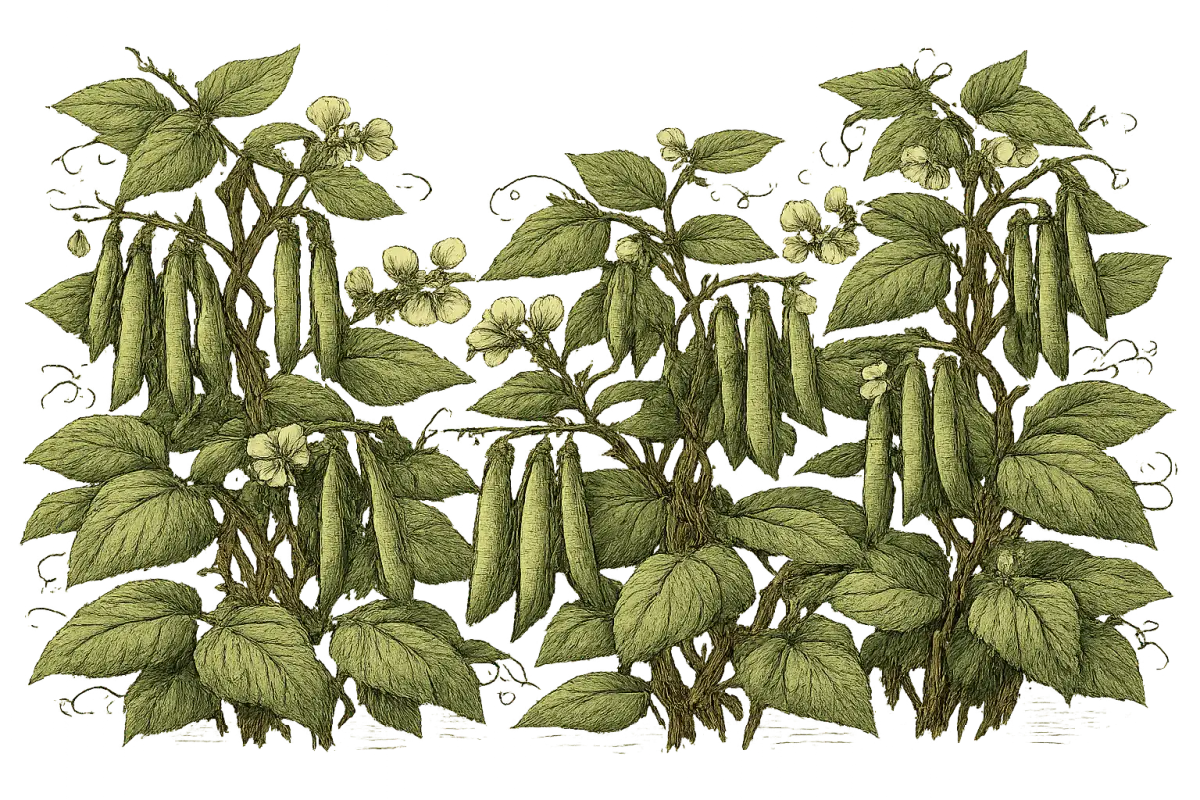


Beans are the most forgiving crop in the vegetable garden, and gardeners still manage to ruin them. Not through bad luck. Through very specific, very avoidable mistakes that I see repeated season after season: transplanting instead of direct-sowing, dumping fertilizer on a plant that makes its own, and planting in cold soil because the calendar said it was time.
Fix those three things and beans will reward you aggressively. We're talking 6–8 weeks of continuous harvest from a single pole bean trellis, or enough bush beans in one flush to fill your freezer for winter. They take up less space than almost any other productive vegetable. They improve your soil instead of depleting it. And unlike tomatoes, they do not spend six weeks doing nothing visible while you stare at them.
But there's a decision you need to make before you buy a single seed packet: bush or pole? That choice determines your spacing, your support needs, your harvest strategy, and how much work you'll be doing all season. Get it right and the rest of bean growing is largely common sense. Get it wrong and you'll either be drowning in beans for two weeks or wondering why your plants are crawling across the ground without structure.
This guide covers everything — bean types, variety selection by zone, the direct-sow rule, watering, feeding (or rather, not feeding), succession planting, and harvest timing. We'll tell you exactly which varieties to grow in your climate, what mistakes kill yields, and why most gardening advice about beans is far too complicated.
Beans are not complicated. Let's keep it that way.
Quick Answer: Bean Growing at a Glance
USDA Zones: 3–10 (snap beans); 6–10 (limas); 7–11 (yard-long)
Sun: Full sun, 6–8 hours minimum
Soil Temperature: 60°F at 2-inch depth before sowing — non-negotiable
Planting Method: Direct-sow only. Never transplant.
Bush bean spacing: 6 inches between plants, 18–24 inches between rows
Pole bean spacing: 6–8 inches between plants, 24–36 inches between rows
Water: 1 inch per week; critical during flowering and pod fill
Fertilizer: No nitrogen. None. Use inoculant in new beds instead.
Bush bean harvest window: 50–60 days to first pod; 2–3 week total harvest
Pole bean harvest window: 60–70 days to first pod; then continuous for 6–8 weeks
Succession planting: Every 2–3 weeks for continuous bush bean supply
Harvest frequency: Every 2–3 days at peak — or you signal the plant to stop
Bush or Pole: The Decision That Shapes Everything
This is not a trivial preference. It's the foundational choice, and most gardeners pick based on what seed packets look exciting without thinking through the implications.
Bush beans are compact — 18 to 24 inches tall, no support required, easy to manage in a standard bed. They mature in 50 to 60 days. All their pods ripen in a 2 to 3 week window. You get one large, concentrated harvest, then the plant is done. This is excellent if you're canning or freezing — you accumulate enough volume in one shot to make processing worthwhile. It's a headache if you just want fresh beans for dinner twice a week, because you'll have too many for two weeks and then nothing.
Pole beans are vining plants that climb 10 to 15 feet. They need a trellis. They take a little longer to first harvest — 60 to 70 days — but then they produce continuously for 6 to 8 weeks. Pick them every few days and they keep going. One well-built trellis of pole beans, kept picked, is the equivalent of three or four successive bush bean plantings without the replanting work.
Here is the practical rule: grow bush beans when you want to preserve large batches at once. Grow pole beans when you want steady fresh production through summer without replanting. Most productive gardens run both — an early bush bean succession for the freezer, a pole bean trellis for daily eating.
The other implication of this choice is space. Pole beans go vertical, which means a single trellis in a narrow bed can produce as much as a wide bed of bush beans. If your garden is small, pole beans are the obvious answer.
Bean Types: More Options Than You Realize
Most people think "beans" and picture green snap beans. That's the most common type, but it's not the only one, and choosing the right type for your goals and your zone makes a real difference.
Snap beans (Phaseolus vulgaris) are what most home gardeners grow. Harvested young, pod and all, before the seeds develop. They snap cleanly when bent — that's how you know they're ready. Modern varieties like Blue Lake 274, Derby, and Fortex are bred to be stringless, so no prep work required. Sub-types include standard round-podded varieties, slender French filet types like Fortex and Maxibel, yellow wax beans, and purple-podded types like Royal Burgundy and Dragon Tongue. All grown the same way, just harvested and eaten differently. Reliable across zones 3 to 10.
Dry beans are the same species as snap beans — just grown to full maturity and dried for storage. Kidney, pinto, navy, black, Great Northern, cannellini: all Phaseolus vulgaris, all grown the same basic way, just left on the plant until the pods are papery and the seeds rattle. They need 90 to 100+ frost-free days, which limits them to zones 4 through 9. In zones 3 to 5, you can pull the whole plant before frost and finish drying it indoors in a ventilated shed.
Lima beans (Phaseolus lunatus) are a different species with more demanding heat requirements. Soil must be at least 65°F at planting — 5 degrees warmer than snap beans — and nights below 55°F during flowering cause pod failure. In the South and Southwest, limas are a staple. In zones 3 to 5, they're generally not worth the effort. Zones 6 to 10 are their territory.
Runner beans (Phaseolus coccineus) are an underused option for northern gardeners. They tolerate cooler conditions than common beans and can go in 1 to 2 weeks earlier in spring — a real advantage in short-season zones. The showy red flowers attract hummingbirds and make them legitimately ornamental. Young pods are edible; mature seeds are large and distinctive. In zones 9 to 11, they're perennial — the root overwinters and regrows.
Yard-long beans (Vigna unguiculata) aren't actually beans in the Phaseolus sense — they're a cowpea subspecies. They produce 18-inch pods and thrive in the heat and humidity of the American South. Strictly for zones 7 to 11. They need a tall trellis (8 feet minimum) and produce prolifically in conditions that would stress other bean types.