Trees

The Tree That Earns Its Place: A Practical Guide to Growing Redbud

Tom Bridger

Tom Bridger

Tree & Shrub Specialist · Updated April 2026

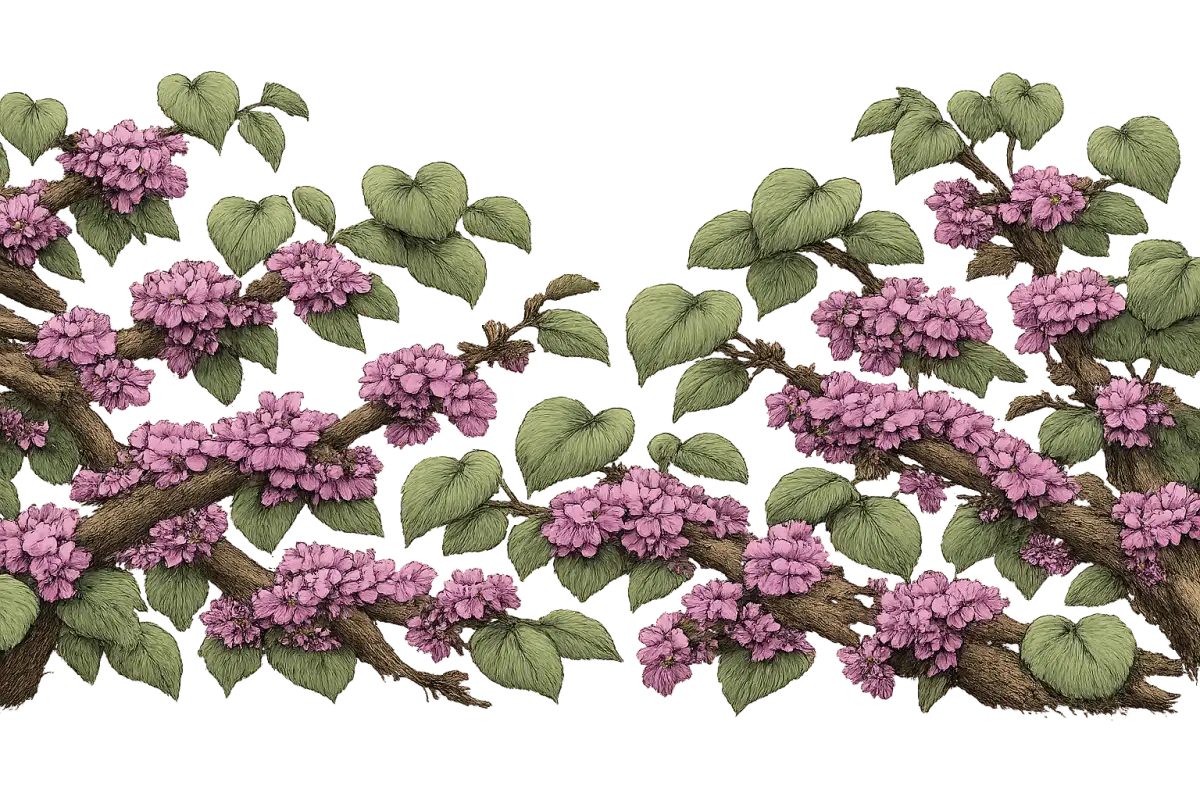
How to grow redbud — vintage botanical illustration showing the plant in detail

Redbud at a Glance

Sun

Sun

4-8 hours depending on zone

Soil pH

Soil pH

5.5-8.0

Water

Water

Weekly deep watering during establishment (years 1-2)

Spacing

Spacing

20-30 ft

Height

Height

5-30 feet depending on cultivar

Soil type

Soil

Extremely adaptable (clay

Lifespan

Lifespan

perennial

Get your personalized growing data

Enter your zip code for frost dates, growing season, and soil type.

I have watched homeowners make the same redbud mistake for years. They drive past a neighbor's tree in April -- clouds of pink-lavender blooms erupting from bare branches, the whole thing looking like a spring hallucination -- and they want one. They buy it, plant it in that low corner of the yard where the soil stays wet after rain because it looks sheltered and protected, and three years later they have a declining tree with yellowing leaves and progressive dieback that no amount of fertilizer or pruning will fix.

The redbud did not fail them. They failed the redbud. And the frustrating part is that it was completely preventable.

Eastern redbud is one of the genuinely great native trees for the American landscape. It blooms in early spring on bare branches before the leaves emerge -- a phenomenon called cauliflory, where flowers appear directly from older bark, twigs, and even the main trunk. The effect is unlike anything else in the temperate garden: entire branches engulfed in rose-pink blossoms, no foliage to dilute the display. It offers heart-shaped summer foliage, decent fall color, and sculptural winter branching. It fits under power lines, under larger trees, and in the gaps of small yards where oaks and maples simply cannot go. It is adapted to an enormous range of US soil types and pH levels. It asks very little once established.

But it has a few specific failure points -- all preventable, all predictable -- and if you ignore them, you will lose the tree. This guide covers everything: the site requirements that determine success before you ever put a spade in the ground, which cultivars to choose for your zone, how to plant correctly, and the mistakes we see most often.

Get these right, and you will have 20 to 30 years of one of the best spring flower displays a residential landscape can offer.


Quick Answer: Redbud Growing at a Glance

USDA Zones: 4 through 9 (with the right cultivar)

Mature size: 6-30 feet tall depending on cultivar (standard species: 20-30 ft)

Sun: Full sun in cooler zones; afternoon shade critical in zones 8-9

Soil: Extremely adaptable (clay, loam, sand, acidic, alkaline) -- drainage is the only non-negotiable

Drainage test: Fill a 12-inch hole with water twice; if it takes more than 6 hours to drain the second fill, do not plant here

Watering: Every 2-3 days for first 2 weeks; weekly for year 1; every 2 weeks in year 2; drought-tolerant after year 3

Fertilizer: Usually none needed; light feeder -- avoid high-nitrogen

Pruning: Late winter only (February-March); flowers form on old wood

Bloom time: March (zones 8-9) through May (zone 4), before leaves emerge

Lifespan: 20-30 years -- plan for eventual replacement


The Drainage Rule That Decides Everything

Before you choose a cultivar, before you pick a spot for aesthetics, before you think about sun exposure or companion plantings -- you need to settle one question about your planting site: does it drain?

This is not a minor consideration. It is the whole game.

Redbuds are remarkable for how broadly adaptable they are to soil composition. Clay soil, sandy loam, rocky hillsides, acidic soil from the Southeast, alkaline/limestone soils from the Midwest -- they grow in all of it. No pH adjustment needed in virtually any US garden soil. That adaptability leads people to assume they are forgiving of any site, including soggy ones.

They are not. Redbuds absolutely cannot tolerate standing water or chronically wet soil around their roots. This is the single most common cause of redbud death, and it is not a fast death. The tree declines over one to three years -- leaves yellowing, branches dying back progressively -- with verticillium wilt or root rot usually doing the work in the background. By the time the symptoms are obvious, the damage is done. No spray, no amendment, no intervention reverses it.

The problem compounds because wet, low-lying spots look attractive when you are standing in them on a dry day in spring, imagining where to put a tree. They look sheltered. They look protected. The drainage problem only reveals itself after rain, when water sits for hours in clay soil that seemed fine the week before.

Test before you plant. Dig a hole 12 inches deep, fill it with water, let it drain completely, then fill it again and time the second drain. If it still has water sitting in it after 6 hours, do not plant a redbud there. Find a different spot, or solve the drainage problem before planting -- either by mounding the root ball 2-3 inches above grade and grading the surrounding soil so water flows away from the trunk, or by creating a raised berm of 6-8 inches.

One more important note on verticillium wilt specifically: the fungus that causes it persists in soil for a decade or more, and it has a long list of host plants that can build up the reservoir in your garden. If a tomato, pepper, eggplant, or strawberry plant has died of wilt in a planting area, do not put a redbud there. The fungus is waiting.

Fix drainage first. Everything else is secondary.


Best Redbud Varieties by Zone

The straight species -- Cercis canadensis -- is native to eastern North America from southern Ontario to northern Florida and west to eastern Texas. It is the hardiest form, adapted to the widest zone range (4-9), and grows 20-30 feet tall and wide at maturity. If you live somewhere at the edges of redbud's range (zone 4 in the north, zones 8-9 in the south), the species is your most reliable baseline. But the cultivar market has expanded dramatically, and for zones 5-7, the ornamental selections are genuinely outstanding.

Zone mismatch is the second most common redbud failure mode after poor drainage. Garden centers sell cultivars without zone-specific guidance, and the photographs of certain varieties are so compelling that people buy them without checking whether they fit their climate. I have seen this pattern play out many times. Do not let a stunning nursery tag override your zone research.

What zone are you in?

Enter your zip code for frost dates, growing season, and soil type.

Cold Zones (4-5): Where Cultivar Choice Is Not Optional

Zone 4 is the northern hardiness limit for redbuds. The tree can survive here, but the margin for error with ornamental cultivars is slim. Forest Pansy, the most popular redbud in nurseries, is not reliably cold-hardy in zone 4 -- it suffers frequent dieback and may not survive repeated hard winters. Rising Sun, with its striking tri-color foliage, combines structural weaknesses (poor branch angles prone to wind and snow damage) with marginal cold hardiness. That combination fails in zone 4.

For zone 4, the right choices are the straight species and Merlot. The species is the most cold-tolerant form, period. Merlot was specifically bred for improved cold hardiness and offers purple foliage -- similar in effect to Forest Pansy -- in a form that can handle zone 4 winters. If you want ornamental foliage color at the northern edge of redbud's range, Merlot is your answer.

Siting matters enormously in zone 4. Plant in a sheltered location with southern exposure. A spot on the south side of a building, or in the lee of a windbreak, makes a real difference in winter survival. Bloom happens in May, later than anywhere else in the range, and late spring frosts can clip the flower display in cold years. The tree recovers -- it simply loses that year's show.

Zone 5 opens things up considerably. All major cultivars are viable here, and the full growing season allows the tree to put on an excellent performance. Full sun is the recommendation for zones 4 and 5: more sun means more flowers, and in northern zones you want to maximize every warm day.

Standard Zones (5-6): Maximum Freedom

Zones 5 and 6 are where redbuds thrive most completely. The winter is cold enough to provide the dormancy they need, the summer warm enough for vigorous growth, and the growing season long enough for full canopy development. Every cultivar works here.

If you want the best ornamental foliage a redbud can offer, this is where you plant Forest Pansy. The deep burgundy-purple spring foliage transitioning through green-purple by midsummer and finishing with fiery red and gold in fall is a true three-season color sequence. It grows 20-30 feet tall, the same as the species, at roughly 2 feet per year. For zones 5-7, Forest Pansy is the single most impactful ornamental choice in the redbud category.

For smaller properties, this zone range also gives you the best results with the compact and weeping selections. Ace of Hearts tops out at 12 feet tall by 15 feet wide -- a genuinely manageable size for tight residential lots -- and has the best overall pest and disease resistance of any cultivar. It is the tree for gardeners who want lower maintenance alongside smaller scale. Ruby Falls is a true dwarf at 6-8 feet tall with 4-6 feet of spread, with a cascading weeping habit and maroon-purple foliage. It is proportionate to large containers and patio gardens in a way that standard redbuds are not.

Rising Sun is worth discussing here because the photographs sell it aggressively. The tri-color foliage -- apricot new growth transitioning through gold to green -- is genuinely stunning. But know what you are getting: poor branch angles that make it susceptible to wind and snow damage, notable winter dieback even in zones 6, and weaker overall structure than any other cultivar. If you want Rising Sun, plant it in a sheltered location and accept that it requires more attention than the rest of the redbud family. Best in sheltered zones 6-8 sites only.

Zone 7: The Transition Point

Zone 7 is still excellent for redbuds, and all standard cultivars perform well here. This is where heat tolerance begins to differentiate the selections in hotter microclimates. Oklahoma redbud starts showing its advantages in zone 7, particularly in the warmer parts -- its thick, leathery, glossy leaves handle summer heat and resist leaf spot diseases better than any other cultivar. If your zone 7 garden runs hot and humid, Oklahoma is worth considering even though Forest Pansy and the others still technically work.

Afternoon shade becomes beneficial rather than just optional in zone 7's hotter spots. The natural understory role of redbuds -- growing beneath larger oaks, maples, and hickories in the eastern deciduous forest -- means they are genuinely adapted to filtered light, and afternoon shade in a hot zone 7 garden extends both the leaf display and the tree's productive life.

Bloom happens in late March to April, which means zone 7 gardeners get the earliest display of the northern range, and the brief window before forsythias and dogwoods kick in makes the redbud's flower show all the more striking.

Warm Zones (8-9): Heat Tolerance Becomes Everything

In zones 8 and 9, most of the popular ornamental cultivars struggle. Heat stress becomes the limiting factor, and Forest Pansy in particular can fail in zone 8 extremes. The selection calculus here is simple: Oklahoma redbud is the best cultivar, and for zone 9 extremes, Texas redbud (Cercis canadensis var. texensis) is the alternative.

Oklahoma inherits its heat and drought adaptation from the Texas redbud variety. The thick, leathery, glossy leaves lose less water to transpiration than other cultivars, resist leaf spot significantly better, and handle sustained summer heat without the scorching and early defoliation that afflict other selections. If you are in zone 8-9 and you want a redbud, Oklahoma is not just a good choice -- it is essentially the only reliable one from the standard cultivar list.

Zone 9 is the southern limit, and success here requires full afternoon shade, supplemental summer irrigation, and realistic expectations. In the warmest parts of zone 9, even Oklahoma may not receive adequate winter chilling for reliable bloom. If standard types fail entirely, Mexican redbud (Cercis canadensis var. mexicana) is an option for extreme southern locations.

Quick Reference Table: Top Picks by Zone Group

Zone GroupTop ChoicesFoliageKey Reason
Zone 4Species, MerlotGreen / PurpleMaximum cold hardiness
Zones 5-6Forest Pansy, Ace of Hearts, Ruby FallsPurple / GreenFull cultivar freedom; best ornamental display
Zone 7Forest Pansy, OklahomaPurple / Glossy greenOklahoma's heat advantage in hot microclimates
Zone 8Oklahoma, Texas redbudGlossy greenHeat and drought performance
Zone 9Oklahoma, Texas redbud, Mexican redbudGlossy greenOnly heat-adapted types reliable

Choosing the Right Size for Your Site

One of the most expensive mistakes in residential tree planting -- not just with redbuds but with trees generally -- is not accounting for mature size at planting time. A redbud planted 6 feet from the foundation of a house looks charming for the first five years. At year fifteen, when it is 25 feet wide, it is a structural problem.

The standard species and Forest Pansy both reach 20-30 feet tall and wide at maturity. That is not a small tree. The minimum setback from a structure is 15 feet, and more is better. For smaller lots, the compact cultivars exist precisely for this reason and should be seriously considered.

Ace of Hearts at 12 feet tall by 15 feet wide needs only 8 feet of setback from a structure. Ruby Falls at 6-8 feet tall and 4-6 feet wide can go within 4 feet. Lavender Twist (also sold as Covey), a weeping green-leafed form, stays 5-10 feet tall depending on graft height. Oklahoma and Rising Sun are mid-sized at 15-20 feet and 8-12 feet respectively, splitting the difference between the dwarfs and the full-sized species.

Take the mature dimensions of your chosen cultivar seriously before you plant. The tree you are looking at in the nursery pot is a fraction of what it will become.


Planting: What Actually Matters

When to Plant

In zones 4-6, plant in spring after the last frost. The full growing season ahead gives the root system time to expand before winter demands anything of it. In zones 7-9, fall planting is preferred -- the cooler temperatures after summer heat reduce transplant stress, and the roots get a head start through the mild winter before the demands of spring growth.

Container-grown trees can technically go in the ground any time it is workable, but spring and fall remain the ideal windows regardless of zone.

The Planting Hole: Wider, Not Deeper

Dig the hole 2-3 times wider than the root ball but no deeper than the root ball is tall. This is counterintuitive -- people assume a bigger hole in all dimensions is better for root growth. In practice, a hole dug too deep creates two serious problems. First, backfill soil is loose and the tree settles, burying the root flare below grade. Second, the hole functions as a collection point for water in slower-draining soils.

The root flare -- where the trunk visibly widens at the base -- must be at or slightly above soil level after planting. This is not negotiable. Bark that sits below grade stays perpetually moist and decays. Bark rot at the trunk base is one of the slower ways to lose a redbud, but it is a reliable one. After backfilling, physically check that the root flare is visible. Pull back any soil covering it.

On container-grown trees, inspect the root ball for circling roots and cut them before planting. Roots that circle inside a container will continue circling once in the ground, eventually girdling the trunk.

Backfill with the native soil removed from the hole. Do not amend it with compost or any other material. Amendments create a soil interface that disrupts drainage and encourages roots to circle within the amended zone rather than expanding into native soil -- what arborists call the bathtub effect.

Water deeply after planting to settle the soil and eliminate air pockets around roots. Then mulch immediately: 2-3 inches of shredded hardwood bark or wood chips in a ring at least 3-4 feet in radius, with the mulch kept 3-4 inches away from the trunk itself. The mulch ring conserves moisture, moderates soil temperature, and will provide a slow release of nutrients as it decomposes. Skip the trunk; do not pile it in a cone against the bark.

The First Two Years: Roots, Not Canopy

Redbuds are reliably drought-tolerant once established -- but "established" means two full growing seasons in the ground, not two months. A newly planted tree with a nursery-sized root ball in full summer sun has almost no drought tolerance. The root system is tiny relative to the canopy it is being asked to support.

In the first two weeks after planting, water every 2-3 days with a deep soak of the entire root zone. From week three through the end of the first growing season, water weekly if rainfall does not cover it. In year two, water every two weeks during dry periods. After year three, the tree is established and supplemental watering is only needed during extended drought -- three or more weeks without significant rain.

In zones 8-9, increase frequency during summer heat throughout the establishment period. A redbud that wilts repeatedly during its first summer establishment may never reach full vigor. Get it through those first two summers.


Watering Established Trees: Drought Tolerance Has Limits

Once established, Eastern redbud is moderately drought-tolerant. The word "moderately" is doing real work in that sentence, and it matters more in warmer zones.

In zones 4-5, established redbuds rarely need supplemental water -- ample rainfall handles it in most years. Zone 6 trees may need one or two deep waterings in dry August and September. Zone 7 trees benefit from monthly deep watering during dry summer months to prevent leaf scorch and early defoliation. In zones 8 and 9, summer irrigation every two to three weeks is not optional -- it is what extends the tree's productive life and determines whether it looks good through the season or goes into early decline.

When you do water an established tree, water deeply and infrequently. A slow soak that reaches 12-18 inches into the soil every two to three weeks during drought is far more effective than frequent shallow watering. Deep watering encourages roots to follow moisture downward, building the root architecture that provides real drought resilience. Frequent shallow watering keeps roots at the surface and makes the tree more vulnerable, not less.

There is a useful distinction between heat stress and drought stress that matters for zones 8-9. Heat stress -- caused by high temperatures regardless of soil moisture -- shows as leaf scorch on sun-exposed sides and is best addressed by afternoon shade, a site-selection decision. Drought stress shows as wilting, general leaf drop, and root decline and is addressed by water. In the hottest zones, trees experience both simultaneously. The solution is both: the right site (afternoon shade) and regular summer irrigation.

The watering method matters. A soaker hose laid in a ring around the drip line, a slow-dripping garden hose moved around the base, or a tree watering bag during the establishment period all work well. Overhead sprinklers primarily wet the canopy and surrounding soil -- they also keep foliage wet, which promotes the leaf spot diseases that are already a concern in humid zones. If you have overhead irrigation, water in the morning so foliage dries quickly.

What zone are you in?

Enter your zip code for frost dates, growing season, and soil type.


Pruning: Less Is Almost Always Right

Redbud pruning has one rule that overrides everything else: prune in late winter while the tree is fully dormant, typically February through March in most zones. Ignore this rule and you will wonder why your tree barely bloomed the following spring.

Redbud flowers form on old wood -- the previous year's growth. Every branch you cut in summer or fall is a branch that would have flowered the coming spring. This catches gardeners by surprise because general pruning advice for many shrubs and trees says you can prune almost anytime. Not redbuds. Late summer or fall pruning removes flower buds and leaves wounds exposed during the active fungal growing season, a combination that costs you both bloom and tree health.

Beyond timing, the other pruning principle is restraint. The natural vase-shaped or multi-stem form of a redbud is genuinely attractive -- it is one of the tree's best features. Heavy pruning of mature redbuds removes the flower-bearing wood that gives the spring display its intensity, stresses a tree that does not regenerate vigorously from aggressive cuts, and rarely produces the result gardeners are hoping for. Never top a redbud. Topping destroys the natural architecture and produces weak, disease-prone regrowth.

What to remove: dead, damaged, or diseased wood (these can come out anytime, regardless of season), crossing branches that rub against each other and create bark wounds, low-hanging branches that obstruct walkways, and basal suckers if you are maintaining a single-trunk form.

In the first 3-5 years, decide which form you want: single trunk (more formal) or multi-stem (naturalistic, wider, popular in woodland gardens). If going single-trunk, remove competing leaders and low branches early. If going multi-stem, allow 3-5 trunks to develop from the base and select for wide-angle crotches -- tight V-shapes are structurally vulnerable, particularly under ice loads.

Minimal, late-winter pruning is the practice that protects both flowering and long-term health.


Diseases and Pests: What to Actually Worry About

Redbuds face fewer pest problems than most ornamental trees. The insect pressure is generally minor and cosmetic. The disease threats are more serious, but prevention through good cultural practices eliminates most risk.

Verticillium Wilt: The One That Kills

Verticillium wilt is a soilborne fungal disease that infects through the roots, blocking the tree's internal water-transport system. It is the number one disease threat to redbuds across all zones, and there is no chemical cure once infection occurs.

The diagnostic sign is asymmetric -- yellowing and wilting on one side of the tree, progressing to branch dieback from the outer branches inward. A cross-section of a dead branch may show brown or olive-green streaking in the sapwood. The fungus lives in the soil and can persist there for more than a decade, which is why planting history matters.

No cultivar is resistant. Prevention is the only effective strategy, which means two things: plant in well-drained soil (wet conditions favor the fungus), and avoid planting where susceptible plants have previously died. If you lose a redbud to verticillium wilt, do not replant another wilt-susceptible tree in the same location. Resistant replacement options include conifers, oaks, willows, dogwoods, hollies, and birches.

Canker and Dieback

Various fungal pathogens cause cankers -- dead, sunken areas on bark -- that girdle branches and cause progressive dieback. The key signs are dying branches with sunken or discolored bark that cracks and peels at the margin. Cankers typically start at wounds, pruning cuts, or branch stubs.

Management is straightforward: prune out affected branches at least 6 inches below visible damage, cutting at a branch collar rather than flush with the trunk. Disinfect pruning tools between cuts with 70% rubbing alcohol or a 10% bleach solution. Canker diseases are more prevalent on stressed trees -- proper watering and mulching are the real prevention.

In humid zones 6-8, canker pressure is higher due to moisture-promoting fungal growth. In zones 8-9, drought stress makes trees vulnerable from the other direction. Keeping the tree well-watered and mulched handles both scenarios.

Leaf Spot: Cosmetic, Rarely Serious

Several fungal pathogens cause brown to purple-black spots on redbud leaves. In wet seasons, spots can merge into blotches and cause premature leaf drop. On healthy trees, leaf spots are mostly cosmetic -- they rarely threaten the tree. Rake and remove fallen leaves in autumn to reduce the fungal spore reservoir, avoid overhead irrigation that keeps foliage wet, and space plantings to allow air circulation.

Oklahoma redbud has a genuine advantage here. Its thick, leathery, glossy leaves resist leaf spot significantly better than other cultivars -- a meaningful benefit in the humid zones 7-8 where leaf spot pressure is highest.

Insects: Minor Players

Japanese beetles are the most visible redbud pest, skeletonizing leaves (eating the tissue between veins) from June through August in zones 5-7. On mature trees this is cosmetic -- the tree defoliates portions but recovers. On young or stressed trees, heavy infestations can weaken the plant. Hand-pick into soapy water on small trees; neem oil or pyrethrin sprays offer temporary deterrence. Avoid Japanese beetle traps near the tree -- they attract more beetles than they catch and increase damage to nearby plants.

Scale insects, leafhoppers, treehoppers, and fall webworms are all occasional visitors, none of them typically serious on established trees. Horticultural oil applied during dormancy addresses scale. Webworm nests can be pruned out or torn open to expose the caterpillars to birds.


The Mistakes That Cost Redbuds Their Lives

These are ranked by frequency, not severity -- though the top two are both severe.

Mistake #1: Planting in Wet or Poorly Drained Soil

Already covered at length, but it bears repeating as the number one killer: declining redbuds trace back to this mistake more than any other single cause. A tree that looks fine for one or two years after planting in marginal drainage can still be dying. The symptoms build slowly while root rot and verticillium establish. By the time the tree looks sick, the underlying cause may be irreversible.

Do the drainage test. There is no shortcut.

Mistake #2: Choosing the Wrong Cultivar for Your Zone

Forest Pansy in zone 4 means repeated dieback. Rising Sun anywhere with cold winters or exposed sites means structural failure. Standard cultivars in zones 8-9 means heat-scorched, short-lived trees. The zone table above exists to prevent these mismatches. Consult it before buying anything -- particularly before buying a cultivar based on how beautiful the nursery tag looks.

Mistake #3: Planting Too Deep

The root flare must be visible. This is a point that applies to virtually every tree, but it is worth stating here because it is violated so frequently. Nurseries sometimes plant trees too deep in their containers, which means the root flare is already buried when you buy the tree. Check before you plant and expose it if needed. After backfilling, check again. Over time, as soil settles and mulch accumulates, verify that nothing is covering the base of the trunk.

The consequences of deep planting are slow -- bark rot and root suffocation that take years to manifest -- which is what makes it so insidious. The connection between cause and effect is never obvious.

Mistake #4: Volcano Mulching

Mulch piled in a cone against the trunk is one of the most widespread tree care errors in residential landscapes. It looks tidy. It damages the tree. Bark kept constantly moist decays. The moist zone provides rodent habitat -- mice and voles will girdle the trunk. And the mounded soil encourages root circling at the surface.

The correct form is a donut, not a volcano: 2-3 inches deep, 3-4 foot radius, with a 3-4 inch gap of bare soil immediately around the trunk. Keep it that way every year, even as mulch decomposes and needs refreshing.

Mistake #5: Pruning at the Wrong Time

Summer pruning is the reliable way to have a redbud that looks healthy but produces almost no flowers. If you prune in July because you noticed a shape problem, you will remove the flower buds for next spring's bloom. The tree will leaf out fine, look fine, and give you nothing in April. Prune in late winter, while dormant. Remove dead and damaged wood anytime it appears.

Mistake #6: Over-Fertilizing with Nitrogen

Redbuds are members of the legume family (Fabaceae) and have some nitrogen-fixation capability. They are light feeders. Treating them like a lawn or a heavy-feeding annual -- with regular high-nitrogen applications -- produces exactly the wrong result: soft, leggy, fast growth that is vulnerable to wind breakage, insect attack, and cold damage, combined with reduced flowering as the tree prioritizes vegetative growth over bloom.

In most garden soils, redbuds need no supplemental fertilizer at all. The annual decomposition of the mulch ring provides adequate nutrition. If the soil is genuinely poor, a single spring application of balanced 10-10-10 at half the package rate is sufficient. Never apply lawn fertilizer to a redbud.

Mistake #7: Not Watering During Establishment -- Because "Redbuds Are Drought-Tolerant"

This one belongs on every list of tree care mistakes in general. Drought tolerance is a property of established root systems, not newly planted trees. A redbud planted in spring and left unwatered through its first summer in a zone 6 garden is being asked to survive on a nursery-container-sized root ball in drying soil. It may appear to make it. It likely enters winter weakened, blooms poorly the following spring, and limps along without ever reaching full vigor.

Two years of consistent watering. That is the investment. After that, the tree earns its reputation.

Mistake #8: Planting Too Close to Hardscapes

This one does not kill the tree -- it just makes someone miserable every fall. Redbuds produce flat brown seed pods 2-4 inches long that persist through fall and winter before dropping. They are a perfectly normal characteristic of the legume family. In a lawn they get mowed over. In a planting bed they disappear into mulch. On white concrete, a pool deck, or a patio you are proud of, they are months of cleanup.

Plant at least 10 feet from high-maintenance hardscapes. The spring bloom is worth accommodating, but not if you plant yourself into a situation you will resent.


Companion Planting and Landscape Placement

Redbuds occupy the understory layer in their native habitat -- the forest edge beneath larger canopy trees, where they get filtered light and the kind of moist, well-drained woodland-edge soil conditions that suit them best. That ecological origin tells you a lot about how to use them in designed landscapes.

The classic spring trio in zones 5-8 pairs redbud with forsythia and dogwood for a rolling 6-8 week flower sequence. Forsythia opens the show in yellow, redbud follows with its pink-lavender clouds while branches are still bare, and dogwood picks up as redbud finishes, extending the display into late spring. The three together are as close to a guaranteed spring spectacle as a temperate garden has.

Underplanting works beautifully beneath a mature redbud. Spring bulbs -- daffodils, early tulips, crocuses -- bloom while the tree is still leafless, sharing the bare-branch moment. Azaleas and rhododendrons at the base overlap with the bloom period. Once the canopy leafs out, the filtered shade is ideal for hostas, coral bells (Heuchera), bleeding heart, ferns, Virginia bluebells, and native woodland wildflowers like trillium and bloodroot.

Forest Pansy's dark purple foliage creates particularly good contrast with gold-leaved hostas, chartreuse coral bells, and silver-leaved artemisia -- the kind of foliage combinations that landscape designers build entire planting schemes around. Oklahoma's glossy dark green leaves work well against lighter-textured perennials and ornamental grasses.

Four-season siting is worth thinking through. The spring bloom display is the headliner -- place the tree where it is visible from primary windows or the front approach to the property. In summer, the canopy provides shade for seating areas. In fall, afternoon backlight through the foliage (Forest Pansy in particular, with its red and gold fall color) is worth positioning for. In winter, the branching silhouette -- especially on multi-stem forms -- is genuinely attractive against a building or winter sky.


A Word on Lifespan

Redbuds live 20-30 years. Not 80. Not 100. Oaks outlive the families that plant them; redbuds do not. This matters for planning purposes and for managing expectations when your tree starts declining at 15-20 years.

Vigor decline after that point is normal for the species -- not a sign of disease, not a sign of poor care, not something that needs aggressive treatment. Signs of normal age-related decline include reduced flowering, increased canker and dieback in the canopy, thinning, and more deadwood. These are natural processes in a tree that is approaching the end of its productive life.

The practical response is to plant a young replacement tree nearby 5-10 years before anticipated decline. This is not pessimism -- it is the kind of long-term thinking that keeps a landscape continuously beautiful rather than experiencing a gap between loss and recovery. A young tree planted when the mature one is at 15-18 years will hit its prime right around the time the original starts its decline.

Plan for it. The redbud is worth planting twice.


The Bottom Line

Redbud is not a difficult tree. It is a specific one. Three decisions determine the majority of outcomes: drainage (non-negotiable), cultivar choice (must match your zone), and the patience to water consistently through two establishment seasons before stepping back and letting the tree do its work.

Get those three things right and you will have one of the finest spring-flowering trees available for US residential landscapes. Twenty to thirty years of that bare-branch flower display in April -- clouds of pink on bare wood before anything else in the yard has woken up -- is a return worth every bit of the preparation this guide describes.

Start with the drainage test. Pick a cultivar from the zone table. Plant at grade, mulch correctly, water through year two, and prune only in late winter. That is the whole list.

The spring show takes care of itself.

What zone are you in?

Enter your zip code for frost dates, growing season, and soil type.


Frequently Asked Questions

Can I Plant a Redbud in Clay Soil?

Yes -- with caveats. Redbuds are genuinely adaptable to clay, but clay soil is where the drainage problem most often hides. Clay that looks well-drained after a dry week can hold water for hours after heavy rain. Before planting in clay, do the drainage test described above. If drainage is marginal, plant the root ball 2-3 inches above grade and grade the surrounding area so water flows away from the trunk. Do not dig a deep hole in clay and fill it with amended soil -- that creates a bathtub effect that drowns roots. Planting high, wide mulching, and good surface grading are the correct approaches for clay sites.

Is Forest Pansy the Best Redbud?

For zones 5-7, it is arguably the finest ornamental small tree available -- the deep burgundy-purple foliage, fiery fall color, and rose-purple spring flowers together make a three-season plant that few trees can match. But Forest Pansy is not suitable for zone 4 (insufficient cold hardiness) and may struggle in zone 8 heat extremes. It is the best choice for the right zone. For zones 4, 8, and 9, different cultivars are the better selections. Know your zone before committing to any cultivar.

How Far from My House Should I Plant a Redbud?

For the standard species and Forest Pansy, which reach 20-30 feet wide at maturity, the minimum setback from a structure is 15 feet -- and more is better for foundation health and future maintenance access. Oklahoma redbud at 15-20 feet wide needs 10 feet of clearance. Ace of Hearts at 15 feet wide needs 8 feet. Ruby Falls at 4-6 feet wide can go within 4 feet. Match the setback to the mature spread of the specific cultivar, not just "redbud" as a category.

Why Did My Redbud Stop Blooming?

The most common cause is summer or fall pruning that removed the flower buds developing on the previous year's wood. Redbud flowers form on old wood, so any pruning outside the late-winter dormant window removes bloom potential. The second cause is a tree under significant stress -- chronic drought, root disturbance, or disease -- that diverts energy away from reproduction. If you have not pruned at the wrong time and the tree appears healthy, check the watering history and look for signs of root zone disturbance or soil saturation.

How Long Before a Redbud Blooms?

Young container-grown trees from a nursery will often bloom in their first or second season in the ground, even as small trees. The floral display fills out significantly as the canopy develops over years 3-7. Full maturity and the most impressive bloom happens at 10+ years. Unlike fruit trees or some flowering shrubs, redbuds do not require years of establishment before they bloom -- the reward comes relatively early, which is one of the things that makes them satisfying to plant.

What Is the Most Low-Maintenance Redbud?

For zones 5-7, Ace of Hearts is the answer: compact growth that requires minimal pruning, superior pest and disease resistance, and a manageable mature size. For zones 8-9, Oklahoma is the low-maintenance selection -- its heat and drought tolerance mean less intervention needed in the seasons when other redbuds struggle most. The straight species, across its full range of zones 4-9, is the most inherently self-sufficient form -- it lacks the ornamental foliage of cultivars, but it is the tree that needs the least from you to thrive.


Research for this guide draws on published extension service resources including recommendations from university cooperative extension services covering Eastern redbud culture, cultivar trials, and disease management across the species' native range. Cultivar performance data reflects documented field behavior across USDA hardiness zones 4-9.

Where Redbud Grows Best

Redbud thrives in USDA Zones 5, 6, 7. Explore each zone's complete guide for growing tips, companion plants, and seasonal advice.

Also possible in: Zone 8 (challenging but possible with the right conditions).

Not sure of your zone? Look it up by zip code →