Shrubs

Forsythia: The Shrub That Rewards Patience and Punishes Impatience

Tom Bridger

Tom Bridger

Tree & Shrub Specialist · Updated April 2026

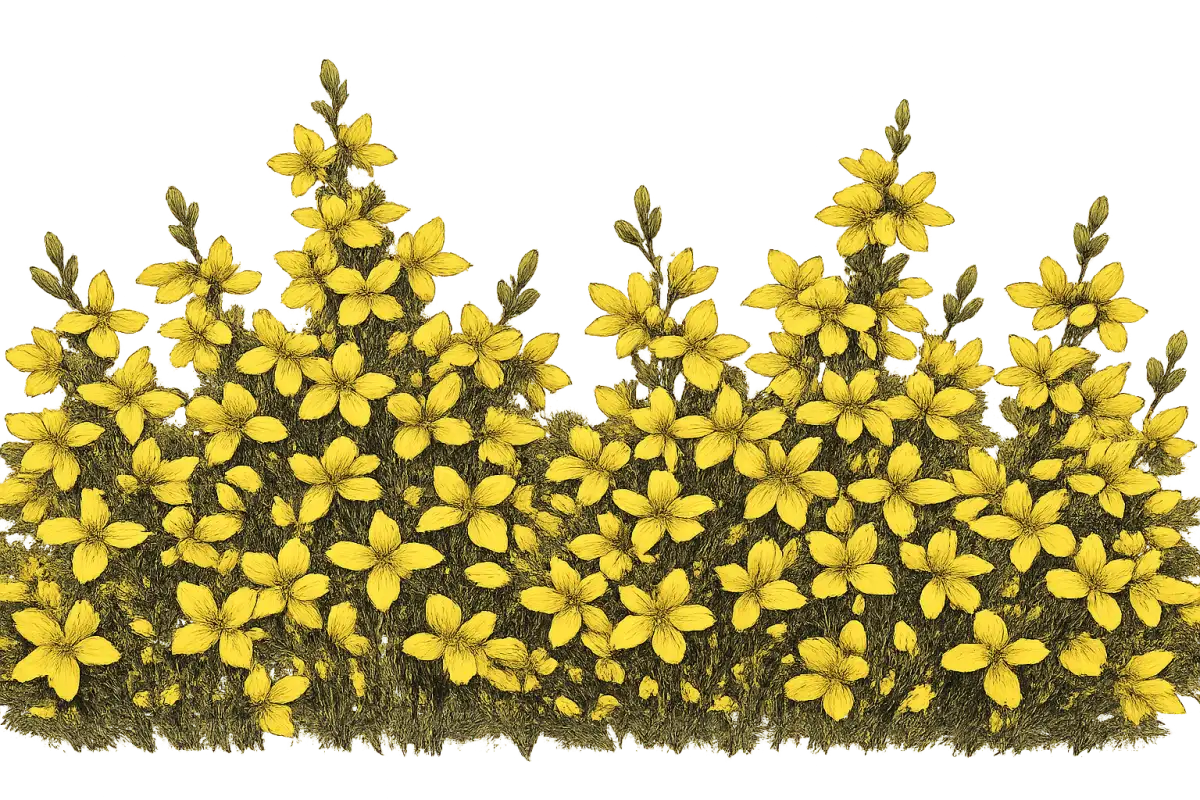
How to grow forsythia — vintage botanical illustration showing the plant in detail

Forsythia at a Glance

Sun

Sun

6+ hours full sun

Soil pH

Soil pH

5.5-8.0

Water

Water

1 inch per week during first year

Spacing

Spacing

4-6 ft

Height

Height

5-10 feet

Soil type

Soil

Almost any — clay

Lifespan

Lifespan

perennial

Get your personalized growing data

Enter your zip code for frost dates, growing season, and soil type.

I have seen the same conversation play out hundreds of times. A homeowner points at a perfectly healthy green shrub and says, "My forsythia hasn't bloomed in three years. What's wrong with it?" And the answer is almost always the same: someone pruned it in September.

That is the central truth about forsythia that this guide is built around. This is not a complicated plant. It has no meaningful pest problems. It grows in almost any soil. It tolerates drought, clay, rocky hillsides, and decades of neglect. There is exactly one way to manage it incorrectly — prune it at the wrong time of year — and that one mistake eliminates the entire reason you planted it in the first place.

The second truth, which matters more in cold climates than most gardeners realize: you can plant the wrong variety and spend years waiting for a bloom that will never come. The plant survives. The flower buds freeze. You keep assuming something else is wrong. Nothing is wrong except the cultivar in the ground.

Get these two things right and forsythia is one of the most satisfying shrubs in the American landscape. Get them wrong and you end up with an expensive green blob that you prune twice a year and resent by the third.

This guide will make sure you get them right.


Quick Answer: Forsythia Growing at a Glance

USDA Zones: 3 through 8 (with the right variety)

Sun: 6+ hours of direct sunlight daily; light shade reduces bloom noticeably

Soil: Almost any soil type; tolerates clay, sand, loam, acidic, and alkaline conditions

pH: Adaptable — no testing or adjustment needed

Spacing: 4-6 feet apart for hedges; allow full mature spread for specimens

Water (first year): 1 inch per week during dry periods

Water (established): Drought tolerant; no supplemental irrigation needed in most climates

Fertilizer: Generally unnecessary; slow-release tree and shrub fertilizer in early spring if growth is sluggish

Pruning window: Immediately after flowering — within 2-3 weeks of bloom ending

Pests and diseases: None significant

Mature size: 5-10 feet tall and wide depending on variety

Best landscape uses: Hedge, screen, slope stabilization, specimen, mass planting


The Flower Bud Hardiness Problem (Why Cold-Climate Forsythia Never Blooms)

Before we talk about planting, pruning, or anything else, I want to address the mistake that destroys more forsythia plantings in cold climates than any other cause.

Plant hardiness and flower bud hardiness are not the same number.

Forsythia flower buds form on the previous year's branches during late summer and fall. By winter, next spring's display is already sitting on the stems as dormant buds, waiting for warmth. Those buds have their own cold tolerance threshold — and that threshold is always warmer than the threshold for the wood, roots, and crown. The plant can survive a -20°F winter without significant damage. The buds may be killed at -10°F or -15°F, depending on the cultivar.

Here is why this matters: the most popular forsythia in the United States, Lynwood Gold, has flower buds that are only hardy to about -10°F. In zone 4, winter temperatures regularly reach -20°F to -30°F. The plant lives. The buds die. The shrub leafs out normally every spring, grows vigorously all summer, and produces not a single flower. Year after year.

The USDA zone printed on the nursery tag tells you whether the plant will survive. It does not tell you whether the flowers will survive. For a shrub grown almost exclusively for its spring bloom, that is the distinction that matters.

The fix is simple. In zones 3-4, plant only Meadowlark (buds hardy to -35°F) or Northern Gold (buds hardy to -30°F). No other varieties will bloom reliably in those zones. If you already have a forsythia in zone 3 or 4 that lives but never flowers — check the variety. If it is Lynwood Gold or Spring Glory, no amount of fertilizer, patience, or horticultural optimism will change the outcome. Replace it.


Best Forsythia Varieties by Zone

The good news for most gardeners is that once you get past zone 5, variety selection becomes more about size and habit than survival. Let me walk you through what to plant where.

What zone are you in?

Enter your zip code for frost dates, growing season, and soil type.

Cold Zones (3-5): Where the Wrong Variety Means Zero Flowers

Zone 3 is non-negotiable. There is one forsythia for this climate, and its name is Meadowlark. Developed by the USDA specifically for northern gardens, Meadowlark carries flower buds that survive -35°F — the hardiest forsythia cultivar available. At 6-9 feet tall with an upright spreading habit, it serves equally well as a hedge, a specimen, or a mass planting on a slope. If you garden in zone 3 and want forsythia to actually bloom, this is your plant. Full stop.

Zone 4 gardeners have a slightly wider choice. Northern Gold joins the roster here, with bud hardiness to -30°F and a marginally more compact growth habit than Meadowlark — typically 6-8 feet tall with 5-7 feet of spread. In most of zone 4, where winter temperatures do not regularly exceed -30°F, Northern Gold is an excellent option. In the coldest pockets of zone 4 where temperatures occasionally push toward -30°F and below, Meadowlark's additional five degrees of bud protection provides a meaningful safety margin. Both are bright golden yellow and reliably showy when planted in the right zone.

Zone 5 is where the selection opens up considerably. Meadowlark and Northern Gold remain solid, reliable performers — and in zone 5a, where winter temperatures can occasionally dip toward the range that challenges other varieties, the extra bud hardiness they carry is still worth having. Show Off (sold as Mindor) enters the picture here as a genuinely excellent compact option: 5-6 feet tall and wide, with flowers packed so densely along its stems that the display-per-square-foot ratio is better than any full-size variety. For suburban landscapes where a 10-foot forsythia would overwhelm the space, Show Off is the answer. Lynwood Gold is marginal in zone 5 — reliable in the warmer 5b half, unpredictable in the colder 5a half.

Moderate Zones (6-8): Pick for Size and Purpose

In zones 6, 7, and 8, bud hardiness drops off your list of concerns entirely. Any forsythia variety will bloom reliably. Selection now comes down to how big you want the plant and what you want it to do in your landscape.

Lynwood Gold dominates nursery shelves in these zones for good reason. It is vigorous, widely available, inexpensive, and produces the large, bright yellow flowers along upright spreading stems that most people picture when they think of forsythia. At 5-10 feet tall with an 5-8 foot spread, it works as a hedge, a screen, a mass planting, or a specimen. This is the workhorse forsythia of the moderate zones.

Spring Glory goes even larger — up to 10 feet tall — with deep yellow, abundant flowers and the vigor to establish quickly in difficult conditions. For screening applications or large-scale mass plantings where maximum coverage is the goal, Spring Glory earns its place. Be clear-eyed about the size: this is a big plant, and it will fill the space you give it within 4-5 years.

Show Off remains an excellent choice in zones 6-8 for homeowners who want forsythia color but cannot accommodate a 10-foot shrub. At 5-6 feet, it fits foundation-adjacent spots (with adequate clearance), smaller residential lots, and situations where a full-size variety would constantly require corrective pruning.

Zone 8 deserves a brief note. In the warmest parts of zone 8, forsythia may experience shorter bloom periods because insufficient winter chilling can reduce flower bud development. This is rarely severe enough to prevent flowering entirely, but gardeners in zone 8b may see lighter bloom in mild winters compared to what they would expect in cooler zones. Forsythia is not well-suited to zones 9 or 10.

Quick Reference Table: Top Picks by Zone Group

Zone GroupTop VarietiesSizeWhy
3Meadowlark6-9 ftOnly cultivar with buds hardy to -35°F
4Meadowlark, Northern Gold6-9 ft / 6-8 ftOnly cultivars that reliably bloom after zone 4 winters
5Meadowlark, Northern Gold, Show Off6-9 ft / 5-6 ftFull selection; Lynwood Gold marginal in 5a
6-8Lynwood Gold, Show Off, Spring Glory5-10 ft / 5-6 ftAny variety works; choose based on size and use

Where and How to Plant

Site Selection: Sun Is the Only Variable That Matters

Forsythia is remarkably indifferent to most site conditions. Soil type, pH, fertility, slope angle — none of these will make or break a forsythia planting. But sun exposure will.

Forsythia's bloom density is directly proportional to how much direct sun it receives. Full sun — 6 or more hours of unobstructed direct sunlight — produces the maximum flower display. Light shade, meaning 4-6 hours of direct sun, is tolerable but reduces bloom noticeably. Below 4 hours, and you have a healthy green shrub that flowers sparsely if at all. Plant tags list "full sun to partial shade" as the exposure range, and technically that is accurate for plant survival. For the spring flower show that is the entire point of growing forsythia, treat it as a full-sun plant.

If the only available spot is partially shaded, position forsythia where it receives morning sun and afternoon shade rather than the reverse. Morning sun is more beneficial for spring-blooming shrubs.

Thinking About Mature Size Before You Dig

Here is where I see people make the expensive mistake. A two-foot forsythia in a nursery pot looks perfectly manageable next to a foundation. Three years later, it is pressing against the siding, blocking windows, and requiring aggressive pruning to keep it off the house. That aggressive pruning — almost certainly done at the wrong time of year — eliminates every flower. The homeowner has a large green plant pressed against their house that never blooms and never will as long as it stays there.

Do not plant forsythia against house foundations. Even the compact Show Off reaches 5-6 feet in all directions. Full-size varieties reach 8-10 feet. Minimum distance from structures: 6-8 feet for standard varieties, 5-6 feet for compact varieties. Better still, use forsythia where its natural size works in your favor: along property lines as a privacy hedge, as a specimen in the open yard where its arching form can be appreciated from all sides, or massed on a slope where it will stabilize soil and naturalize beautifully.

Planting: No Amendments, No Complications

Forsythia is one of the rare shrubs where "no amendments needed" is genuinely the correct advice, not a simplification. Its root system will grow out of any amended planting hole within a year, and creating a pocket of enriched soil surrounded by native soil can actually cause problems by encouraging roots to circle within the amended zone rather than spreading outward.

Dig a hole twice as wide as the root ball and the same depth. Set the plant at the same level it was growing in the container — do not bury the crown. Backfill with the native soil you removed. Water deeply to settle the soil and eliminate air pockets. Apply 2-3 inches of organic mulch around the base, keeping mulch 3-4 inches away from the stems.

That is it. No compost, no peat moss, no fertilizer mixed into the backfill. Forsythia does not need it, and adding it buys you nothing.

When to plant: Spring (March-May) and fall (September-October) are both excellent. Container-grown plants can go in the ground anytime during the growing season, but spring and early fall give the root system the most time to establish before temperature extremes arrive.

The one soil condition to avoid: Standing water. Forsythia tolerates clay, sand, rocky ground, and almost any pH, but it cannot tolerate ground that remains waterlogged for extended periods. Test your planting site after a heavy rain. If water drains away within 24-48 hours, forsythia will be fine. If water stands for three or more days, choose a different location or address the drainage issue before planting.


Pruning: The One Thing You Cannot Get Wrong

Everything else about forsythia care is optional, adjustable, or largely irrelevant. Pruning timing is not.

Prune forsythia immediately after flowering — within 2-3 weeks of bloom ending.

That is the rule. It is the only rule. And it is violated constantly, in backyards across the country, by well-meaning homeowners with perfectly good intentions and completely wrong timing.

Why Timing Is Everything

Forsythia blooms on old wood — the branches that grew during the previous year. After this spring's flowers fade, new shoots begin growing. Those shoots mature over summer. In late summer and fall, flower buds form on those new shoots. Those buds are next spring's flowers. They spend winter dormant on the branches, waiting for warmth. In spring, they open, the plant blooms, and the cycle begins again.

Prune in summer and you cut off branches that are forming next year's buds. Prune in fall and you cut off branches with buds already set. Prune in winter and you cut off dormant buds ready to open in weeks. In every case, the result is the same: the following spring, the plant is healthy, leafy, and flowerless.

Prune in the two-to-three-week window immediately after bloom ends, and you remove only spent flowers and old wood. The plant then has the entire growing season to produce vigorous new shoots that will carry next spring's buds. Timing is everything.

The post-bloom window varies by zone because bloom time varies:

  • Zones 3-4: Bloom in late April through May; prune by late May to early June
  • Zone 5: Bloom in mid-April through early May; prune by mid-to-late May
  • Zones 6-7: Bloom in late March through mid-April; prune by mid-April to early May
  • Zone 8: Bloom in early to late March; prune by late March to mid-April

Do not rely on calendar dates alone. Watch your plant. When the last flowers fade and begin to drop, your window is open. Mark it on your phone if that is what it takes. This is a narrow window that matters more than any other single thing you will do for this shrub.

What Annual Maintenance Looks Like

The goal of annual maintenance pruning is to remove old, thick canes from the base and give new growth room to emerge and arch outward. Done correctly, this keeps forsythia in its natural fountain-like form — the arching sprays that cascade outward and give the plant its character.

After bloom ends, remove one-quarter to one-third of the oldest, thickest stems at ground level, cutting them all the way to the base and leaving a 1-2 inch stub. These are the heavy canes, typically the darkest and least flexible. Removing them opens the interior of the plant and stimulates vigorous new basal growth that will carry future blooms. Then lightly trim the remaining branches to maintain the shape you want, following the natural arch rather than fighting it. Remove any dead, damaged, or crossing branches.

What you should not do: shear forsythia with hedge trimmers. Shearing removes the outer layer of growth uniformly — and that outer layer is exactly where the flower buds are. Every pass of the hedge trimmer removes a percentage of next spring's flowers. Beyond the bloom damage, shearing destroys forsythia's signature arching habit and replaces it with a stiff, angular exterior shell that fights the plant's growth pattern for the rest of its life. Forsythia sheared into balls and boxes is a common sight in American suburbs. It is also almost always bloomless, and it will stay that way as long as the shearing continues.

Use bypass hand pruners for smaller stems, loppers for stems three-quarters to one-and-a-half inches in diameter, and a pruning saw for the largest, oldest canes in neglected plants. Keep blades sharp — clean cuts heal faster and look cleaner.

Rejuvenating a Neglected Plant

If you have inherited a forsythia that has been sheared, neglected, or both — a dense, tangled mass with dead wood throughout and sparse bloom — full rejuvenation is an option. In late winter (February through March), cut the entire shrub to 3-4 inches from the ground. Use loppers or a pruning saw, leave short stubs rather than cutting flush with the soil, and remove all the cut material.

Be clear about what you are signing up for: the year of the cut, no flowers. The following year, minimal to no flowers while the new growth establishes. By year three, the first significant bloom on a fully renewed shrub. Forsythia is resilient enough that this hard cut is not a survival risk — it will regrow vigorously, often reaching 3-5 feet of new growth in the first season. The only cost is two springs without flowers.

If losing two years of bloom is genuinely unacceptable, use the gradual approach instead: remove one-third of the oldest stems at ground level each year for three consecutive years, always immediately after bloom. After three years, the entire shrub has been renewed while maintaining some flowers each spring. Slower, but never completely bloomless.


Watering: Establish It and Leave It Alone

Forsythia is drought tolerant once established, and "drought tolerant" here means something specific: in areas receiving 20 or more inches of annual rainfall — which covers most of the eastern United States, the Pacific Northwest, and much of the Midwest — established forsythia needs zero supplemental irrigation. No irrigation system. No watering schedule. No monitoring of soil moisture. Rain provides everything the plant needs.

The first growing season is the exception. During this establishment period, when the root system is expanding from the original root ball into surrounding soil, consistent moisture is important. Water every three to four days for the first four weeks if there is no rain, soaking the root zone to six to eight inches with each watering. From months two through six, water once per week during dry spells, providing roughly one inch of water combined between rainfall and irrigation. By late fall, the plant should be drawing moisture from a wide enough area that it no longer needs your help.

After the first year, step back. An established forsythia during extended drought — three or more consecutive weeks without meaningful rain in peak summer heat — may benefit from a deep soaking every two weeks. But even without that intervention, the plant is unlikely to suffer permanent damage. It may drop some leaves as a self-protective measure. It will recover when rain returns.

The greater risk, counterintuitively, is overwatering. Forsythia planted in an automatic irrigation zone that runs three times a week receives far more water than it needs and benefits from. Persistent saturation depletes soil oxygen, stresses the root system, and encourages excessively soft, leggy growth that is less cold-hardy than normal. If your forsythia is in an irrigated lawn zone, consider excluding it from the irrigation schedule after the first year. When in doubt about whether to water an established forsythia, the correct answer is almost always: do not.

What zone are you in?

Enter your zip code for frost dates, growing season, and soil type.


Soil and Fertilizer: The Pleasantly Short Section

Forsythia is the plant you choose when you do not know your soil or do not want to deal with it. Clay, loam, sand, rocky ground, acidic, neutral, alkaline — forsythia grows in all of it without amendments, without pH testing, without raised beds, and without anything you might find at a garden center in a brightly colored bag.

The one exception: ground that stays waterlogged for days after rain. That is the only soil condition forsythia cannot handle. Everything else is fine.

On fertilizer: do nothing in most situations. Forsythia is adapted to poor and average soils and does not require supplemental nutrition to thrive. If growth is genuinely sluggish — not just slow in the first season, but actually producing very little new growth in subsequent years — a slow-release tree and shrub fertilizer applied in early spring is appropriate. One application per year is sufficient. Avoid high-nitrogen fertilizers; excess nitrogen pushes leafy growth at the expense of flower production, which is the opposite of what you want.

Over-fertilizing forsythia is more common than under-fertilizing and produces excessively leggy, rank growth that is harder to maintain and less attractive. When someone asks me whether to fertilize their forsythia, my default answer is: probably not. Watch the plant. If it is growing and blooming, it is getting what it needs from the soil.


Pests, Diseases, and the Pleasantly Boring Truth

Extension offices from Wisconsin to Clemson to Iowa State describe forsythia with the same language: "remarkably pest and disease free," "no significant pest problems," "no notable diseases." After twenty-something years of working with woody plants, I can confirm this is accurate. Forsythia does not have a list of problems to monitor for, treat, or prevent. It simply does not work that way.

There is no spray program for forsythia. No preventive fungicide, no insecticide schedule, no miticide applications. Put the sprayer away and do not get it back out for this plant.

Deer occasionally browse forsythia, particularly in late winter when other food is scarce, but they do not prefer it. Hostas, arborvitae, and yews go first. On newly planted shrubs in areas with known heavy deer pressure, temporary fencing or a deer repellent spray through the first two winters provides adequate protection. Established plants at 4 feet or taller generally tolerate occasional browsing without meaningful impact.

Rabbits may chew bark from young stems at ground level in the first winter or two, particularly where snow cover limits other food. A cylinder of quarter-inch hardware cloth around the base of new plants through the first two winters prevents this. After that, the bark thickness on established stems makes them unattractive to rabbits.

In rare and exceptional circumstances — unusually wet seasons, very humid sites — you may see occasional cosmetic leaf spotting or minor twig tip dieback. These conditions do not warrant chemical treatment. Prune out affected growth and move on. Most forsythia plants will never experience any disease in their entire lifespan.

When homeowners report problems with forsythia, the cause is almost never biological. "My forsythia won't bloom" is wrong pruning time, insufficient sun, or the wrong cultivar for the zone — not pests or disease. "My forsythia is dying" is waterlogged soil, almost without exception. "My forsythia looks bad" is overgrown, overdue for pruning, or planted in too much shade. The diagnostic pattern is consistent: the problem is almost always what we did, not what a pest or pathogen did.


Using Forsythia Well: Landscape Applications

Forsythia is at its best when it is given space to be itself — an arching, fountain-shaped shrub that erupts in yellow for two to three weeks in early spring and then spends the rest of the year as a pleasant, low-maintenance backdrop. Understanding this shapes every good landscape decision you can make with it.

As a hedge or screen: This is forsythia's most common use and one of its best. Plant Lynwood Gold or Spring Glory at 4-6 feet apart for a continuous screen that provides privacy and spring color simultaneously. The hedge fills in within 2-3 seasons and requires only annual post-bloom maintenance. For a smaller hedge, Show Off at 4-5 feet apart gives you a neat, manageable screen that stays under 6 feet without constant correction.

As a specimen: A single well-placed forsythia in full sun, given room to achieve its natural arching form, is a genuinely handsome shrub. The key is clearance — allow the full mature spread plus two feet of breathing room on each side. A specimen forsythia that has never been sheared, pruned incorrectly, or crowded by surrounding plants is a different thing entirely from the ball-shaped, bloomless version most of us see in suburban landscapes.

For slope stabilization: Forsythia is one of the better shrubs for this application. Its vigorous root system establishes quickly in challenging substrates — rocky soil, steep grades, erosion-prone banks — and its tendency to spread via root suckers means it naturally fills gaps over time. The dense root network stabilizes slopes within two to three growing seasons.

For forcing branches indoors: This is an underused pleasure. Cut forsythia branches from January through March, before outdoor bloom begins. Select branches with plump, swollen buds (the round ones are flower buds; thin, tight buds are leaf buds). Recut the ends at an angle, soak the stems overnight in warm water, then arrange in a vase in a bright, warm room. Flowers begin opening within seven to fourteen days. Branches from late January or early February, when the plant has completed at least six weeks of cold dormancy, force reliably and bring a welcome color into the house in the depths of winter.


Common Mistakes That Eliminate Bloom

The seven mistakes below account for nearly every bloomless, misshapen, and underperforming forsythia I have encountered. Most of them involve doing something — at the wrong time, in the wrong zone, or in the wrong location — rather than simple neglect.

Wrong pruning time. This is the number one cause of bloomless forsythia in the United States. Summer, fall, and winter pruning all remove next spring's flower buds. The only correct pruning time is within two to three weeks of bloom ending. Mark your calendar, watch your plant, and do not touch it with pruners outside that window.

Wrong variety for the zone. In zones 3 and 4, planting Lynwood Gold or Spring Glory produces a healthy, vigorous plant that never flowers. Replace it with Meadowlark or Northern Gold. There is no workaround.

Foundation planting. A two-foot nursery plant does not give you a reliable mental image of a ten-foot mature shrub. Forsythia planted three feet from a building will be pressing against it within three years and will require the kind of aggressive, badly-timed pruning that guarantees bloomlessness. Plant with adequate clearance or do not plant against structures at all.

Shearing into formal shapes. Hedge trimmers remove the outer growth layer where flower buds develop, destroy the plant's natural arching form, and create a stiff exterior shell that fights the plant's growth pattern indefinitely. Switch to selective hand pruning with loppers and bypass pruners. The results are dramatically better and the plant finally looks like forsythia.

Planting in deep shade. Under 4 hours of direct sun, forsythia flowers sparingly or not at all. The plant tag says "full sun to partial shade." Treat it as a full-sun plant.

Spacing too close to structures or other plants. Allow full mature spread plus clearance. Spacing hedge plants closer than four feet creates maintenance headaches within five years as plants compete and overgrow.

Expecting immediate results from rejuvenation pruning. A hard cut to the ground in late winter is a legitimate and effective technique for overgrown plants, but it means no flowers for one to two years while new growth establishes. Go in with realistic expectations or use the gradual three-year approach instead.


Propagating Your Own Plants

Forsythia propagates readily and without specialized equipment. If you want to expand a hedge, fill a slope, or share plants with neighbors, two methods work reliably well.

Softwood cuttings in late June to early July, when the current season's growth has matured enough to be semi-firm. Select four to six inch shoots from non-flowering branches, remove the lower leaves leaving two to three sets at the top, and insert into moist perlite or coarse sand. Roots form in six to eight weeks. Overwinter rooted cuttings in pots and plant in permanent locations the following spring.

Tip layering is even easier and requires no cutting at all. In late summer, bend a low, flexible branch until a mid-section contacts the soil. Scrape a small area of bark on the underside where it will contact the ground, pin it down, and cover with three inches of soil while leaving the tip exposed. Over fall and winter, roots form at the buried section. The following spring, cut the rooted section from the parent plant and transplant it. Because the new plant draws nutrients from the parent throughout the rooting process, tip-layered plants are larger and more established than cuttings from the start.

What zone are you in?

Enter your zip code for frost dates, growing season, and soil type.


Frequently Asked Questions

Why does my forsythia grow but never bloom?

There are three causes, and they account for essentially every case I have seen. First and most common: wrong pruning time. If anyone pruned the plant in summer, fall, or winter, next spring's flower buds were removed. Second: wrong variety for the zone. In zones 3-5, only Meadowlark and Northern Gold reliably produce flowers — other varieties live but their buds freeze. Third: insufficient sun. Under four hours of direct sun, forsythia flowers sparsely or not at all. Determine which of these applies and address it directly.

Can I prune forsythia in fall to control its size?

No. Fall pruning removes buds that formed over the summer and are waiting to open next spring. You will have a smaller plant and zero flowers in the following spring. If the plant has outgrown its space, prune it immediately after bloom next spring — that is the only window. If it consistently outgrows the space before the pruning window opens, the plant may be too large for the location and replacement with a compact variety like Show Off is worth considering.

Can I grow forsythia as a hedge?

Absolutely, and it is one of the best hedge plants available for zones 3-8. Space plants 4-6 feet apart; closer spacing fills in faster but creates maintenance challenges sooner. Maintain the hedge with annual post-bloom pruning — selective removal of the oldest canes at ground level rather than shearing. A forsythia hedge maintained this way blooms heavily each spring along its entire length. A sheared forsythia hedge blooms poorly and loses the arching cascade effect that makes the spring display worthwhile.

Do I need to fertilize forsythia?

In most situations, no. Forsythia thrives in average and even poor soils without supplemental nutrition. If the plant shows genuinely sluggish growth — not just the moderated pace of a first-year establishment — a slow-release tree and shrub fertilizer in early spring addresses it. Avoid high-nitrogen formulations, which push leafy growth at the expense of flower production.

What is the difference between Meadowlark and Lynwood Gold?

The difference that matters most is flower bud hardiness. Meadowlark flower buds survive to -35°F, making it the choice for zones 3-5. Lynwood Gold flower buds are only hardy to about -10°F, making it unreliable in zones 3-5 but excellent in zones 6-8. Beyond cold hardiness, Lynwood Gold has slightly larger individual flowers and is far more widely available commercially. If you are in zones 6-8, Lynwood Gold is an excellent choice. If you are in zones 3-5, Meadowlark is the only one that will consistently bloom.

When should I plant forsythia?

Spring (March through May) and fall (September through October) are both excellent planting windows. Spring planting allows the root system to establish through a full growing season before its first winter. Fall planting in zones 6-8 gives roots a head start during winter dormancy before spring demands arrive. Container-grown plants from nurseries can go in the ground anytime during the growing season, but avoid planting during peak summer heat if possible — the establishment period is harder on the plant when temperatures are extreme.

How long before forsythia fills in as a hedge?

At 4-foot spacing, a forsythia hedge creates a reasonably continuous screen within two to three growing seasons. At 5-6 foot spacing, add an extra season for full coverage. The plants grow quickly — forsythia is a fast grower — so the patience required is measured in seasons, not years.


The Long View

I have seen forsythia plants that have been in the same yard for forty or fifty years, still blooming reliably every spring, still arching outward in that fountain shape that makes the whole plant look like it is in motion. Forsythia done right is as close to a "plant it and forget it" landscape shrub as exists in the woody plant world.

What it asks of you is modest: a sunny spot with room to grow, correct variety for your zone, and one brief window of attention each year when the last flower drops and the pruning window opens. That is the whole bargain. In exchange, you get three weeks of early spring yellow that no other landscape plant delivers quite so dramatically, and then a trouble-free, drought-tolerant, pest-free green shrub that takes care of itself for the remaining forty-nine weeks.

The mistakes I have described in this guide are all fixable, most of them immediately. If your forsythia has never bloomed, check the variety first, then the pruning timing, then the sun exposure. One of those three is almost certainly the answer. If it is the variety, replace it — the right cultivar in the right zone will reward you every spring for decades. If it is pruning timing, change the calendar reminder on your phone and start fresh next year. If it is sun, transplant it in early fall to a better location.

Forsythia is patient. It will wait for you to get it right.

Source material for this guide was synthesized from extension service research and cultivar trial data, including resources from Iowa State University Extension, Clemson Cooperative Extension, the University of Wisconsin, and the USDA Plant Introduction Program, as well as published cultivar performance records for Meadowlark, Northern Gold, Show Off, Lynwood Gold, and Spring Glory.

Where Forsythia Grows Best

Forsythia thrives in USDA Zones 3, 4, 5, 6, 7, 8. Explore each zone's complete guide for growing tips, companion plants, and seasonal advice.

Not sure of your zone? Look it up by zip code →