Fruits

Plum Trees: The Stone Fruit Your Backyard Has Been Missing

Sarah Whitfield

Sarah Whitfield

Fruit & Berry Specialist · Updated April 2026

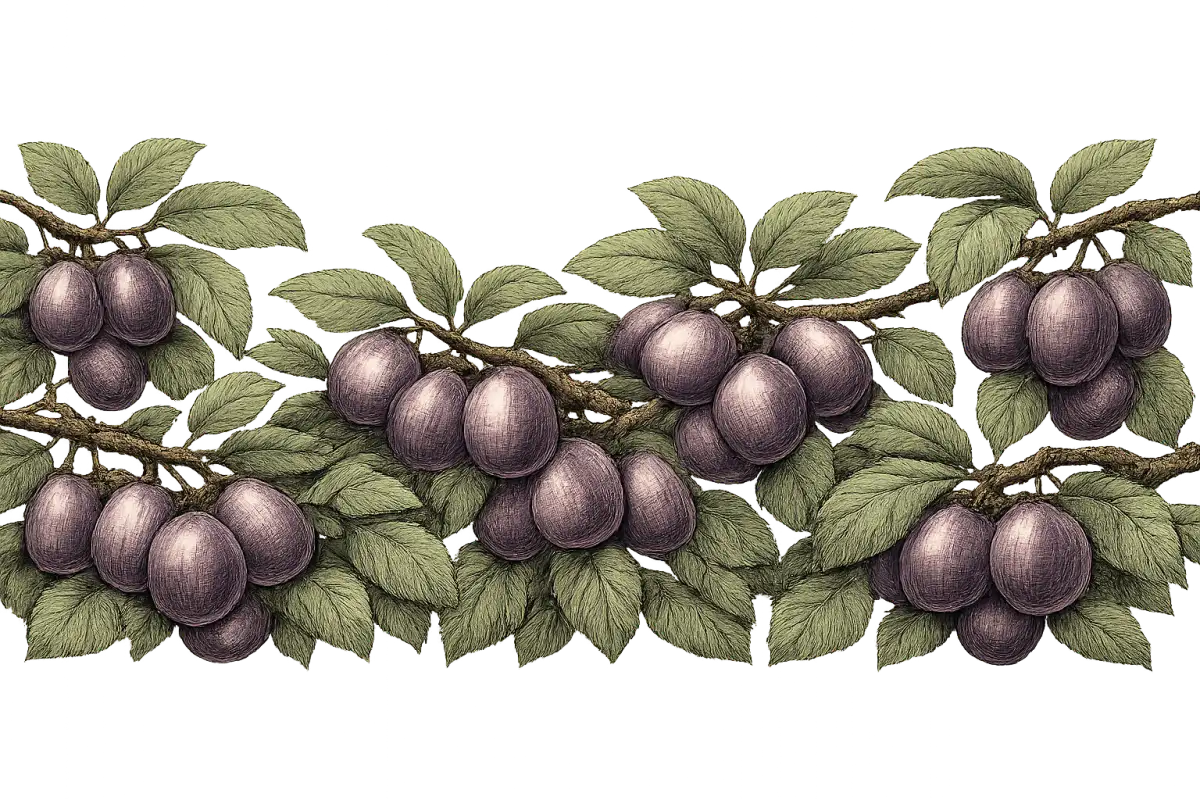
How to grow plum tree — vintage botanical illustration showing the plant in detail

Plum Tree at a Glance

Sun

Sun

Minimum 6 hours full sun per day

Soil pH

Soil pH

5.5-6.5

Water

Water

Deep weekly watering during establishment (year 1-2)

Spacing

Spacing

12-22 ft

Days to harvest

Days to Harvest

First crop year 3-4; harvest June-September

Height

Height

12-22 feet depending on rootstock

Soil type

Soil

Well-drained soil

Lifespan

Lifespan

perennial

Get your personalized growing data

Enter your zip code for frost dates, growing season, and soil type.

Here is what nobody tells you about growing stone fruit at home: peaches demand near-constant attention, sweet cherries are practically impossible in half the country, and apricots are a gamble wherever late frosts exist. Plums, on the other hand, quietly do most of what you need with less drama than any of their close relatives.

We have tracked home fruit tree outcomes across the country for years, and plums outperform every other stone fruit by a wide margin when it comes to beginner success. They tolerate heavier soil than peaches or cherries. They are more disease-resistant than peaches. They are cold-hardy across a far wider range than sweet cherries. And there are genuinely self-fertile varieties, meaning a single tree in your yard can produce full crops without a partner.

So why do so many home-grown plum trees underperform? Why do people plant them and get gorgeous foliage for years but almost no fruit?

Usually, the answer comes down to one of three things: the wrong variety for the zone, a pollination mismatch that makes fruit production physically impossible, or a tree that was never trained properly in its first two or three years. None of these problems are hard to solve once you know what to look for. All of them are miserable to discover on a tree that is already five years old.

This guide covers everything that matters: variety selection by zone, the pollination rules that trip up most beginners, soil and planting, watering, pruning, pests, and the mistakes we see most often. Get these right and you will have a tree that produces 20 to 40 pounds of fruit per year for decades.


Quick Answer: Plum Tree Growing at a Glance

USDA Zones: 3 through 9 (with the right variety and type)

Sun: Full sun, minimum 6 hours direct — more is better

Soil pH: 5.5–6.5 (slightly acidic)

Spacing: 12–22 feet depending on rootstock

Water: Weekly deep watering during establishment (years 1–3); moderate drought tolerance at maturity

Fertilizer: Balanced 10-10-10 in early spring before bloom; stop by June

Pollination: Many European varieties are self-fertile; most Japanese and all American hybrids need a partner of the same type — Japanese and European cannot cross-pollinate each other

First meaningful crop: Year 3–4

Mature yield: 20–40 pounds per tree annually

Easiest single-tree variety: Mount Royal (zones 4–6, European, self-fertile) or Methley (zones 4–9, Japanese, self-fertile)


The Pollination Problem Nobody Warns You About

Before we get into variety selection, soil, or any other topic, I need you to understand this. It is the single most common mistake we see with plum trees, and it is completely invisible until you spend years wondering why your healthy trees are not fruiting.

Japanese and European plums cannot cross-pollinate each other.

This is not a matter of bloom-time overlap or spacing. It is a chromosomal incompatibility. Japanese plums (Prunus salicina) are diploid. European plums (Prunus domestica) are hexaploid. Different chromosome counts mean their pollen is fundamentally incompatible. A Methley (Japanese) planted ten feet from a Stanley (European) will not pollinate it. Neither tree will produce more fruit for having the other nearby.

This matters enormously because nurseries often sell both types under the same "plum" label. A customer buys two plum trees — one Japanese, one European — assuming they have covered pollination. They plant them, both trees bloom, nothing sets fruit. They blame the location, the soil, the weather. They fertilize more. They try again the following year. The trees look healthy because they are healthy. They just cannot produce fruit together.

The fix is simple once you know the rule: Japanese pollinates Japanese. European pollinates European. No exceptions.

Most European varieties — Stanley, Italian, Green Gage, Mount Royal — are self-fertile and do not need a partner at all. Most Japanese varieties do need one, though Methley and Santa Rosa are partially self-fertile and will produce some fruit alone (significantly more with a partner of the same type). American hybrid plums, which are the cold-hardy choice for zones 3 and 4, are never self-fertile and always need a cross-pollinator.

Keep this rule in your head as you read the variety recommendations below, and you will avoid the most costly plum-growing mistake there is.


Best Plum Tree Varieties by Zone

Zone selection is the second major decision, and it is where variety choice determines not just yield but whether the tree produces at all. The key distinction is between the three plum types: American hybrids for the coldest zones, European plums for zones 4 through 8, and Japanese plums for zones 5 through 9.

What zone are you in?

Enter your zip code for frost dates, growing season, and soil type.

Cold Zones (3–4): American Hybrids and the Northern European Standouts

Zone 3 is inhospitable to Japanese and European plums. The winters are simply too severe — temperatures hitting -30F to -40F eliminate most of the standard catalog. American hybrid plums, which were bred specifically for these conditions, are the only reliable choice. They are not the plums you see in grocery stores — the fruit is smaller and firmer, best for jams and preserves — but they are productive, cold-hardy trees that survive conditions other plums cannot.

Toka is the pollinator you build a zone 3 planting around. It is sweet, spicy, good for fresh eating, and it pollinates every other American hybrid variety. No zone 3 planting should be without it. Pair Toka with Superior (the largest-fruited American hybrid, decent for fresh eating) or Alderman (large red fruit, productive in harsh conditions). Pipestone rounds out the zone 3 options with its reliable cold-hardiness and utility for jam-making. None of these are self-fertile — plant at least two varieties.

Zone 4 opens the door to cold-hardy European plums, and one variety stands out above everything else: Mount Royal. It is blue, sweet, and self-fertile. If you have space for only one plum tree in zone 4 and want guaranteed production, Mount Royal is the answer. It handles the northern winters, blooms at the right time to dodge most late frosts (a natural advantage of European plums over Japanese), and produces reliably without a partner.

Methley — a Japanese variety — can succeed in protected zone 4 microclimates, but it sits at its cold limit here. Site it against a south-facing wall, at the top of a slope where cold air drains away, or near a building that provides reflected warmth. Methley is self-fertile and produces very early, with distinctive blood-red flesh. In an exposed zone 4 location, skip it and stick with Mount Royal or American hybrids.

Standard Zones (5–6): The Widest Selection in the Country

Zone 5 is the tipping point where the full range of both European and Japanese plums becomes available. The challenge is not finding varieties that will survive — it is choosing among everything that will thrive.

For a single self-fertile tree in zone 5, you have two excellent options depending on how you like to eat plums. Stanley is the classic European choice: dark blue, freestone, versatile for fresh eating, cooking, and drying, and reliably self-fertile. It is the most widely grown prune-type plum in home gardens for a reason. Methley is the Japanese equivalent — self-fertile, very early to ripen, mild and sweet with that distinctive blood-red flesh. Easier to eat out of hand; less suited for drying.

For a two-tree planting that maximizes production, keep varieties within the same type. On the European side, Stanley pairs naturally with Italian (Fellenberg) — both self-fertile, both reliable, slightly different ripening windows, and Italian is unsurpassed for making homemade prunes. Add Green Gage if you want what many consider the finest-flavored plum in existence — small, green-yellow, and absolutely not a grocery-store plum. It produces less heavily than Stanley but is worth growing for the flavor alone. On the Japanese side, Santa Rosa is the benchmark variety — large, dark purple, widely adapted — and it benefits significantly from a partner. Pair it with Methley for early coverage, or Shiro for mid-season. Be warned about Shiro: it is extraordinarily productive, which sounds great until you realize that means aggressive thinning every single year or you will get quantities of undersized fruit and a tree that crashes into alternate bearing.

Zone 6 is arguably the best zone for Japanese plums. The warmth suits them, and late frosts — while still possible — are less reliably destructive than in zone 5. Santa Rosa thrives here. Satsuma enters the picture in zone 6 as well — its blood-red flesh is visually stunning and the firm, meaty texture holds up beautifully for jam. Satsuma needs a pollinator, and Santa Rosa is the standard pairing. For European types in zone 6, Stanley is still excellent and entirely sufficient as a solo planting.

Warm Zones (7–9): Japanese Plums Take Over

Zone 7 is where Japanese plums are definitively at their best. The warmth suits them perfectly, and the early bloom time — which is a frost liability in zone 5 — becomes an advantage, delivering ripe fruit in late June and July while European plums are still sizing up. Santa Rosa is the cornerstone recommendation here: it handles zone 7 heat, is partially self-fertile, and produces heavily. The classic pairing is Santa Rosa with Beauty (red with amber streaks, an excellent early pollinator and fresh-eating plum) or with Satsuma for a mid-season blood-plum addition. Methley continues to work well in zone 7 as the self-fertile, low-maintenance option.

One note for the warmest parts of zone 7: European plums may not receive enough winter chill hours to bloom and set fruit reliably. Japanese varieties are the safer bet in these locations. If you are in coastal zone 7 or a particularly warm microclimate, prioritize Japanese types.

Zones 8 and 9 belong entirely to Japanese plums. European varieties cannot accumulate the winter chill hours they need here, and they will simply fail to bloom adequately year after year. Low-chill Japanese varieties are the only path forward. Methley is the safest single-tree choice for these zones — it has among the lowest chill requirements of any Japanese plum, handles heat well, and is self-fertile. Santa Rosa is widely grown in California's warm valleys and the Gulf Coast region and performs strongly in warm climates. In zones 8-9, brown rot pressure increases sharply due to warm temperatures combined with summer humidity, so cultural disease management becomes more important here than in cooler zones. We will cover that in the pest and disease section.

Quick Reference Table: Top Picks by Zone Group

Zone GroupTop 3 VarietiesTypeWhy
3Toka, Superior, AldermanAmerican hybridSurvive to -40F; Toka pollinates all hybrids
4Mount Royal, Toka, Methley*European / HybridMount Royal: self-fertile, cold-hardy standout
5–6Stanley, Santa Rosa, Green GageEuropean / JapaneseFull selection opens up; pair within type
7Santa Rosa, Beauty, SatsumaJapaneseBest zone for Japanese plums; heat suits them
8–9Methley, Santa Rosa, BeautyJapaneseLow chill only; European plums won't produce

*Methley viable in protected zone 4 microclimates only


Soil, Drainage, and Getting the Site Right

Plums are the most forgiving stone fruit when it comes to soil. Peaches demand light, well-drained loam. Sweet cherries struggle in clay. Plums — especially on Myrobalan rootstock — tolerate heavy clay soil that would make other stone fruit miserable. This does not mean soil is irrelevant. It means you have a wider margin for error, and getting it right still produces healthier trees with better crops.

What Plums Actually Need

Target pH is 5.5 to 6.5 — slightly acidic. This range keeps nutrients available in forms roots can use. Below pH 5.0, the soil becomes too acidic and you will need lime to correct it. Above 7.0, the soil is too alkaline and elemental sulfur is required. Above 7.5, you have significant amendment work ahead of you or should consider raised beds with amended soil.

Test your soil before planting, ideally 6 to 12 months in advance. A soil test from your county extension office — typically $10 to $25 — is more reliable than home test strips for making actual decisions. Collect samples from 6 to 8 inches deep, which is where the roots will be growing. If pH adjustment is needed, sulfur takes 3 to 6 months to fully react in soil, so apply it in fall for spring planting. Lime reacts faster, typically 2 to 3 months.

Drainage is non-negotiable. Standing water after rain is a warning sign serious enough to change your planting location. Waterlogged soil kills plum roots through oxygen deprivation and water mold pathogens, and saturated conditions reduce cold hardiness in winter. Before you plant, do a percolation test: dig a 12-inch hole, fill it with water, let it drain, fill it again, and time how long it takes to empty. Water that drains within 1 to 4 hours indicates ideal conditions. More than 12 hours is poor drainage that needs addressing. Water still standing after 24 hours means do not plant there without significant intervention.

Clay Soil: Better News Than You Think

If you have heavy clay, you are not automatically disqualified from growing plums. The key is to amend broadly — not just in the planting hole. Digging a pocket of improved soil in the middle of dense clay creates what is sometimes called the bathtub effect: water flows into the amended hole and cannot drain into the surrounding clay. The result is a puddle at root depth, which is exactly what you were trying to avoid. Work 3 to 4 inches of compost into a 10-foot-wide area around the planting site, 8 to 12 inches deep. Choose Myrobalan rootstock, which is specifically adapted to heavy and poor soils. This combination — broad amendment plus the right rootstock — lets plums succeed in clay conditions that would defeat peaches or cherries.

Site Selection Beyond Soil

Full sun is mandatory — minimum 6 hours of direct sunlight per day, with more always being better. Trees in partial shade produce fewer flowers, set less fruit, and stay perpetually damp in ways that favor fungal disease. A plum tree in insufficient sun is a permanent disappointment.

Avoid frost pockets. Low-lying areas where cold air collects on clear nights expose Japanese plums — which bloom early — to significantly more late frost damage than the same variety planted on a slight rise or slope just fifty feet away. In zones 5 and 6 especially, siting a Japanese plum in a frost pocket almost guarantees years of lost crops even though the tree itself survives. Cold air flows downhill like water; elevated sites and slopes are naturally protected.

If your drainage is marginal, plant on a raised mound 12 to 18 inches above the surrounding grade. It is not elegant, but it works and protects your tree for decades.


Planting Your Plum Tree the Right Way

When to Plant

In most zones, early spring is the best planting time. Bare-root trees — which are less expensive and establish beautifully — should go in before bud break while they are still dormant. Container-grown trees can be planted spring through early fall, though spring is always preferred. In zones 8 and 9, late winter planting (January through February) works well and gives the tree time to establish roots before summer heat arrives.

The Planting Process

Step 1: Dig the hole. Make it twice as wide as the root ball and the same depth. Shallow and wide is the formula. Resist the instinct to dig deeper thinking you are giving roots more room — you are not.

Step 2: Prepare bare-root trees. If you are planting a bare-root tree, soak the roots in water for 1 to 2 hours before planting. Build a small mound of soil at the bottom of the hole and spread the roots over it.

Step 3: Watch the graft union. This is critical and often overlooked. The graft union — the knobby joint where the desired variety was budded onto the rootstock — must sit 2 to 3 inches above soil level after planting and settling. Burying the graft union allows the upper portion of the tree to root on its own, completely defeating the purpose of the rootstock. The rootstock controls tree size and soil adaptation; if the graft union is buried, you lose that control.

Step 4: Backfill with native soil. Do not amend the backfill. Use the soil you dug out. You want roots to grow outward into the surrounding earth, not circle endlessly in a pocket of enriched soil that is easier to navigate than everything around it.

Step 5: Water deeply. Soak the entire root zone slowly and thoroughly to eliminate air pockets around the roots. This first watering matters more than most people realize.

Step 6: Mulch correctly. Apply 2 to 4 inches of organic mulch — wood chips, shredded bark, or straw — in a wide ring around the base of the tree. Extend it at least to the drip line of the canopy. Keep mulch 3 to 4 inches away from the trunk itself. A mulch ring that presses against the trunk keeps bark perpetually moist, which promotes rot, invites fungal entry, and creates comfortable rodent habitat. The mulch ring should look like a donut, not a volcano piled against the trunk.

Step 7: Remove first-year fruit. If your tree sets fruit in year 1, remove it. We know this is hard to do when you have just planted a tree and you are excited to taste the fruit. Do it anyway. The tree needs its energy for root and branch development, not fruit production. A tree that fruits too early in its life is trading long-term productivity for short-term output that amounts to a handful of plums.


Watering: Deep and Deliberate During Establishment, Hands-Off at Maturity

The watering needs of a plum tree shift more dramatically between youth and maturity than almost any other common fruit tree. Understanding that transition — and not applying establishment-phase watering forever — is essential.

Years 1 Through 3: The Vulnerable Window

A newly planted plum tree has a limited root system and cannot find its own water. In year 1, water deeply once per week if rainfall is less than 1 inch. Apply 2 to 3 gallons per watering, slowly, at the base of the tree. A hose on a slow trickle for 15 to 20 minutes achieves deep penetration. A quick surface spray does not — it wets the top inch of soil and does nothing for roots growing 12 to 18 inches down. In hot climates (zones 7 to 9) during extreme heat above 95F, move to twice-weekly watering.

In year 2, continue weekly watering during dry periods but begin allowing mild dry spells between waterings. This is intentional: letting the tree experience brief moisture stress encourages roots to grow deeper seeking water, which is exactly what you want for long-term resilience. By year 3, space waterings to every 10 to 14 days and begin the transition to mature-tree management.

Mature Trees: Less Is More

Established plum trees have moderate drought tolerance. In most zones that receive 1 inch of rain per week during the growing season, supplemental watering is usually unnecessary. The root system of a mature tree extends well beyond the visible canopy and accesses moisture from a large soil volume. Trust it.

During extended dry spells — two or more weeks without meaningful rain — water deeply once every two weeks. Apply 5 to 10 gallons per tree, slowly, at the drip line of the canopy (not at the trunk, where absorbing roots are not concentrated). The three most critical watering windows during drought are bloom through fruit set in spring, fruit sizing in early to mid-summer, and the pre-harvest period 2 to 4 weeks before ripening. Water stress during these windows causes poor fruit set, small fruit, and fruit cracking respectively.

In late summer and fall, reduce watering intentionally. Excess moisture in fall promotes soft new growth that does not harden off before winter. Let the tree enter dormancy naturally.

The Brown Rot Connection

How you water matters for disease, not just for moisture. Overhead irrigation — sprinklers that wet the foliage, flowers, and fruit — creates ideal conditions for brown rot, which is the most economically damaging disease of stone fruit in the US. Wet foliage during bloom promotes blossom blight. Wet fruit during ripening promotes fruit rot. If you have had brown rot problems, switching from overhead sprinklers to drip irrigation at the base of the tree is often the single most impactful change you can make — more effective in many cases than a full fungicide program.

Drip irrigation also directs water where it is needed (the root zone), reduces evaporation, and is more efficient by every measure. If you are setting up watering for a new plum tree, install a drip emitter ring around the tree from the start and do not look back.

Mulch as Water Management

The most effective water conservation tool for a plum tree is not a fancy irrigation system. It is 2 to 4 inches of organic mulch maintained consistently around the tree, extended at least to the drip line. Mulch reduces soil temperature by 8 to 13 degrees Fahrenheit in summer, dramatically slowing evaporation. In zones 8 and 9, the difference between a mulched and unmulched tree's watering needs in summer heat is dramatic — it can mean the difference between supplemental watering twice a week versus once every two weeks.


Pruning for an Open Canopy (and Why It Matters Beyond Fruit)

Plums are trained to an open-center vase shape. No central leader — the main upward trunk is removed. Three to five main scaffold branches radiate outward and upward from the trunk. The center of the tree is open to sunlight and air. This shape is not just about aesthetics or space efficiency. It is directly tied to disease management.

Brown rot and black knot — the two most serious plum diseases — both thrive in dense, humid canopies. An open-center tree dries faster after rain, allows better air circulation, and lets sunlight reach fruit and foliage throughout the canopy. Pruning and disease management are not separate subjects with plums. They are the same subject.

Training Young Trees (Years 1–3)

Year 1 is where you establish the framework that determines the tree's health and productivity for decades. If you are planting a bare-root whip with no branches, head the central leader back to 30 to 36 inches above ground to force lateral buds and give you branches to choose from. If you are planting a branched nursery tree, select 3 to 5 scaffold branches with these characteristics: spaced 4 to 8 inches apart vertically on the trunk (not all emerging from the same point), distributed evenly around the trunk, and attached at 45 to 60 degree angles from the trunk. Wide crotch angles are structurally strong. Narrow angles — where a branch meets the trunk almost vertically — are weak and split under fruit weight.

In year 2, remove the central leader above the scaffolds to create the open center, head scaffold branches back by about one-third to encourage lateral branching, and remove any shoots growing inward toward the center or straight up (water sprouts) from scaffold branches. By year 3, the vase shape should be clearly established and you transition into annual maintenance pruning.

This process takes five minutes of attention twice a year for the first three years. Skipping it means facing major corrective surgery on an established tree — large wounds, significant disease risk, and years of reduced production.

Annual Maintenance Pruning

Once trained, the annual pruning checklist for a mature plum follows a consistent sequence. Start with the three Ds: remove dead wood, diseased wood (any black knot growths, pruned 4 to 6 inches below the visible infection), and damaged or broken branches. Then remove crossing and rubbing branches (the weaker of the two). Then thin the interior — remove branches growing toward the center until you can see daylight through the canopy from below. Then remove water sprouts (the vigorous vertical shoots from scaffold branches that crowd the canopy and rarely produce fruit). Finally, pull — not cut — any rootstock suckers emerging from below the graft union. Cutting leaves a stub that resprouts; pulling removes more of the base.

Aim to remove 10 to 20 percent of the canopy annually. Enough to maintain the open center and address problem wood. Not so much that you shock the tree into producing a forest of water sprouts.

Pruning Timing Is a Disease Decision

Prune in late winter during the dormant season — February through March in most zones — and do it during a dry weather window. Check the forecast before you start: you want at least 48 hours of dry weather after pruning. This is not just preference. Black knot spores disperse actively during wet spring weather, and fresh pruning cuts are direct entry points. Pruning in wet conditions is essentially inviting the disease into wounds you just created.

Never prune in fall. Wounds heal slowly going into dormancy, and cold-damaged tissue around cuts provides disease entry points. Never prune during or immediately before rain. If you discover an active black knot growth during the growing season, remove it immediately — the urgency of stopping disease spread outweighs the timing concern. But plan your standard annual pruning for dry late-winter windows.

Sterilize your pruning tools between every cut when removing diseased wood. Use 70% isopropyl alcohol (effective and less corrosive to blades than bleach) or a 10% bleach solution. Carry a spray bottle while pruning. This step is not optional if black knot has ever appeared in your tree or neighborhood.

Fruit Thinning: The Step Most People Skip

Fruit thinning is technically separate from structural pruning, but it belongs in this section because it is performed with similar timing and tools — and it is one of the most skipped essential steps in plum growing.

Japanese plums are notorious for setting dramatically more fruit than they can support. Shiro and Santa Rosa are particularly guilty. When a tree carries too many fruit, the individual plums are small and poor quality, branches snap under the weight (especially in rain or wind), and the tree exhausts itself and skips the following year's crop entirely — a phenomenon called alternate bearing. Touching fruit also spreads brown rot directly by contact.

Wait until after June drop — the tree's natural shedding of a portion of its fruit in late May through June. Then thin remaining fruit by hand to 4 to 6 inches apart on the branch. Remove damaged, misshapen, or scarred fruit first. On heavily laden branches, err on the side of removing more rather than less. If branches still sag after thinning, support them with wooden props. European plums need less thinning than Japanese, but check every variety in a heavy crop year.

What zone are you in?

Enter your zip code for frost dates, growing season, and soil type.


Pests and Diseases: The Three Things That Matter Most

Despite being the easiest stone fruit overall, plum trees face three serious threats. All three are manageable with good cultural practices. In most home gardens, you can avoid the worst damage without a heavy spray program — but you have to be consistent.

Black Knot: The One That Sneaks Up on You

Black knot is caused by the fungus Apiosporina morbosa, and it is distinctive enough that once you have seen it, you will always recognize it. In its early stage, look for olive-green, soft swellings on twigs and young branches. By the second year, those swellings have hardened into rough, warty, black masses that encircle branches. Left unmanaged, advanced black knot girdles and kills branches throughout the tree. And here is the frustrating part: by the time you can see the visible knot, the fungus has been growing inside the wood for over a year.

Spores disperse during wet spring weather, from bud break through bloom. Wild plums and wild cherries in the area serve as permanent infection reservoirs — if there are wild plums within 500 feet of your tree with visible black knot, expect persistent reinfection regardless of what you do to your own tree.

Management starts with pruning: cut 4 to 6 inches below the visible edge of the knot, because the fungus extends beyond what you can see. Destroy all removed material — burn it, bag it, haul it away. Do not compost it and do not leave it on the ground under the tree. Scout your tree thoroughly every winter during dormant pruning; catching small knots early makes removal effective. Large established knots on main scaffold branches may require removing major limbs.

Variety selection matters for black knot. Methley and Shiro (Japanese) show better resistance. Stanley and Damson (European) are more susceptible. If you are in the Midwest or Northeast, where black knot pressure is highest, prioritizing Japanese varieties or the President European variety reduces your long-term management burden significantly.

Brown Rot: The Fast One

Brown rot (Monilinia fructicola) is the most economically important stone fruit disease in the US. It attacks blossoms in spring and fruit in summer. Warm temperatures (75 to 85F) combined with rain or high humidity are the trigger conditions, and it moves fast — an entire plum can rot within one to two days in warm, wet weather. The hallmark sign is gray fuzzy mold developing on the surface of rotting fruit.

Prevention is overwhelmingly about sanitation and canopy management. Remove every mummified fruit from the tree and from the ground beneath it during winter cleanup — mummies are the primary inoculum source for the following season. Prune for an open canopy that dries quickly. Thin fruit to prevent touching. Avoid overhead irrigation. Harvest promptly as fruit ripens rather than letting it hang.

If you live in a zone with persistent wet weather during bloom or ripening, a targeted fungicide program is warranted at three windows: pink bud stage (just before bloom opens), full bloom, and 2 to 3 weeks before anticipated harvest. Captan, myclobutanil, and propiconazole are common options — check your local extension service for currently approved products in your state.

Japanese plums are somewhat less susceptible to brown rot than European varieties, which is another reason to favor them in zones 7 to 9 where warm, humid conditions peak.

Plum Curculio: The Eastern Insect Problem

The plum curculio is the most damaging insect pest of plum trees in the eastern United States and is essentially a non-issue west of the Rocky Mountains. It is a small (one-quarter inch) grayish-brown snout beetle that emerges in spring when trees are blooming. Females puncture developing fruit to lay eggs, leaving crescent-shaped scars on the fruit skin — the telltale sign. Heavy infestations can destroy 80 percent or more of the crop.

The critical management timing is petal fall. This is when beetles are active and laying eggs, and when an insecticide application (if you choose one) is most effective. A second application 7 to 10 days after petal fall catches late-emerging beetles. For a non-chemical approach, try the shake-and-collect method: spread a tarp under the tree in early morning when beetles are sluggish, shake the branches vigorously, and collect and destroy the beetles that drop and play dead. Repeat every few days from petal fall for two to three weeks. Kaolin clay (Surround) as a physical barrier on fruit also deters egg-laying when applied thoroughly and reapplied after rain.

The Dormant Oil Spray You Should Not Skip

Applied in late winter before bud break, dormant oil spray smothers overwintering scale insects, mite eggs, and aphid eggs on bark. It is a simple, low-toxicity intervention that pays consistent dividends. Apply when temperatures are above 40F and a 24-hour freeze-free window is forecast. This combined with thorough winter cleanup — mummies removed, black knot pruned, debris hauled away — forms the foundation of plum pest and disease management. Everything else builds on top of it.


The Mistakes That Cost You Years of Production

We have watched enough plum trees underperform to know exactly where things go wrong. These are the mistakes that appear most often — and the ones with the highest cost in time and lost fruit.

Mistake #1: Cross-Type Pollination

We covered this at the top of the guide, but it bears repeating in a different context: this is the mistake most likely to leave you with healthy trees that produce almost nothing for years. Japanese and European plums cannot cross-pollinate each other. Verify the type of every variety you plant before buying a pollination partner. If you already have a tree and are not sure of its type, find out before you buy a second. One afternoon of research saves years of frustration.

Mistake #2: Choosing Japanese Plums in Frost-Prone Cold Zones

Zone ratings on nursery tags tell you whether a tree will survive the winter. They do not tell you whether it will actually produce fruit. Japanese plums are rated to zone 5 (Methley to zone 4), but their early bloom makes them vulnerable to late April and May frosts that are common in zones 4 and 5. A Japanese plum in a frost-prone zone 5 location may live perfectly well for a decade and produce almost no fruit because its blossoms freeze every spring.

The fix: in zones 4 and 5, default to European plums, which bloom later and dodge most late frosts. If you want Japanese plums in zone 5, plant the hardiest Japanese variety (Methley), choose the warmest microclimate on your property, and understand you are taking a measured risk.

Mistake #3: Skipping Fruit Thinning

Fruit thinning is easy to understand and hard to actually do, because removing healthy fruit feels wrong. But allowing Japanese plums to carry every fruit they set produces small, poor-quality plums, structural branch damage, and alternating heavy-light crop cycles that reduce lifetime yield. Thin to 4 to 6 inches apart after June drop. Every year. No exceptions for Shiro and Santa Rosa, which will over-set fruit enthusiastically and consistently regardless of how many times you have thinned them before.

Mistake #4: Pruning in Fall or Wet Spring

This one creates a specific, predictable consequence: increased black knot and brown rot infections. Pruning in fall means wounds heal slowly going into dormancy, and cold-damaged tissue around cuts provides a disease pathway. Pruning during wet spring weather means creating fresh wounds exactly when black knot spores are dispersing. Prune in late winter during a dry weather window. The 48-hour dry forecast rule is not overcaution — it is standard practice.

Mistake #5: Over-Fertilizing with Nitrogen

Excess nitrogen produces vigorous, dense, succulent vegetative growth that looks impressive and performs poorly. More leaves. Longer whippy shoots. Fewer flowers, less fruit. And the soft, nitrogen-rich tissue is more attractive to aphids and more susceptible to fungal disease. If your mature plum tree is growing 18 to 24 or more inches of new shoot per year but setting disappointing crops, nitrogen is likely the culprit.

Use a balanced fertilizer (10-10-10) applied once in early spring before bloom. Do not fertilize after June. Do not apply lawn fertilizer — typically high in nitrogen — anywhere near the root zone of your fruit trees. When in doubt, under-fertilize. A slightly hungry plum tree produces better fruit than an overfed one.

Mistake #6: Ignoring Winter Sanitation

Brown rot and black knot both overwinter on infected material. The mummified fruit hanging in your tree through winter produces spores that reinfect blossoms the following spring. Pruning debris left on the ground continues releasing spores. Scale insects and mite eggs on bark build up year after year without dormant oil spray.

Letting sanitation slide is self-compounding: a minor disease problem in year one becomes moderate in year two and severe by year three. The escalation is predictable and preventable. Winter cleanup takes 30 to 60 minutes per tree. Do it every year without fail.

Mistake #7: Neglecting Young Tree Training

The first three years of a plum tree's life establish the structural framework it will carry for decades. Skip training, and the tree develops a crowded, poorly structured canopy that requires large corrective cuts later — creating big wounds, disease entry points, and years of reduced production. Five minutes of attention twice a year for the first three years is the entire investment. Select your scaffolds, remove the central leader, maintain the open center. The rest takes care of itself.

What zone are you in?

Enter your zip code for frost dates, growing season, and soil type.


Harvesting: The Difference Between Plums and Great Plums

The gap between a grocery-store plum and a home-grown plum at peak ripeness is genuinely startling. Commercial plums are harvested for shipping durability — firm enough to survive transit, which means picked before full ripeness. A fully ripe plum from your own tree is a different fruit altogether.

How to Tell When Plums Are Ready

Japanese plums ripen between June and August depending on variety and zone. European plums ripen August through September. The reliable test for both is gentle pressure: a ripe plum yields slightly to a thumb pressed gently against the skin. It does not need to be soft — it needs to give. Ripe Japanese plums also develop their full color (variety dependent) and pull easily from the branch. European plums develop a waxy bloom on the skin and separate easily from the branch when ready.

Do not harvest by color alone. Full color develops before peak sweetness in many Japanese varieties. Give them a few more days once they look right and you will be rewarded.

Picking Window and Method

Plums ripen over a 2 to 3 week window on the tree, and ripeness varies across the canopy — fruit on the south and west sides, receiving more sun, ripens first. Pick every few days as fruit becomes ready rather than harvesting all at once. Twist and gently pull; ripe fruit releases with minimal effort.

Storage

Use plums quickly — they have less shelf life than most home growers expect from tree-ripened fruit. Refrigerate promptly after harvesting. Japanese plums at their best are genuinely best eaten within a few days of picking. For longer preservation, plums freeze well: spread in a single layer on a baking sheet, freeze until solid, then transfer to freezer bags. They hold quality for 6 to 12 months. European varieties like Italian and Stanley can be dried — halve them, remove the pit, and dry in a food dehydrator or low oven for homemade prunes that bear no resemblance to the commercial variety.

Install Bird Netting Before Fruit Colors

Birds are attentive. They notice ripening fruit and move quickly. Install bird netting before the fruit begins to change color, not after. Raise it on a frame rather than draping it directly on the canopy — birds peck through draped netting effectively. A simple PVC pipe frame around the tree is sufficient.


Frequently Asked Questions

Can I Grow a Plum Tree in a Small Yard?

Yes. Choose a semi-dwarf tree on Citation rootstock (suitable for zones 7 to 9) or a semi-vigorous tree on St. Julien A rootstock (better for zones 4 to 7). Semi-dwarf trees on Citation reach 12 to 15 feet with appropriate spacing and bear fruit earlier than standard trees — sometimes in year 2 or 3. St. Julien A trees run 15 to 18 feet at spacing. Both are manageable in a typical suburban yard. If your space is very limited, European upright varieties like Stanley take up less horizontal space than spreading Japanese varieties.

Do I Need Two Plum Trees?

It depends on your variety. Most European plums — Stanley, Italian, Green Gage, Mount Royal — are self-fertile and produce full crops alone. If you want a single tree, choose one of these. Most Japanese plums benefit significantly from a cross-pollinator of the same type; Santa Rosa is partially self-fertile but produces substantially more with a partner. American hybrid plums always need two varieties and are never self-fertile. If you plant two trees, remember the fundamental rule: Japanese pollinates Japanese, European pollinates European. Mixing types does not help either tree.

Why Is My Plum Tree Not Fruiting?

The four most common reasons are: pollination mismatch (Japanese paired with European, which cannot cross-pollinate), late frost damage to blossoms (especially likely with Japanese varieties in zones 5 to 6), inadequate sun (less than 6 hours direct), and insufficient chill hours in warm climates (European plums in zones 8 to 9 often fail to bloom adequately). Younger trees in years 1 and 2 should not be expected to fruit heavily — they are still establishing. If your tree is at least 4 years old, getting full sun, in the right hardiness zone, and still not fruiting, investigate the pollination situation first.

What Is the Best Low-Maintenance Plum Tree?

Methley is our answer for most gardeners. It is the self-fertile Japanese plum with the widest zone range (zones 4 to 9), low chill requirements for warm-climate performance, and early ripening that puts fruit on the table in June before most other plums. It is less fussy about soil than most stone fruit, handles heat well, and does not require a partner. If you are in zones 4 to 6 and prefer a European variety for its later bloom (reducing frost risk) and self-fertility, Mount Royal is the low-maintenance standout. Cold-hardy, reliable, and entirely independent.

How Do I Deal with Black Knot on an Existing Tree?

Prune out every knot you can find during the dormant season, cutting 4 to 6 inches below the visible infection edge and sterilizing your tools between each cut. Destroy all removed material — do not compost it. If knots are on small twigs and branches, you can likely maintain the tree. If black knot has reached the main scaffold branches and removing it would compromise the tree's structure, consider whether the tree is worth saving. A severely infected tree with compromised scaffolds is a persistent disease source for future plantings. If you replant, choose a different site and start with a Japanese variety — they are generally less susceptible than European varieties to black knot.


The Bottom Line

Plums are genuinely the easiest stone fruit for home growers — more forgiving of soil, more cold-hardy than cherries, less demanding than peaches. But easy does not mean effortless. The trees that fail almost always failed at one specific point: wrong variety for the zone, crossed pollination types, no training in the first three years, or winter sanitation ignored until disease took hold.

Get the fundamentals right — choose a variety matched to your zone, pair correctly within the same type, plant in full sun with good drainage, train to an open-center vase in the first three years, and do your winter cleanup every year without exception — and a plum tree will reward you with decades of heavy crops.

A mature plum tree producing 20 to 40 pounds of fruit per year, harvested at peak ripeness and eaten the same day, is one of the most satisfying things a yard can produce. Start with the right variety, plant it correctly, and you are more than halfway there before the first spring bloom.

Research for this guide was synthesized from extension service publications and nursery resources including recommendations from university extension services covering fruit tree establishment, variety trials, disease management, and zone-specific growing guidance.

Where Plum Tree Grows Best

Plum Tree thrives in USDA Zones 5, 6, 7, 8. Explore each zone's complete guide for growing tips, companion plants, and seasonal advice.

Also possible in: Zone 4, Zone 9 (challenging but possible with the right conditions).

Not sure of your zone? Look it up by zip code →