 Where to Plant
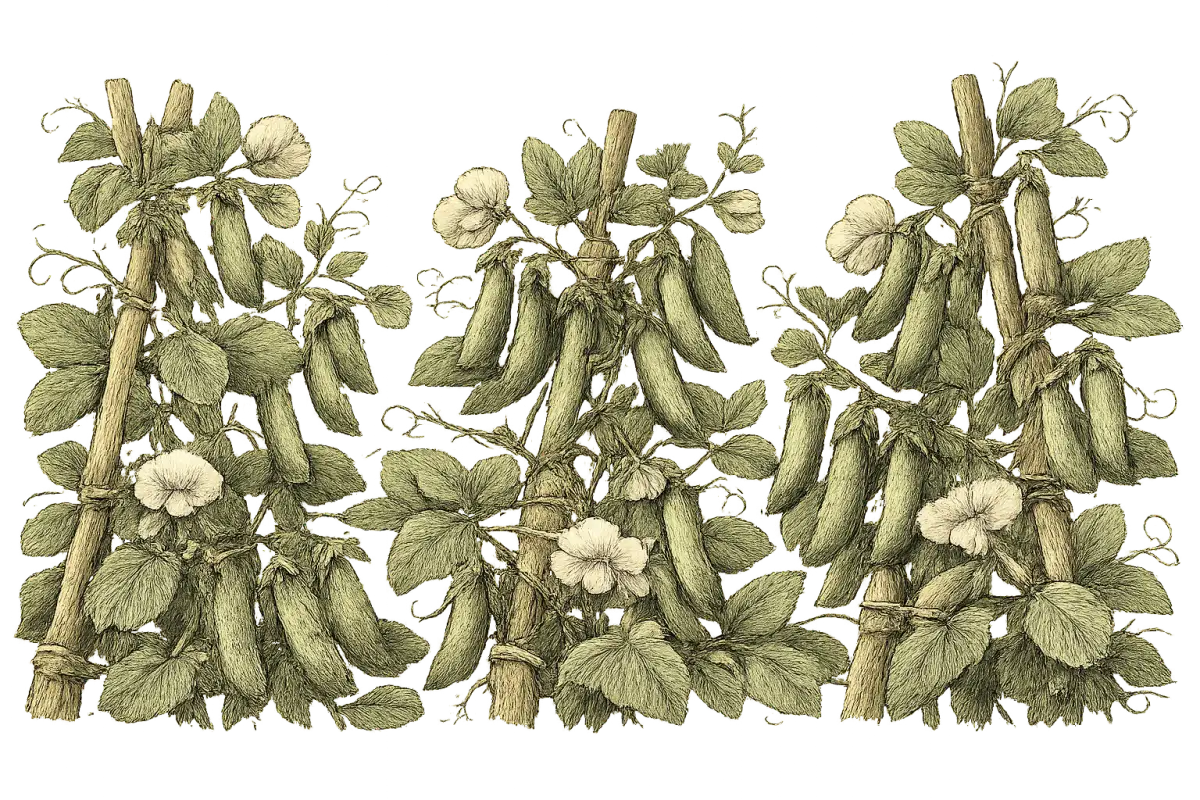


Here is a fact that should change how you think about peas: the moment you pick one off the vine, its sugar starts converting to starch. Within two to four hours at room temperature, you can taste the difference. Within 24 hours, a significant amount of that sweetness is simply gone. This is why peas from the grocery store taste like faintly green cardboard, and why peas eaten in a garden, still warm from the sun, taste like an entirely different vegetable.
That flavor is the whole point. And it is completely achievable if you know what you are doing.
Peas are one of the easiest vegetables you can grow. They fix their own nitrogen, tolerate light frost, ask almost nothing in the way of fertilizer, and produce prolifically in cool weather that shuts down most other crops. They are your first planting of spring and one of the most rewarding. But a handful of mistakes -- most of them completely avoidable -- turn what should be a reliable, sweet harvest into a short-lived disappointment: nitrogen-bloated vines with no pods, plants cooked by heat before they ever produced, a two-week glut followed by nothing.
This guide fixes all of that. We will cover the right varieties for every zone, how to manage soil without overthinking it, watering in a way that does not invite disease, the harvesting rhythm that doubles your total yield, and the mistakes that derail more pea crops than any pest or disease ever could.
Get these things right and you will have more sweet peas than you know what to do with. That is a problem worth having.
Quick Answer: Peas Growing at a Glance
USDA Zones: 3 through 10 (cool-season crop; timing varies dramatically by zone)
Pea Types: Sugar snap (whole pod), snow (flat pod), shelling (peas only)
Soil pH: 6.0-7.0
Soil Temperature for Sowing: Minimum 40F; seeds germinate in 7-14 days
Frost Tolerance: Down to 28F -- peas can handle light frost
Heat Ceiling: Stops flowering above 80F; dead above that for long
Sowing Depth: 1 to 1.5 inches
Spacing: 2-3 inches within rows; 18-24 inches between rows
Trellis: Required for pole types (5-6 ft); strongly recommended for bush types
Water: 1 inch per week; drip or soaker hose only -- no overhead watering
Fertilizer: None for nitrogen; bone meal and wood ash at planting only
Inoculant: Yes -- always, especially in new beds
First Harvest: 52-75 days depending on variety
Harvest Frequency: Every 1-2 days during peak -- this is non-negotiable
Succession Plant: Every 2-3 weeks throughout the cool window
The Temperature Problem (Why Timing Everything Else Follows From This)
Peas do not care about your calendar. They care about temperature.
They thrive between 40F and 75F. They tolerate frost down to 28F without flinching. But above 80F, they stop flowering. Not "slow down" -- stop. A week of 85F days effectively ends your crop. This single biological fact dictates everything about how you grow peas: when you plant, which varieties you choose, whether you succession plant, whether a fall crop makes sense in your zone.
Most people plant too late. They wait until the ground "feels ready," until there is no frost in the forecast, until it seems like proper spring. By that point, in most zones, they have burned half their window. Peas should go in the ground when temperatures are still uncomfortable for humans -- late winter or very early spring depending on where you live. A light frost will not hurt pea seedlings. A week of warm weather in May absolutely will.
The other half of the equation is summer heat. It arrives at different times in different zones, but it arrives everywhere. Your job is to get peas in the ground early enough that they mature in cool weather, not in spite of warm weather. In zones 8 through 10, that means a January or February planting. In zones 3 and 4, it means late April or early May the moment soil is workable. In zone 6, it means March, ideally before the last frost, because the plants can handle it.
This is the rare case in vegetable gardening where being aggressive pays off. Plant early. The peas can take it.
Soil: Less Is More (Especially With Nitrogen)
Peas are fundamentally different from most vegetables when it comes to soil. They fix their own nitrogen -- a symbiotic relationship with Rhizobium leguminosarum bacteria that colonize their roots and convert atmospheric nitrogen into a form the plant can use. When this partnership is working, the plant essentially fertilizes itself. You can verify it is working by digging up a plant four weeks after emergence and checking the root nodules: pink or red inside means active fixation. White or green inside means the bacteria are present but inactive. No nodules at all means the bacteria are absent entirely.
This changes your entire approach to soil prep.
pH matters. Keep it between 6.0 and 7.0. Below 6.0, the Rhizobium bacteria become less effective and Fusarium wilt pressure increases. Above 7.5, you will need to work in elemental sulfur or acidic organic matter. Test your soil before planting. It costs a few dollars and saves a lot of frustration.
Drainage is non-negotiable. Cold, wet spring soil and pea seeds are a bad combination. Damping off -- the condition where seedlings emerge and immediately collapse at soil level -- is caused by soilborne fungi (Pythium and Rhizoctonia) that thrive in exactly those conditions. If water puddles on your bed for more than an hour after rain, you have a drainage problem. The fix is either raised beds (the reliable solution) or amending heavily with compost to break up clay structure. Either way, fix it before planting season, not during.
Compost is your primary amendment. Work 2-4 inches into the top 6-8 inches of soil before planting. Compost improves drainage in clay soils, improves water retention in sandy soils, and supports the soil biology that peas depend on.
What to add at planting: Bone meal for phosphorus -- about 2 tablespoons per linear foot of row -- supports root development and pod formation. Wood ash provides potassium. A balanced organic fertilizer with a low nitrogen number (2-5-5 or 3-5-3 is fine; anything with nitrogen above 5 is not) is acceptable. That is it. Peas do not want a heavily amended, richly fertilized bed. They want moderate, well-drained, biologically active soil.
Inoculant is cheap insurance. A $3 to $5 packet of Rhizobium leguminosarum inoculant covers a large garden. If your bed has not grown peas or beans in the last three to four years -- or if you are working with new garden soil, raised beds with purchased mix, or containers -- there may be no Rhizobium bacteria present at all. Without them, peas must rely entirely on whatever nitrogen is in the soil. The result is pale foliage, slow growth, and mediocre yields. Mist seeds lightly with water, dust them with inoculant powder, and plant immediately. The bacteria are alive and sensitive to UV light and heat -- do not coat them and leave the seeds sitting on a bench in the sun for an hour.
One important soil note: Do not plant peas in the same bed more than once every three to four years. Fusarium wilt -- a soilborne fungal disease -- persists in soil for years and accumulates with repeated legume plantings. Rotate peas to fresh ground. When you are done with the season, cut plants at soil level rather than pulling them out. The nodule-bearing roots decompose underground and release their fixed nitrogen for the next crop. It is free fertilizer. Leave it there.
Best Pea Varieties by Zone
Choosing the right variety is the most consequential decision you will make. The wrong variety in the wrong zone either runs out of season before it fruits, capitulates to heat before the first picking, or gets obliterated by powdery mildew before you get a second harvest. Get it right and variety selection does half the work for you.
A word on the three pea types before we get into zones. Sugar snap peas -- you eat the whole pod -- are the most popular for home gardens and have the most forgiving harvest window. Snow peas -- flat pods harvested before the peas develop -- are essential for stir-fry and have the tightest harvest timing of the three. Shelling peas -- you shell the pod and eat only the peas -- have the most intense sweetness of all, but require the most labor and have the fastest sugar-to-starch conversion after harvest. Most home gardeners start with sugar snap for the best effort-to-reward ratio. All three are covered below.