Fruits

Growing Lemon Trees at Home: Everything You Need to Know Before You Plant

Sarah Whitfield

Sarah Whitfield

Fruit & Berry Specialist · Updated April 2026

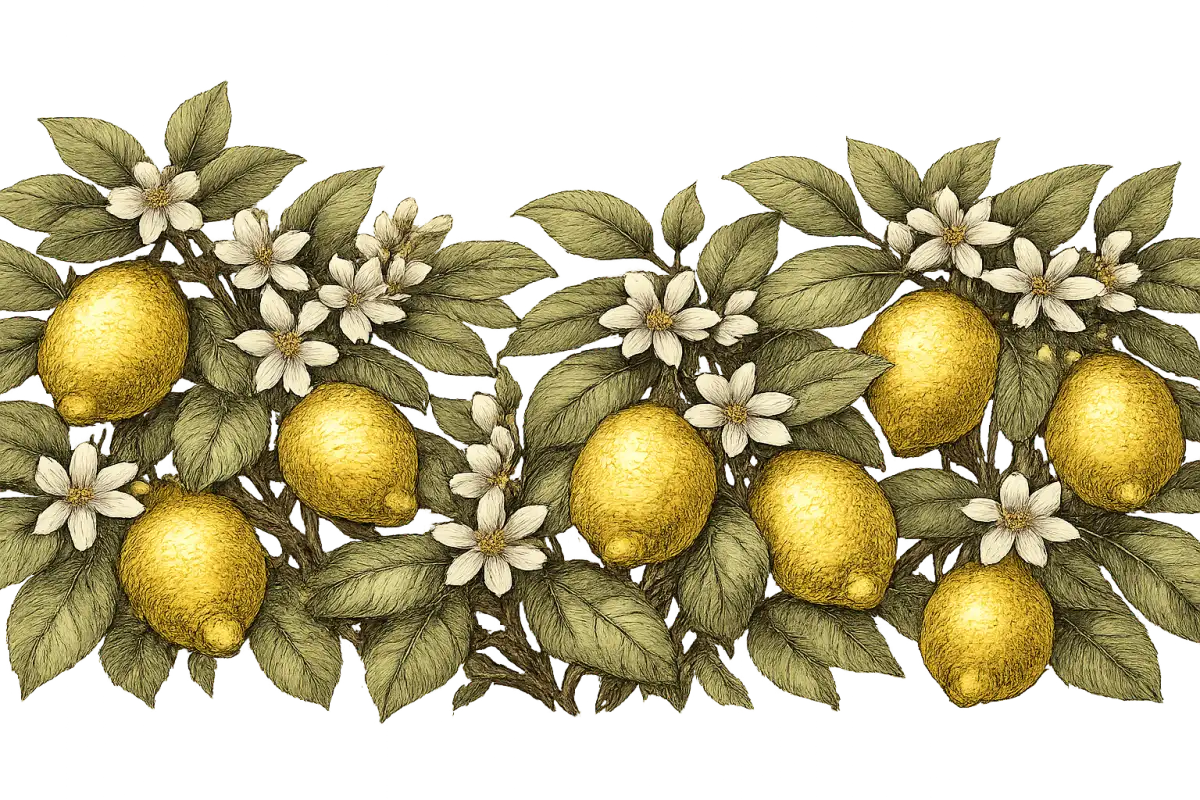
How to grow lemon trees — vintage botanical illustration showing the plant in detail

Lemon Trees at a Glance

Sun

Sun

8-12 hours for fruit production

Soil pH

Soil pH

5.5-6.5

Water

Water

Deep but infrequent

Spacing

Spacing

15-25 ft

Days to harvest

Days to Harvest

Some varieties need 6-9 months for full ripening after fruit set

Height

Height

10-20 feet unpruned

Soil type

Soil

Well-draining

Lifespan

Lifespan

perennial

Get your personalized growing data

Enter your zip code for frost dates, growing season, and soil type.

There is something deeply satisfying about a lemon tree in a home garden. The waxy, dark green leaves. The intoxicating fragrance of the flowers — a scent that genuinely stops people mid-conversation. And then, eventually, the fruit: glossy yellow globes that you grew yourself, picked at the moment they are actually ripe, tasting nothing like the pale, waxy specimens shipped across the country to your grocery store.

Here is the reality check, though: lemons are subtropical trees, and most of the United States is not subtropical. If you live in zones 9 through 11 — coastal California, the Gulf Coast, South Florida, Hawaii — you can plant a lemon tree in the ground and largely let it do its thing. If you live anywhere else, and that is the majority of American gardeners, you are growing this tree in a container, and that changes almost everything about how you approach it.

We are not going to pretend that is bad news. Container-grown Meyer lemons produce genuinely beautiful trees that fruit reliably with the right setup — and the fragrant flowers alone justify the effort. Penn State Extension puts it well: the tree blooms all year with an amazing scent. Even if your first year does not yield a single lemon, you will have a houseplant worth keeping.

But we are going to be honest about what it takes. Light is the number one reason indoor lemon trees fail to fruit. Overwatering is the number one reason container citrus dies. And choosing the wrong variety for your situation — planting a cold-sensitive Eureka in zone 8b, or a full-size Lisbon in a 12-inch pot — is the mistake that derails growers before they even get started.

This guide will walk you through all of it. Variety selection by zone, container setup, watering and feeding, pollination, harvesting, and the problems you are most likely to encounter. Let's get it right from the beginning.


Quick Answer: Lemon Tree Growing at a Glance

USDA Zones (in-ground): 9-11 standard; 8b with Meyer lemon and cold protection

USDA Zones (container): Any zone — container growing works everywhere

Best variety for most growers: Meyer lemon (Improved Dwarf)

Sun: 8-12 hours for fruit production; 6+ hours minimum for healthy growth

Soil: Well-draining, acidic mix; pH 5.5-6.5; 4:1 aged pine bark to peat (Clemson recipe)

Watering: Deep and infrequent; water when top 1-2 inches of soil feel dry

Fertilizer: Nitrogen-dominant 2-1-1 ratio; citrus-specific formulas with micronutrients

Fruiting onset: 1-3 years on grafted trees

Mature yield (in-ground): 100-200 lbs per year (UF/IFAS)

Time flower to harvest: 6-9 months for lemons

Cold hardiness: Meyer lemon survives to 22.3F (Clemson trial data); Eureka and Lisbon are more cold-sensitive

Pollination: Self-fertile; hand pollination required for indoor trees


The Variety Decision Comes First (And It Determines Everything Else)

Before you think about soil, pots, or watering schedules, you need to choose a variety. Not because it is the most exciting part of growing lemons, but because getting this wrong is the mistake that cannot be corrected later without starting over.

There are five varieties most home growers will encounter: Meyer, Eureka, Lisbon, Bearss, and, if you are open to adjacent citrus, kumquat for cold climates and Key lime for warm ones. They are not interchangeable. Cold hardiness, vigor, flavor profile, and container suitability vary enormously across these varieties.

What zone are you in?

Enter your zip code for frost dates, growing season, and soil type.

Warm Zones (9-11): The Full Menu Is Available

If you are in zones 9 through 11, you have access to the complete range of lemon varieties, and the choice comes down to flavor preference, site conditions, and how much maintenance you want to take on.

Meyer lemon is a hybrid of lemon and mandarin — technically not a true lemon, but the most beloved home-growing citrus in the country for good reason. It is the cold-hardiest of the lemons, surviving to 22.3F in Clemson trial data, which opens outdoor growing all the way into zone 8b with protection. The fruit is sweeter and less acidic than a true lemon, with thin smooth skin that deepens to orange-yellow when fully ripe. It blooms multiple times per year, which means fragrance and fruit almost continuously. If you are growing in a container, Meyer is the universal recommendation from UMD, UMN, Illinois Extension, Penn State, and Clemson — it is naturally compact, reaching 3-6 feet in containers and 6-10 feet in the ground. When you purchase a Meyer lemon today, you are almost certainly getting the Improved Dwarf selection — a virus-free form certified free of citrus tristeza virus, which is what you want.

Eureka lemon is the grocery store lemon — the variety most people picture when they think of a lemon. Sharp, bright acidity. Nearly thornless growth, which is a genuine practical advantage if you have children or tight spaces. The peel is thinner than Lisbon, which makes it easier to zest. In warm coastal climates (zones 10-11), Eureka produces nearly year-round. Its limitation is cold sensitivity: it cannot handle the temperatures Meyer tolerates, restricting it to zones 9-11, and it is really most reliable in zone 10 and up. It also grows to 10-15 feet in the ground, making it a poor container candidate.

Lisbon lemon is the other commercial true lemon, and it earns its place in the lineup through vigor and juice content. It produces slightly more juice per fruit than Eureka, handles wind exposure better due to its dense, protective canopy, and is marginally more cold-tolerant than Eureka — though still firmly in zones 9-11. The tradeoff is significant thorns, which make harvesting and pruning genuinely unpleasant. Lisbon shines in inland zone 9-10 areas with more temperature variation and wind exposure, where Eureka's spreading, less vigorous habit struggles.

Bearss lemon is a Florida specialty — vigorous, nearly thornless, with highly acidic, few-seeded fruit and a rich oil in the peel. It is well-adapted to humid subtropical climates. The caveat is susceptibility to citrus scab and greasy spot, which makes disease management more demanding than other varieties. In Florida and similar humid climates, Bearss is worth considering, but be prepared to manage disease pressure.

Kumquat is not a lemon, but it belongs in this conversation because it is the cold-hardiest citrus available — surviving to 15-17F, with Clemson's Meiwa kumquat trial reaching 16.3F. If you are in zone 8 and want an outdoor citrus tree without extensive cold protection infrastructure, kumquat is your answer. The fruit is eaten whole, sweet skin with tart flesh. Meiwa is sweeter, Nagami more tart.

Key lime is the most cold-sensitive citrus in common cultivation, really only viable outdoors in zones 10-11. In containers it grows happily anywhere with adequate light, producing reliable crops of small, intensely acidic fruit. Clemson recommends it as a container option specifically.

Cold Zones (8b): Meyer Is the Only Outdoor Option

Zone 8b is the frontier for in-ground lemon growing, and the rules here are strict: Meyer lemon only, planted in a strategic site, with graft union protection through the winter. No other lemon variety has the cold hardiness to survive zone 8b reliably.

The most important concept for zone 8b growers is the graft union — the point where the lemon scion is attached to the rootstock. If a freeze kills everything down to the graft union but the union itself survives, the desired lemon variety regrows. If the damage reaches below the graft union, what regrows is the rootstock — typically trifoliate orange or sour orange, not the lemon you planted. Protecting the graft union through cold winters is therefore the single most important cold protection strategy, not just for the tree's survival but for its identity.

The traditional technique for zone 8b is soil banking: mounding soil as high as possible around the trunk to cover the graft union and lower scaffold limbs. Texas A&M and Clemson both describe the protocol. Bank soil at Thanksgiving (November), remove carefully in early March. Before banking, treat the bark with insecticide and copper fungicide to prevent pest and disease issues in the moist, covered environment. When it is time to remove the bank, wash the soil off with a hose rather than scraping — the bark beneath will be tender.

Site selection provides passive protection worth several degrees of cold hardiness. Plant on the south or southeast side of a building — structures absorb solar heat during the day and radiate it at night. Bodies of water moderate nearby temperatures the same way. Avoid low-lying areas where cold air sinks during frost events; even a few feet of elevation difference matters in a hard freeze.

Zones 3-8a: Container Growing Is Your Path to Lemons

If you are north of zone 8b, the approach is container growing: Meyer lemon in a pot that spends warm months outdoors and winters inside near a south-facing window. This is not a consolation prize. A well-managed container Meyer lemon is a beautiful, fragrant, productive plant, and the container approach works in every zone in the country.

We will cover the full container setup in detail in the next section.

Quick Reference Table: Top Picks by Zone

Zone GroupTop VarietyTypeWhy
10-11 (coastal)EurekaTrue lemonThornless, year-round production, classic flavor
9-11 (inland)LisbonTrue lemonVigorous, wind tolerant, more juice
9-10 (humid SE)BearssTrue lemonFlorida-adapted, prolific, nearly thornless
9-11 (all areas)MeyerLemon hybridCold-hardiest lemon, compact, year-round bloom
8bMeyerLemon hybridOnly lemon with sufficient cold hardiness
8 (outdoor citrus)KumquatCitrus relativeSurvives to 15-17F without protection
3-8a (any zone)Meyer (container)Lemon hybridCompact, self-fertile, naturally dwarf

Container and Indoor Growing: The Setup That Makes or Breaks Your Tree

For most American gardeners, this section is the one that matters most. Growing a lemon tree in a container is not complicated, but it requires getting four things right: light, soil, pot, and water. Get all four correct and you will have a productive, beautiful tree. Miss any one of them and you will spend years wondering why your tree refuses to fruit — or watch it decline despite your best efforts.

Light: The Non-Negotiable

Every extension source that addresses indoor lemon growing flags light as the primary failure point. UMD, Illinois Extension, and Clemson all agree: fruit production requires 8-12 hours of direct sunlight daily. Not bright indirect light. Not a north-facing window. Direct sun.

Most indoor situations cannot deliver 8-12 hours without help. Illinois Extension states this plainly: supplemental lighting is "helpful or even necessary for most indoor situations." A south-facing window is the starting point — Penn State, Clemson, and UMD all specify south-facing as optimal during winter. But in most homes, even a south-facing window delivers 5-6 hours of direct sun at best, especially in northern latitudes and winter months. Fluorescent or LED grow lights extend the effective photoperiod to where it needs to be.

The single most effective thing you can do for an indoor lemon tree is move it outside during warm months. Give it 8-12 hours of direct outdoor sun from late spring through early fall, and it will reward you with a flush of growth and, eventually, flowers. Bring it back inside before temperatures drop into the 40s F (Illinois Extension) — and do it gradually. A sudden move from full outdoor sun to indoor light causes leaf drop. Transition over about two weeks in both directions: shade first, then adjust.

The Soil Mix

The Clemson recipe is the most specific and most cited: 4 parts shredded aged pine bark to 1 part peat moss or coir. This mixture is chunky enough to drain freely, acidic enough for citrus, and provides the oxygen at the root zone that lemon trees need. If you use coir instead of peat, add agricultural gypsum to counteract the sodium content of coir.

UMN offers an alternative: equal parts sterile potting soil, perlite or vermiculite, and peat or other organic matter. Texas A&M recommends 1 part sand, 1 part peat moss, 1 part composted bark. The recipes differ in the details but share the same core principles: excellent drainage, acidity, and air space in the mix. Standard potting soil straight from the bag — the kind used for annuals and houseplants — is not appropriate for citrus. It holds too much moisture and compacts over time.

Whatever you use, target a soil pH of 5.5-6.5 (UF/IFAS). Citrus are acid-loving plants, and a pH above 6.5 begins to lock out iron and other micronutrients even when they are present in the soil.

Pot Size and Material

Start with a container 2 inches wider than the nursery pot. Progress upward every 3-5 years (Clemson) until you reach the final size: 18-36 inches in diameter depending on the variety. Every container must have adequate drainage holes — this is not optional.

Clemson recommends lightweight plastic containers for one compelling reason: you have to move this tree. A 36-inch terracotta pot full of damp soil weighs hundreds of pounds. Save your back and use plastic or fabric grow bags.

One positioning detail that matters more than most growers realize: the root flare — the point where the trunk widens at soil level — must sit above the soil line. Burying the crown encourages crown rot, which can be fatal. Plant high rather than deep.

Watering: Deep and Infrequent, Not Little and Often

Overwatering is the leading cause of container citrus death. Texas A&M, Four Winds Growers, and UMD all flag it as the most common problem. The counterintuitive thing about overwatering is that it does not look like what you expect: it looks like underwatering. Roots deprived of oxygen by constantly saturated soil cannot transport water effectively. The tree wilts. The grower sees wilting and adds more water. The spiral accelerates.

Four Winds Growers describes lemon roots memorably: they function like paper straws. When too wet, they collapse and cannot do their job.

The correct technique is deep watering: apply water until it flows freely from the drainage holes, moistening the entire root zone. Then wait. Check the top 1-2 inches of soil (UMD, Four Winds). When that layer feels dry, water again. In winter, that might mean once a week or less. In hot summer weather with the tree outdoors, it might mean two or three times a week, potentially daily in extreme heat.

Never let the pot sit in standing water. The drainage hole does its job only if the water has somewhere to go.

The Flowering Trigger Most Growers Miss

Here is a detail that explains why so many indoor lemon trees grow beautifully but never bloom: flowering is triggered by cooler temperatures. Clemson quantifies the requirement as approximately 800 chilling hours — just over 33 days — where temperatures are below 68F. A tree kept at constant 70-75F year-round may grow vigorously but flower poorly.

The solution is a cool winter rest. Move the tree to a sunroom, an unheated but frost-free room, or the coolest indoor space you have — somewhere that stays 55-65F through winter. This is not about cold-hardening the tree; it is about signaling that winter happened and spring should follow. Drought stress can also induce flowering (Clemson), which is another reason that slightly under-watering in late fall is better than overwatering.


Feeding Lemon Trees: The 2-1-1 Rule and Why Micronutrients Matter

Lemon trees are heavy feeders. A mature in-ground tree producing 100-200 pounds of fruit per year needs substantial nutritional support, and even a compact container Meyer lemon growing indoors has real nutritional requirements that cannot be ignored.

Multiple extension sources converge on the same foundational ratio: nitrogen should be roughly double the phosphorus and potassium. UMD recommends a 2-1-1 or 3-1-1 ratio. Illinois Extension specifies at least 2-1-1. Penn State recommends a 2-1-1 citrus-specific fertilizer. Clemson recommends 12-6-6 or 12-4-6 slow-release formulas. The message is consistent: use a fertilizer labeled for citrus, because generic garden fertilizers often lack the micronutrients that lemon trees cannot do without.

The Micronutrient Problem Most Growers Ignore

Here is the honest version of citrus nutrition: you can feed a lemon tree perfectly balanced N-P-K for years and still watch it slowly decline, because what you are missing is iron, zinc, and manganese.

UF/IFAS is direct on this point: by the time visual deficiency symptoms appear, production impairment has already occurred. A tree showing yellow leaves with green veins — the classic iron deficiency pattern — has been struggling for weeks or months. The damage happened before the symptom showed up. Proactive fertilization with citrus-specific formulas (which include these micronutrients) and periodic soil testing are the prevention strategy, not the response strategy.

Iron deserves special attention. UF/IFAS identifies iron deficiency as the micronutrient problem most likely to cause serious damage — capable of resulting in total crop loss. The pattern to watch for: young upper leaves with darker green veins and yellow interveinal areas, while older leaves remain green. This is the reverse of nitrogen deficiency, which starts on older lower leaves. Knowing the difference matters because the treatments are completely different.

For iron deficiency treatment, soil type determines the right product. On acid to neutral soils, dry iron sulfate at 0.25-1 oz per tree, 2-3 times yearly works well (UF/IFAS). On alkaline soils, drench with 1-4 oz EDDHA iron chelate, 1-2 times between June and September. And importantly: soil applications of iron chelates are more effective than foliar iron sprays — UF/IFAS is explicit about this, and it is the exception to the general rule that foliar feeding provides faster response.

Timing: Stop by Midsummer

For in-ground trees in transition zones, Clemson is emphatic: do not fertilize after July. Late fertilization pushes tender new growth that cannot harden off before cool weather arrives, leaving fresh tissue vulnerable to cold damage. UMD similarly recommends discontinuing container fertilization by early fall.

For container trees, fertilize during the active growing season only — April through August or September, depending on your climate. Do not fertilize during the winter rest period. The tree needs that dormancy to trigger spring flowering, and stimulating growth through winter fertilization undermines the cool-rest cycle.

The In-Ground Feeding Schedule

Recommendations vary by region, but the UF/IFAS schedule for Florida gives a clear framework. Using a 6-6-6-2 formulation with 20-30% nitrogen from organic sources: young trees (years 1-3) receive 3-4 applications per year at increasing amounts, building from 0.75-2.0 lbs annually in year one to 3.0-6.0 lbs by year three. Mature trees (year 5 and beyond) receive 2-3 applications per year totaling 6.0-12.0 lbs annually, plus 2-4 micronutrient foliar sprays from April through September.

Texas A&M recommends a simpler mature tree approach: 1 pound of fertilizer per inch of trunk diameter annually for products with less than 15% nitrogen. Apply as a single February application, or split: two-thirds in February and one-third in May, or three equal applications in February, May, and September.

One application rule applies universally: scatter fertilizer at least 1 foot from the trunk (Texas A&M). Piling it against the base risks burning the crown.

What zone are you in?

Enter your zip code for frost dates, growing season, and soil type.


Pollination and Harvesting: What Nobody Tells You About Picking Lemons

Self-Fertile but Not Self-Sufficient Indoors

Good news first: lemon trees are self-fertile. Every flower contains both male and female parts — 20-40 stamens and a central pistil — so a single tree can set fruit without a second variety for cross-pollination. This is different from many fruits, where you need multiple varieties blooming simultaneously.

The catch is that outdoors, wind and bees do the pollination work for you. Indoors, there are no pollinators, and without help, flowers drop without setting fruit. Hand pollination is the solution.

The most reliable technique: use a small, soft, dry paintbrush. Gently brush the anthers (the pollen-coated tips of the stamens) to collect the fine yellow powder, then transfer it to the central stigma of the same or another open flower. Work through all open flowers, ideally in the morning when pollen is most abundant. Repeat daily during the bloom period, and continue as new flowers open — Meyer lemon blooms multiple times per year, so this becomes part of the seasonal rhythm.

UMN Extension offers an even simpler method: gently shake or flick the flowers. Since the flowers are self-fertile, redistributing pollen within the same flower can succeed. Less precise, but it requires no tools.

One critical management note: do not move the tree during flowering or fruit set. Sudden environmental changes — including position changes — cause flower and fruit drop. If you need to transition the tree indoors for fall, do it before the tree is in active bloom, or wait until fruit has set and stabilized.

Fruit Drop Is Normal — Even More Than You Think

Texas A&M reports that 70-80% of lemon flowers drop during and after bloom. That figure is not a failure; it is how citrus works. Additional drops occur as developing fruit reaches pea size, marble size, and golf ball size — the tree is continuously editing its crop load down to what it can support. Penn State captures the experience from a home grower's perspective: "At least 50 baby lemons fell off before I got the clump of three to hang on."

If you are watching your tree drop fruit, do not automatically conclude you did something wrong. The causes of abnormal (excessive) fruit drop include sudden temperature changes, insufficient moisture (UMD identifies flower drop specifically as a sign of insufficient water), and drafty locations. Stable conditions, consistent watering, and leaving the tree in one place through fruiting give you the best odds of a full set.

The Ripeness Rule That Changes Everything

Here is the harvesting fact that transforms how you approach picking lemons: citrus does not ripen after picking. This is not conventional wisdom — it is physiology. Unlike bananas, peaches, or tomatoes, which continue converting starches to sugars after harvest, a lemon picked before peak ripeness will never get sweeter or more flavorful. What is on the tree when you pick it is what you get.

This makes the tree itself the best storage location. A ripe lemon held on the tree is in better condition than a ripe lemon in your refrigerator. Pick when you intend to use the fruit.

The complication is that color is an unreliable ripeness indicator. Lemons turn yellow before they are fully ready. Cold weather accelerates yellowing without affecting sweetness. A fruit can have full color weeks before it reaches peak flavor. Size is a more reliable guide: lemons should reach 2-3 inches before picking. UF/IFAS notes you can harvest green at 1.5-2 inches and cure at room temperature — the peel will yellow, the texture will smooth, and juice content will increase — but leaving them on the tree longer produces better flavor.

The better ripeness test is feel: firm to the touch, with a slight give under gentle pressure, and glossy skin. Fragrance increases as the fruit matures. For Meyer lemons specifically, watch for the skin to shift from green-yellow toward deep yellow or orange — the characteristic Meyer color.

For harvesting technique, twist gently or clip with pruners. Avoid pulling, which can strip bark from the spur.

What to Expect at Maturity

In-ground trees are where the numbers become genuinely impressive. UF/IFAS data shows year-three trees yielding approximately 38 pounds, year-four and five trees crossing 100 pounds, and mature trees reaching 100-200 pounds per year. That is real production from a home garden tree.

Container trees produce meaningfully less due to restricted root zone and limited light exposure, but a well-managed indoor Meyer lemon can reliably yield several dozen fruit per year. UMN Extension frames container expectations honestly: "It may be better to simply consider your citrus a nice houseplant that might produce fruit as a bonus." We think that is the right mindset for the first year or two. Once the tree is established and the conditions are dialed in, the fruit follows.

Meyer lemons ripen primarily in fall through winter. The flower-to-harvest timeline for lemons is 6-9 months (Illinois Extension), which means flowers set in spring or early summer produce fruit in time for the holidays — a satisfying calendar.


Diagnosing Problems: Reading What Your Tree Is Telling You

A healthy lemon tree is one of the more forgiving container plants once it is established. When things go wrong, the symptoms are usually readable — if you know what pattern to look for.

Yellow Leaves: The Pattern Tells You the Cause

Yellow leaves are the most common complaint from lemon tree owners, and the frustrating part is that multiple causes produce yellow leaves. The location and pattern of yellowing is the diagnostic key.

General yellowing starting on older, lower leaves with soggy soil: This is overwatering, the most common cause of container citrus decline. The soil should never be constantly wet. Check that drainage holes are unobstructed, and allow the top 1-2 inches to dry between waterings. If root rot has progressed — indicated by a sludgy, foul-smelling pot bottom — repot into fresh mix with the 4:1 bark-to-peat ratio.

Uniform yellowing starting on older, lower leaves in a tree with appropriate soil moisture: Nitrogen deficiency. Apply a nitrogen-dominant citrus fertilizer (2-1-1 ratio). Stunted growth and sparse canopy accompany this pattern (UF/IFAS).

Yellow interveinal areas on young, upper leaves, while older leaves stay green: Iron deficiency. This is the reverse of nitrogen deficiency — it starts on new growth. Iron is likely present in your soil but unavailable due to high pH. Check pH first. Treatment for alkaline soils is EDDHA iron chelate as a soil drench (UF/IFAS); avoid foliar iron sprays, which are less effective for iron specifically.

Yellow-green blotches in an inverted V pattern on mature foliage: Magnesium deficiency. Treat with Epsom salt (magnesium sulfate) at 1-4 oz per cubic foot of media for containers (Clemson).

Dark green veins with light green interveinal areas on younger leaves, with a bronze appearance: Manganese deficiency, requiring a citrus micronutrient supplement.

No Fruit: The Four Usual Suspects

A tree that grows beautifully but never produces fruit is usually missing one of four things.

Insufficient light is the most common indoor cause. Fruit production requires 8-12 hours of direct light. A tree in a dim room will stay alive indefinitely but will not fruit. Add grow lights or move the tree to a sunnier position.

No hand pollination for indoor trees. Without insects and wind, flowers drop before setting fruit. Paintbrush pollination daily during bloom is the fix.

Tree too young. Grafted citrus typically begins flowering within 1-3 years (Clemson). If your tree is in its first year, patience is the answer. Seed-grown trees may never fruit, or may take many years — always buy grafted.

No cool rest period. Trees kept at a constant 70-75F year-round often flower poorly. The cool-temperature trigger (below 68F for approximately 800 hours) is the cue the tree needs to transition into bloom. A cool winter room at 55-65F resolves this.

Scale Insects: The Most Common Pest

Clemson identifies six species of scale affecting citrus, all manageable with the same primary treatment: horticultural oil. In the dormant season, apply a 2% solution (5 tablespoons per gallon) to trunk and limbs until runoff, when temperatures exceed 45F but before significant new growth. During the growing season, use a 1% solution (2.5 tablespoons per gallon) for tender new growth and 2% for mature foliage. Apply at 45-85F, in late afternoon or evening to avoid direct sun on treated tissue.

Contact insecticides like malathion control only the crawler stage — they cannot penetrate adult scale armor (Clemson). Horticultural oil suffocates all life stages and is the more reliable option.

Before bringing container trees indoors for fall, apply horticultural oil or insecticidal soap to prevent hitchhiking pests from establishing in your home environment (UMD). Inspect the undersides of leaves — that is where mites, mealybugs, and scale prefer to hide.

Sooty Mold: Treat the Insect, Not the Fungus

Black sooty mold on leaves and stems is not a disease — it is a non-parasitic fungus growing on the honeydew excreted by aphids, whiteflies, and soft-scale insects. It does not infect the plant; it just blocks photosynthesis by coating leaf surfaces. Spraying the mold with fungicide accomplishes nothing lasting. Eliminate the insect producing the honeydew, and the mold weathers away or washes off with water.

Suckers: Remove Them Early and Often

Grafted lemon trees occasionally send up suckers from below the graft union — sprouts from the rootstock that are entirely different plants genetically. You can identify them by their trifoliate leaves (three leaflets vs. the single leaves of lemon varieties), excessive thorns, and origin point below the visible bud union scar on the trunk. Arizona Extension notes that lemon sprouts in particular are vigorous and thorny, sometimes growing above the canopy.

Remove suckers when small by snapping them off by hand — they break cleanly at the base and leave no stub. For larger sprouts, use clean pruners and cut flush at the base. Young trees need monthly monitoring. Left alone, rootstock suckers outcompete the desired variety and gradually take over the tree.


The Mistakes That Cost Lemon Growers the Most

We have seen these failures across zones, variety types, and growing setups. The good news: every one of them is avoidable with the right information upfront.

Overwatering, then diagnosing it as underwatering. This is the single most common container citrus mistake, and it is lethal. A waterlogged tree wilts — roots deprived of oxygen cannot move water even when it is abundant. The grower sees wilting, adds water, and the root rot accelerates. Check soil moisture before every watering. When in doubt, wait.

Choosing the wrong variety for the zone. Planting a Eureka or Lisbon in zone 8b or 9 and expecting it to survive a hard freeze without protection. Planting a full-size standard tree in a container. These are mismatches that no amount of care can overcome. Meyer lemon (Improved Dwarf) is the right default for anyone growing in containers or in marginal zones.

Giving up on fruiting before the tree is established. Grafted citrus trees fruit within 1-3 years under the right conditions, but the conditions have to be right. If your tree is not fruiting, work through the list: sufficient light (8-12 hours), hand pollination, cool winter rest, and adequate feeding with micronutrients. Fix all four before concluding the tree is the problem.

Fertilizing with generic garden fertilizer. Standard garden formulas often lack zinc, manganese, and iron — the micronutrients citrus cannot do without. Use a fertilizer labeled for citrus or "citrus and avocado," which is formulated with the right N-P-K ratio and includes these critical trace elements. And remember the UF/IFAS principle: by the time you see deficiency symptoms, production damage has already happened. Feed proactively, not reactively.

Fertilizing in late fall or winter. Clemson is direct: fertilizing after July in transition zones forces tender new growth into cold weather. For container trees, fertilizing through winter disrupts the cool-rest cycle that triggers spring flowering. Stop fertilizing by midsummer in the ground and by early fall in containers.

Not protecting the graft union in cold zones. In zone 8b, an unprotected graft union exposed to a hard freeze can result in the rootstock surviving while the desired lemon variety dies. Soil banking from November through early March, combined with strategic site placement near heat sinks, is the protection system that makes zone 8b lemon growing viable.

Moving the tree during bloom or fruit set. Sudden environmental changes — including just repositioning the pot — cause flower and fruit drop. If you need to transition the tree indoors for fall, do it before bloom begins, or wait until after fruit has set and held for several weeks.

What zone are you in?

Enter your zip code for frost dates, growing season, and soil type.


Frequently Asked Questions

Can I grow a lemon tree if I live in a cold climate?

Yes, through container growing. Meyer lemon in a container works in every USDA zone in the country. The tree spends warm months outside — ideally in full sun from late spring through early fall — and winters inside near a south-facing window, ideally in a cool room (55-65F) to trigger spring flowering. Illinois Extension notes that supplemental grow lights are "helpful or even necessary for most indoor situations." The fruit production is more modest than an in-ground tree, but the fragrant flowers and glossy foliage make container Meyer lemons worth growing for their own sake.

Why won't my indoor lemon tree flower?

The three most likely causes are insufficient light, no cool winter rest period, and tree age. Fruit production requires 8-12 hours of direct light — most indoor windows deliver considerably less. Add grow lights if needed. The flowering trigger is cool temperatures: approximately 800 hours below 68F (Clemson). A tree kept at 70-75F year-round may never bloom. Give it a winter rest in a cooler room. And if the tree is less than 1-3 years old from a grafted purchase, patience is genuinely the answer.

What is the difference between Meyer lemon and a regular lemon?

Meyer lemon is technically a hybrid of lemon and mandarin, not a true lemon. The fruit is sweeter and less acidic than Eureka or Lisbon, with thinner, smooth skin that deepens to orange-yellow when ripe. The flavor is complex and somewhat floral. Some recipes specifically require true lemon acidity — in those cases, a Meyer may not substitute well. For general home use, fresh-squeezed Meyer juice, cocktails, and desserts, the flavor is excellent and highly regarded. The cold hardiness advantage (surviving to 22.3F vs. greater sensitivity in Eureka and Lisbon) makes Meyer the clear choice for any zone other than the warmest.

When should I pick my lemons?

When they reach 2-3 inches and have a slight give under gentle pressure, with glossy skin and increasing fragrance. Color is a poor guide — lemons turn yellow before full ripeness, and cold weather speeds up color change without affecting flavor. The most important harvesting principle: citrus does not ripen after picking. Leave fruit on the tree until you intend to use it. The tree is a better storage location than your refrigerator. Meyer lemons are an exception to the color rule — they turn deep yellow or orange when fully ripe and are notably more fragrant.

How much fruit should I expect from a container lemon tree?

Realistic expectations for a well-managed indoor Meyer lemon are a few dozen fruit per year — not hundreds. In-ground mature trees are a different story: UF/IFAS data shows mature in-ground lemons producing 100-200 pounds per year, with year-three trees already yielding around 38 pounds. Container growing restricts yield through root zone limitation and (usually) lower light levels. UMN Extension frames it well: treat your container citrus as "a nice houseplant that might produce fruit as a bonus." Once conditions are dialed in — adequate light, proper feeding, cool winter rest, hand pollination — the fruit production often surprises.

How do I protect my lemon tree from a hard freeze?

For in-ground trees in zone 9, drape blankets or burlap over the canopy the afternoon before the freeze, and irrigate thoroughly several days in advance — moist soil conducts and radiates heat better than dry soil (Texas A&M). Remove plastic covers during sunny days to prevent heat buildup. For zone 8b trees, the soil banking technique (mounding soil over the graft union from November through early March) is the primary protection strategy, combined with south-facing site placement near heat-absorbing structures. If a freeze damages your tree, do not prune immediately — wait until May or late summer to assess damage fully. Lush spring regrowth after a hard freeze often dies back as underlying bark damage becomes apparent. Scrape the bark lightly to find the boundary between live (green beneath) and dead tissue before cutting.


The Bottom Line

Growing a lemon tree at home is one of those projects where the research investment upfront pays compound interest for decades. Get the variety right for your zone. Build the container setup correctly from the start — the right soil mix, the right pot, adequate drainage, and a growing position with genuine direct sun. Feed with a citrus-specific fertilizer that includes micronutrients, and stop by midsummer. Give the tree a cool winter rest to trigger spring flowering. And if you are growing indoors, pick up a soft paintbrush and spend thirty seconds hand-pollinating when the flowers open.

None of this is complicated. It is specific. And specificity is what separates a thriving, fragrant, fruit-bearing lemon tree from a struggling houseplant that mystifies you for years.

Meyer lemon is the right starting point for the majority of home growers — compact, cold-hardy for a lemon, naturally suited to containers, and remarkably willing to bloom almost year-round when its basic requirements are met. For in-ground growers in warm climates, Eureka and Lisbon deliver the classic lemon flavor and production levels that make a mature tree a genuinely meaningful food source.

The lemons are worth growing. Let's get you started on the right foot.

Research for this guide draws on publications from UF/IFAS, Clemson Extension, Texas A&M AgriLife Extension, University of Maryland Extension, University of Minnesota Extension, Illinois Extension, and Penn State Extension, along with cultivar trial data and variety performance records from Clemson's cold hardiness studies.

Where Lemon Trees Grows Best

Lemon Trees thrives in USDA Zones 9, 10. Explore each zone's complete guide for growing tips, companion plants, and seasonal advice.

Also possible in: Zone 8 (challenging but possible with the right conditions).

Not sure of your zone? Look it up by zip code →