Shrubs

Hibiscus: The Plant You Probably Bought the Wrong Version Of

Tom Bridger

Tom Bridger

Tree & Shrub Specialist · Updated April 2026

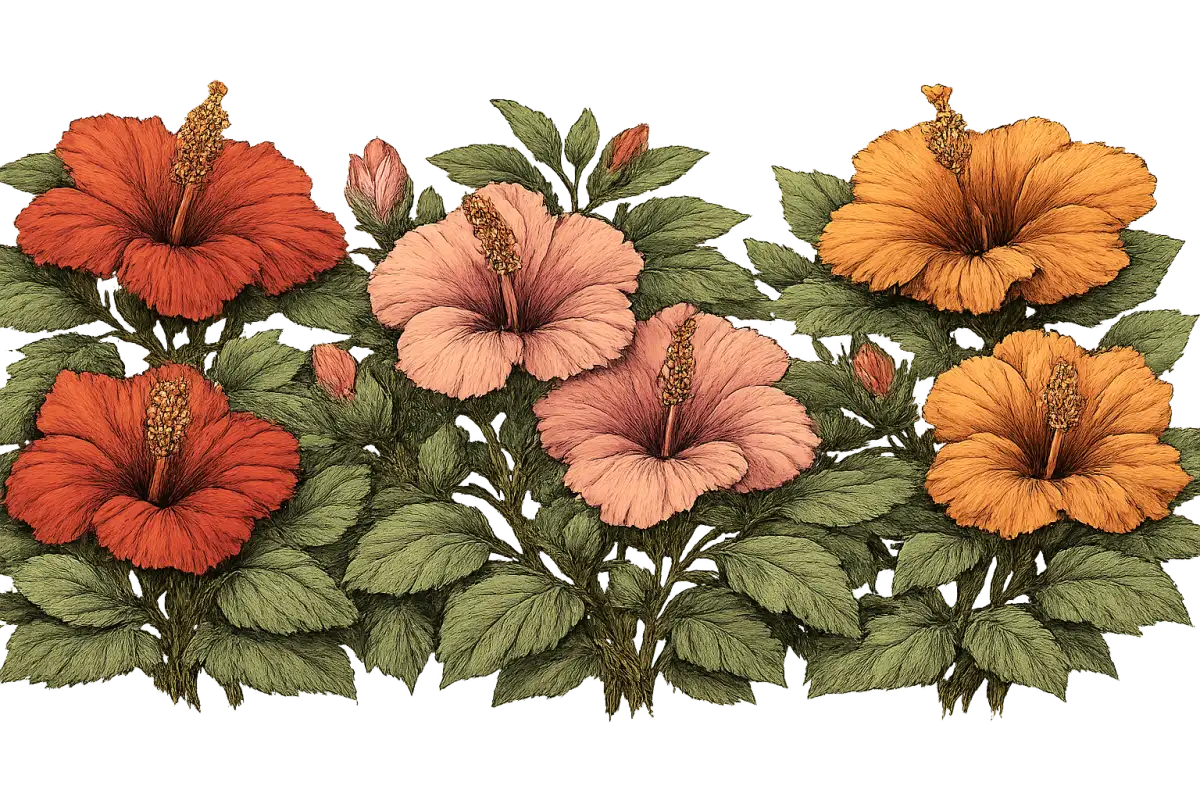
How to grow hibiscus — vintage botanical illustration showing the plant in detail

Hibiscus at a Glance

Sun

Sun

6-8 hours full sun

Soil pH

Soil pH

5.5-7.5

Water

Water

Hardy perennial: consistently moist, do not let dry out

Spacing

Spacing

Hardy perennial: 36-48 inches"

Height

Height

Hardy perennial: 3-7 feet

Soil type

Soil

Rich

Lifespan

Lifespan

Hardy perennial

Get your personalized growing data

Enter your zip code for frost dates, growing season, and soil type.

Let me tell you about a call I took from a gardener in Connecticut. She had bought a beautiful hibiscus at a farm stand in late August -- enormous orange blooms, glossy leaves, absolutely stunning. She planted it in a sunny border, watered it faithfully through September, watched it die at the first hard frost, and called me in April wondering what she had done wrong.

She had not done anything wrong. She had bought a tropical hibiscus and planted it in zone 6. No amount of good care was going to change that outcome.

What she actually wanted -- those dinner-plate flowers, that same bold tropical feeling -- was available to her all along. Hardy perennial hibiscus (H. moscheutos) grows in zone 6 without a second thought. It dies to the ground every winter and comes back in spring. It produces flowers 6 to 12 inches across. It is a genuinely spectacular plant. She just needed to know it existed.

This is the central hibiscus problem, and it plays out thousands of times every growing season across the country. The word "hibiscus" covers three completely different plants -- tropical hibiscus (H. rosa-sinensis), hardy perennial hibiscus (H. moscheutos), and Rose of Sharon (H. syriacus) -- and garden centers often sell all three with minimal labeling that distinguishes them. Buy the right one for your zone and your situation, and you will have a phenomenal plant. Buy the wrong one, and you will spend years wondering what you are doing incorrectly.

This guide tells you which type belongs where, how to grow each one well, and what to avoid. It is organized around the decisions that actually matter, not the ones that seem like they matter.


Quick Answer: Hibiscus Growing at a Glance

Three distinct types: Tropical (H. rosa-sinensis), Hardy Perennial (H. moscheutos), Rose of Sharon (H. syriacus)

Hardy Perennial Zones: 4-9 (dies to ground in winter; returns from roots)

Tropical Zones: 10-12 outdoors; container-grown anywhere else

Rose of Sharon Zones: 5-9 (deciduous shrub; woody stems persist through winter)

Sun: 6-8 hours of direct sunlight daily, minimum -- for all three types

Hardy Perennial Soil: Rich, consistently moist; tolerates wet areas and rain gardens

Tropical Soil: Well-draining potting mix with 20-25% perlite; never waterlogged

Rose of Sharon Soil: Highly adaptable; tolerates clay, poor soils, urban conditions

Watering (Hardy): Deeply 2-3 times per week; moisture-loving; never let dry out

Watering (Tropical, summer): Daily in hot weather; containers dry out fast

Watering (Tropical, winter indoors): Every 7-10 days; let top 1-2 inches dry between waterings

Fertilizer: High-potassium bloom formula promotes flowering on all types; stop feeding hardy types by midsummer

Hardy Perennial Spring Emergence: Late May to early June -- do NOT assume it is dead before then

Hardy Perennial Flower Size: 6-12 inches (dinner-plate)

Tropical Flower Colors: Salmon, peach, orange, coral, multicolor -- colors hardy types cannot produce

Rose of Sharon Warning: Always choose sterile varieties to prevent aggressive self-seeding


The Type Problem: Why Buying the Right Hibiscus Matters More Than Anything Else

Before we discuss soil amendments or pruning schedules, this needs to be said plainly: the most expensive hibiscus mistake is buying the wrong type for your zone. It happens more often than any disease, pest, or cultural error. And unlike root rot or aphids, there is no treatment. A tropical hibiscus planted in zone 6 in the ground is not recoverable once frost arrives.

Here is how the three types break down:

Tropical hibiscus (H. rosa-sinensis) is an evergreen woody shrub. It has glossy, smooth-edged leaves. Its flowers run 3 to 6 inches across and come in colors that stop people in their tracks: salmon, peach, coral, orange, bicolor combinations that shift from center to edge. This is the plant sold at grocery stores in summer, at garden centers in hanging baskets, and at farm stands in late August. Outdoors in the ground, it is only reliably hardy in zones 10 through 12. Everywhere else, it either dies at the first frost or requires overwintering indoors as a container plant.

Hardy perennial hibiscus (H. moscheutos) is something else entirely. It dies completely to the ground every winter -- stems, leaves, everything above the soil line -- and returns each spring from its root system. It is an herbaceous perennial, not a shrub. It grows 3 to 7 feet in a single season. Its flowers are the largest of any perennial commonly grown in the garden: 6 to 12 inches across, often called dinner-plate hibiscus. Colors are limited to white, pink, red, and crimson -- no orange, no salmon. But in terms of sheer flower size, nothing compares. Hardy in zones 4 through 9.

Rose of Sharon (H. syriacus) is a deciduous shrub or small tree reaching 8 to 12 feet tall. It keeps its woody structure year-round, leafing out in spring and dropping leaves in fall. Its flowers are smaller, 3 to 4 inches, but it blooms in August and September when almost nothing else is flowering. Hardy in zones 5 through 9. Its chief liability is aggressive self-seeding -- non-sterile varieties scatter seeds throughout the landscape, and the seedlings are persistent. Always buy sterile cultivars.

How to identify what you have if you are not sure: Look at the leaves -- tropical has glossy, smooth-edged leaves; hardy has dull green, thick, lobed or toothed leaves; Rose of Sharon has medium-textured lobed leaves. Look at the flower color -- if it is salmon, orange, or peach, it is tropical. If it is white, pink, or red with a dinner-plate size, it is hardy. If it is 3 to 4 inches on a woody shrub blooming in late summer, it is Rose of Sharon. Look at what it does in winter -- if it keeps its leaves (or dies at the first cold), it is tropical; if it goes completely underground, it is hardy; if it drops leaves but leaves behind a woody skeleton, it is Rose of Sharon.

If the garden center tag just says "hibiscus" with no Latin name, check the label for the species. H. rosa-sinensis is tropical. H. moscheutos is hardy. H. syriacus is Rose of Sharon. That five-second check can save a season of frustration.


Best Hibiscus Varieties by Zone

Zone matching is the second decision that defines your success. Once you know which type belongs in your climate, there are excellent named varieties worth seeking out and a few worth avoiding.

What zone are you in?

Enter your zip code for frost dates, growing season, and soil type.

Cold Zones (4-5): Hardy Perennial Is Your Foundation

In zones 4 and 5, hardy perennial hibiscus is the primary option for in-ground planting. These plants are genuinely cold-hardy -- the root system survives winters that kill the above-ground plant entirely, returning year after year with increasing vigor.

The Summerific series from Proven Winners is the current standard for hardy hibiscus. These are bred for compact size, heavy bloom production, and reliable hardiness, and they outperform older cultivars by a meaningful margin.

Berry Awesome is a standout in the series -- lavender-pink flowers 7 to 8 inches across on a plant that stays around 4 feet tall. Heavy bloomer, compact, and one of the most reliable performers for northern gardens. Cherry Cheesecake produces white flowers with a cherry-red center at 8 inches across -- the bicolor effect is dramatic. Holy Grail has deep red flowers and contrasting dark foliage that intensifies the whole display. Cranberry Crush gives you vivid scarlet-red color on a 4-foot plant. If you are working with a tight space, Perfect Storm is the most compact of the group at 3 feet, with pink flowers featuring a red eye.

For smaller footprints -- containers, front borders, tight spots -- the Luna series is the answer. These top out at 24 to 36 inches and are available in Red, Pink Swirl, White, and Rose. Luna types can bloom in their first year from seed started early indoors, which makes them unusually rewarding for impatient gardeners.

The classic varieties still earn their keep. 'Lord Baltimore' (red, 4 to 5 feet) has been grown reliably in zone 4 and 5 gardens for decades. 'Blue River II' (pure white, 4 to 5 feet) is one of the cleanest white-flowering hardy perennials available. 'Lady Baltimore' (pink with red center) completes the traditional trio.

One critical zone 4 note: mulch heavily after the ground freezes -- 3 to 4 inches of organic mulch over the crown. In zone 5, minimal winter protection is needed. And in both zones, understand that hardy hibiscus is one of the last perennials to emerge in spring. While your hostas and daylilies are already leafed out, your hardy hibiscus may show no growth at all until late May or even early June. This is completely normal. Do not dig it up.

For zone 4 and 5 gardeners who want tropical hibiscus colors -- orange, salmon, peach -- container growing is the path. Use a minimum 14-inch pot with a 5-gallon or larger capacity, bring it inside before nights dip into the upper 50s F, and give it your brightest south-facing window through winter. The outdoor season is short in zones 4 and 5, but tropical hibiscus can deliver a full summer of bloom on a patio or deck.

Zones 5-9: Rose of Sharon Opens Up

Starting in zone 5, Rose of Sharon becomes available as a permanent woody shrub, and it fills a gap that neither hardy perennial hibiscus nor tropical can fill: a late-summer blooming deciduous shrub that needs almost no care once established.

The self-seeding problem is real. I want to say this clearly before recommending anything: non-sterile Rose of Sharon varieties scatter seeds throughout your entire landscape. The seedlings germinate aggressively and appear in garden beds, lawn edges, foundation plantings, and pavement cracks. Removing them becomes a recurring chore measured in years, not weeks. There is no reason to plant a non-sterile variety when sterile alternatives exist.

Always choose from this list:

'Minerva' is lavender-pink with a red eye and produces no viable seed. 'Diana' gives you large, pure white flowers with the same sterile advantage -- it is one of the best white-flowering shrubs in the summer garden. 'Aphrodite' has pink flowers with a dark red eye and is reliably sterile. If you want double flowers, the Proven Winners Chiffon series (including Blue Chiffon) produces semi-double blooms with very low seed set. 'Sugar Tip' adds variegated foliage to the ornamental interest. 'Purple Pillar' is a columnar form -- significantly narrower than standard Rose of Sharon -- that works well in tight spaces and also produces less seed by virtue of its reduced overall size.

Rose of Sharon's bloom timing is one of its defining assets: it flowers August through September, when nearly every other shrub has finished for the year. A hedge of 'Diana' or 'Minerva' in late summer is a genuinely impressive sight.

Be realistic about mature size. Eight to 12 feet tall and 6 to 10 feet wide is what these plants will eventually become. Foundation plantings installed at 3 feet will, in a decade, be pressing against soffits. Annual late-winter pruning manages size effectively, and severely overgrown plants can be cut back hard -- to 1 to 2 feet -- and will regrow vigorously, blooming on the new wood the same season.

Zones 6-9: The Full Range Available

These are the most versatile hibiscus zones. All three types work. Hardy perennial hibiscus needs minimal winter protection and delivers reliable bloom from mid-July through September. Rose of Sharon is fully established and thriving. Tropical hibiscus has a longer outdoor season but still requires indoor overwintering in zones 6 through 9.

In zones 8 and 9, the hottest part of the range, provide afternoon shade for hardy types to prevent flower scorch. The flowers are large and somewhat delicate -- strong afternoon sun in August in zone 9 can damage open blooms. Morning sun remains essential; it is the afternoon heat that causes problems. In the hottest parts of zone 9, tropical hibiscus may need only minimal protection during brief cold snaps rather than a full indoor overwintering.

Zones 10-12: Tropical Hibiscus at Home

This is where tropical hibiscus (H. rosa-sinensis) belongs. It grows as a permanent outdoor evergreen shrub, 4 to 10 feet tall, blooming year-round. No indoor overwintering. No containers to haul in and out. Just a flowering shrub that does what it is meant to do.

Hardy perennial hibiscus and Rose of Sharon are both viable in zones 10 through 12 as well, but they are less commonly planted here because tropical hibiscus offers something they cannot: year-round continuous bloom in an extraordinary range of colors that no other hibiscus type can produce.

Quick Reference Table: Top Picks by Zone Group

Zone GroupTop VarietiesTypeWhy
4-5Berry Awesome, Luna, Lord BaltimoreHardy PerennialCold-hardy; dinner-plate flowers; Summerific reliability
5-9Minerva, Diana, AphroditeRose of SharonSterile; late-summer bloom; adaptable
6-9Full Summerific range + Rose of Sharon + Tropical containersAll three typesFull zone range; longest tropical outdoor season
10-12Any H. rosa-sinensis; Chiffon and Summerific also viableTropical primaryYear-round outdoor bloom; no overwintering needed

Planting and Site Selection: Getting the Foundation Right

All three hibiscus types share one non-negotiable requirement: full sun. A minimum of 6 to 8 hours of direct sunlight daily, and more is better. More sun equals more flowers on every type. A hibiscus planted against a north-facing wall or under tree canopy will grow green and leafy and flower disappointingly little. This is one of the most common reasons we hear "my hibiscus doesn't bloom" -- the site has too much shade.

South and west exposures are ideal in zones 4 through 7. In zones 8 and 9, morning sun with some afternoon shade protection is acceptable for hardy types, where the intense afternoon heat can scorch open blooms. Tropical hibiscus handles full sun throughout its outdoor range.

Wind protection matters more than most gardeners account for. Hardy hibiscus flowers can run 12 inches across -- a single strong gust can destroy a day's worth of open blooms in minutes. All types benefit from a sheltered position.

Planting Hardy Perennial Hibiscus

Plant in spring after frost danger has passed, or early fall at least 6 weeks before first frost. Dig a hole twice the width of the root ball and the same depth. Mix compost or aged manure into the backfill soil -- roughly 25 to 30 percent amendment to native soil. Plant the crown at soil level, not deeper. Water deeply to settle soil and eliminate air pockets. Space plants 3 to 4 feet apart.

Apply 2 to 3 inches of organic mulch -- shredded bark, compost, or leaf mold -- keeping mulch 2 to 3 inches away from the stems. In zones 4 and 5, increase to 3 to 4 inches after the ground freezes for winter insulation.

The late-emergence warning bears repeating. Hardy hibiscus is the last perennial to emerge in spring. When your daylilies and hostas are already a foot tall, your hardy hibiscus may be showing no signs of life whatsoever. That is normal. Mark the location with a stake or plant marker in fall so you remember where it is. Do not plant anything in that spot. Do not dig in that area before mid-June. The plant is alive underground, waiting for soil to warm significantly before sending up new growth. Once it emerges, it grows with remarkable speed -- 3 to 7 feet in a single season.

Planting Tropical Hibiscus in Containers

For zones 4 through 9, containers are the strategy for tropical hibiscus. Use a minimum 14-inch diameter pot (5-gallon or larger). Fill with high-quality potting mix amended with perlite at roughly 20 to 25 percent of the total volume -- this drainage is not optional. Do not use garden soil in containers; it compacts and retains too much moisture.

Position in full sun outdoors. Rotate the pot weekly for even light exposure. Repot every 2 to 3 years or when the plant becomes root-bound. If you want to maintain the same container size, root-prune by removing the outer 1 to 2 inches of the root ball and repotting with fresh mix.

For zones 10 through 12, plant in ground in well-drained, organically rich soil amended with compost. Space 4 to 6 feet apart.

Planting Rose of Sharon

The most forgiving installation of the three. Plant in spring or fall. Rose of Sharon tolerates full sun to partial shade, most soil types including poor and compacted, urban pollution, and drought once established. Space 6 to 10 feet apart for specimen or mixed border planting; closer spacing creates a hedge effect.

If you want to train it as a single-trunk small tree rather than a multi-stemmed shrub, select the strongest central stem and remove all others at ground level. Remove lower lateral branches on the selected trunk up to the desired crown height (typically 3 to 4 feet). Remove any suckers from the base throughout the growing season. The tree form is elegant and particularly useful in small spaces where a 12-foot-wide shrub would be overwhelming.


Watering: Three Plants, Three Completely Different Rules

This is where growers who know "hibiscus" as a single thing run into serious trouble. The three types need water in ways that are, in some cases, directly opposite to each other.

Hardy perennial hibiscus is a moisture-loving plant. This needs to be internalized rather than treated as a footnote. In the wild, H. moscheutos grows in marshes, swamps, and along stream banks. It wants more water than you expect from an ornamental perennial. During establishment, water deeply every 2 to 3 days. For established plants, water deeply 2 to 3 times per week during the growing season, increasing to daily deep watering during heat waves above 90 degrees. Never let the soil dry out completely.

This makes hardy hibiscus uniquely useful in the landscape: it is an excellent solution for the problem wet spots where most ornamentals would develop root rot. Rain gardens, low-lying areas, spots beside downspout discharge -- these are ideal placements for hardy hibiscus.

Tropical hibiscus in containers needs daily water in summer. A tropical hibiscus in a 14-inch pot on a hot, sunny patio can deplete its soil moisture in hours. Water thoroughly until it runs from the drainage holes. Do not just wet the surface. Morning watering is ideal -- it allows foliage to dry before evening, reducing disease risk. Check soil moisture daily by inserting a finger 1 to 2 inches into the mix.

Then tropical hibiscus moves indoors for winter -- and the watering rules reverse completely. Reduce dramatically. Let the top 1 to 2 inches of soil dry out between waterings. The plant's metabolism slows in reduced indoor light. Its water uptake drops accordingly. Continuing a summer watering schedule indoors is the single most common way to kill a tropical hibiscus during overwintering, and it does so through root rot.

The death cycle to recognize and break: plant wilts indoors, owner waters more, roots are already rotting from excess moisture, more water accelerates root death. If your tropical hibiscus is wilting but the soil is wet, stop watering. The problem is root rot, not drought. Wilting with wet soil is root rot until proven otherwise.

Rose of Sharon is drought-tolerant once established. During its first one to two years in the ground, water once or twice per week to help the root system develop. After that, supplemental irrigation is only needed during extended dry spells of two weeks or more. This makes it the right choice for low-maintenance landscapes where consistent irrigation is not available.

Container plants of all types dry out dramatically faster than in-ground plantings. Terracotta pots are the most porous and dry out fastest -- in peak summer heat, they may need water twice daily. Plastic and glazed ceramic retain moisture longer. Whatever the container material, always water until it flows from the drainage holes. Empty saucers 30 minutes after watering; allowing the pot to sit in standing water creates the exact waterlogged conditions that cause root rot.


Soil: Where Hardy Hibiscus Surprises You

The soil requirements for these three plants diverge more sharply than almost any other aspect of their care.

Hardy perennial hibiscus thrives in rich, consistently moist soil with a wide pH tolerance of 5.5 to 7.5. It is one of the few ornamental perennials that handles wet conditions. Clay soils that retain moisture are actually useful here. Amend with compost or aged manure at planting -- roughly 25 to 30 percent amendment to native soil -- and mulch 2 to 3 inches deep to retain moisture.

Tropical hibiscus prefers a pH of 6.0 to 7.0. In containers, the potting mix is the most critical variable. It must drain freely while retaining some moisture -- the key test is squeezing a handful of mix: if water streams out, it is too wet. Add perlite at 20 to 25 percent of the total volume. Avoid mixes with excessive peat, which becomes hydrophobic when dry. Repot every 2 to 3 years to refresh the mix and prevent root binding.

Rose of Sharon is the most forgiving of all three. It tolerates clay, sandy soil, compacted urban soils, nutrient-depleted soil, and a pH range of 5.5 to 7.5. It performs best in moderately fertile, well-drained soil with some organic matter, but it will grow acceptably in conditions that would discourage most flowering shrubs.

One soil problem affects all three types in alkaline conditions: iron chlorosis. When soil pH rises above 7.0 to 7.5, iron becomes chemically unavailable to the plant even if it is present in the soil. The symptom is yellowing leaves with green veins, starting on newer growth. The fix is lowering soil pH and, for quick results, applying chelated iron as a foliar spray or soil drench. If you have alkaline tap water or well water above pH 7.5, it can gradually raise soil pH with every watering over months and years. Test soil pH if you see persistent interveinal yellowing on otherwise healthy plants.


Fertilizing: The High-Potassium Rule for More Flowers

All hibiscus types are heavy feeders during the growing season. They burn through nutrients quickly when producing large flowers continuously. The key nutrient for flower production is potassium -- the third number in the N-P-K analysis. A bloom-boosting fertilizer with higher potassium content produces more and larger flowers on all three types.

For hardy perennial hibiscus: Apply balanced fertilizer (10-10-10) or a bloom-boosting formula from spring through midsummer -- monthly is the target frequency. Stop by midsummer. Late-season fertilizer encourages soft new growth that will not harden off before frost, leaving tender tissue vulnerable to cold damage at the crown. This is a mistake with real consequences.

For tropical hibiscus outdoors: Apply a bloom-boosting formula every 2 weeks during the growing season when in containers. The high potassium drives continuous flower production.

For tropical hibiscus indoors in winter: Stop fertilizing entirely or reduce to one-quarter strength balanced fertilizer monthly. The plant's reduced-light dormancy means it cannot process nutrients effectively. Heavy winter fertilization pushes weak, leggy growth and can burn roots.

For Rose of Sharon: A balanced slow-release fertilizer applied once in spring handles most of its needs. An optional mid-season boost can be added but is rarely necessary once the plant is established. Rose of Sharon is among the least demanding hibiscus types in terms of feeding.


Pruning by Type: Forgiving, But Timing Still Matters

One of the genuinely good things about hibiscus pruning is that all three types bloom on new wood -- the current season's growth. There is no risk of accidentally removing next year's flower buds the way there is with old-wood bloomers like bigleaf hydrangeas. This makes hibiscus pruning more forgiving than many flowering shrubs.

What zone are you in?

Enter your zip code for frost dates, growing season, and soil type.

Pruning Hardy Perennial Hibiscus

The primary pruning task is the late-winter or early-spring cutback. Hardy hibiscus dies to the ground after frost, and those dead stems need to be removed before new growth begins. Cut all dead stems to approximately 6 inches above ground level using clean, sharp bypass pruners or loppers. Timing: late February to March in zones 6 through 9; March to April in zones 4 through 5.

Some gardeners prefer to leave dead stems standing through winter as location markers -- this is especially practical because hardy hibiscus emerges so late in spring. Seeing the dead stems reminds you where the plant is before any green appears. Remove them before or immediately after new growth shows at the base.

An optional technique for a bushier plant with more flowering stems: pinch the tips of young shoots in early summer when new growth is 6 to 12 inches tall. This encourages lateral branching -- each pinched stem produces 2 to 3 lateral branches. The trade-off is a 2 to 3 week delay in flowering because the plant must develop new growing tips before setting buds. If you want the earliest possible bloom, skip it. If you want a denser plant loaded with more flowers, pinch.

Pruning Tropical Hibiscus

The most important pruning event for tropical hibiscus in zones 4 through 9 is the cut before bringing the plant indoors. Trim back by approximately one-third of its total size. This reduces its indoor footprint, removes excess foliage the plant cannot support in reduced light, and provides an opportunity to inspect carefully for pests during the process. Make cuts just above a leaf node or branching point. Do not cut back more than one-third at this stage -- the plant is heading into a reduced-light dormancy and does not need additional stress.

During the growing season, container tropical hibiscus benefits from periodic shaping 2 to 3 times per season to maintain an attractive, compact form. Cut just above an outward-facing leaf node to encourage open, spreading growth.

Do not prune tropical hibiscus heavily during indoor overwintering. It is already stressed from reduced light. Wait until spring, when it can recover quickly as growth resumes.

Pruning Rose of Sharon

The late-winter or early-spring window (February through March, before buds break) is ideal. Because it blooms on new wood, you lose no flower potential by pruning now.

For size control, cut back by one-third to one-half. Severely overgrown plants can be cut back hard -- to 1 to 2 feet -- and will regrow vigorously, producing flowers on new wood the same season. Annual late-winter pruning is the only way to keep an 8 to 12 foot shrub in bounds. Skip it for several years and you will eventually face a significant renovation project.

If you have a non-sterile variety and are trying to manage self-seeding through pruning by removing spent flowers, be realistic about the labor involved. Blooming in August and September on an 8 to 12 foot shrub produces a lot of spent flowers. Sterile varieties are a far more practical solution.


Pests and Diseases: Know Your Adversary by Type

Hibiscus pest problems are strongly correlated with plant type and growing situation. Knowing which pests are actually relevant to your situation is more useful than a comprehensive list of everything that has ever been recorded on any hibiscus anywhere.

Whiteflies are the primary threat for tropical hibiscus, especially during indoor overwintering. Tiny white flying insects found on leaf undersides, rising in a cloud when foliage is disturbed. They produce sticky honeydew that leads to black sooty mold on leaf surfaces. Outdoors, natural predators keep populations manageable. Indoors, in warm, still, predator-free conditions, they can explode from a minor nuisance to a serious infestation within weeks.

Treatment: yellow sticky traps near the plant, insecticidal soap sprayed directly on leaf undersides (it must contact the insects to kill them), and neem oil as a systemic deterrent. Expect to treat repeatedly over weeks, not once. The most important intervention is prevention: inspect leaf undersides, stems, and the soil surface thoroughly before bringing tropical hibiscus indoors in fall. Treat the entire plant with insecticidal soap, wait 5 to 7 days and treat again to catch newly hatched insects, then quarantine the plant away from other houseplants for at least 2 weeks. This sequence prevents whiteflies from becoming an indoor problem for your entire houseplant collection.

Spider mites thrive in the dry air of indoor overwintering. First sign is usually stippled, yellowing leaves with a dusty appearance. Fine webbing on leaf undersides and between stems confirms the diagnosis. Indoor humidity is the primary defense: mist tropical hibiscus regularly during winter or run a humidifier nearby. Treat with insecticidal soap or miticide spray if an infestation develops. Spider mites are largely a symptom of dry air indoors.

Aphids attack all three types. Small soft-bodied insects that cluster on new growth, buds, and shoot tips. Outdoors, a strong blast of water from a hose is often sufficient for early infestations. Insecticidal soap and neem oil are effective. Monitor new growth weekly during the growing season -- catching a small colony early is far easier than dealing with a full infestation.

Japanese beetles target hardy perennial hibiscus and Rose of Sharon. Metallic green-and-copper beetles active from late June through August. They skeletonize leaves by eating tissue between the veins. Hand-picking into soapy water is the most effective intervention for small numbers. Avoid Japanese beetle bag traps -- they attract more beetles to your yard than they catch. Milky spore or beneficial nematodes applied to surrounding lawn areas reduce future adult populations, but take one to three years to establish.

Hibiscus sawfly affects hardy perennial hibiscus. Green caterpillar-like larvae found on leaf undersides -- often missed because they are the same color as the leaves. They cause the same skeletonizing damage as Japanese beetles. Inspect leaf undersides carefully, hand-pick, and apply Bt (Bacillus thuringiensis) spray for larger infestations.

Root rot is the most common fatal disease -- and it is almost always caused by overwatering in poorly drained soil, not by an external pathogen beyond the gardener's control. The diagnostic clue: wilting despite wet soil. Healthy roots absorb water; rotted roots cannot, so the plant wilts even when moisture is present. For container plants, unpot immediately, trim all mushy brown roots with sterile tools, repot in fresh well-draining mix, and reduce watering significantly. Often fatal once advanced. Prevention is worth far more than treatment: well-draining mix with perlite, unblocked drainage holes, and appropriate drying between waterings.


The Mistakes That Cost the Most (Ranked)

These are ordered by damage frequency. The first two are in a different category from the rest.

Mistake #1: Buying the Wrong Type

A tropical hibiscus planted in the ground in zone 6 will die at the first frost. A hardy hibiscus in zone 10 will confuse its owner by going completely dormant. The garden center label that simply says "hibiscus" has a lot to answer for. Check the Latin name before purchasing. Know your zone. The five seconds this takes prevents the plant's death.

Mistake #2: Digging Up Hardy Hibiscus in Spring

Hardy perennial hibiscus goes completely underground in winter and may show zero signs of life until late May or even early June. Gardeners assume the plant has died and dig it up, or accidentally damage the roots by planting something else in the same spot. Mark the location with a stake in fall. Do not dig in that area until mid-June. The plant is alive. It simply runs on a different clock than every other perennial in your garden.

Mistake #3: Overwatering Tropical Hibiscus Indoors

The death spiral: plant wilts, owner waters more, roots are rotting from excess moisture, more water accelerates the damage. The fix is recognizing the diagnostic clue: if the plant is wilting but the soil is wet, the problem is root rot, not drought. Stop watering immediately. Let the soil dry. Check roots if the decline continues.

Mistake #4: Planting Non-Sterile Rose of Sharon

The self-seeding is relentless. Seedlings in every bed, every crack, the lawn. Removing established seedlings becomes a years-long chore. Minerva, Diana, and Aphrodite are sterile. The Chiffon series has low seed set. There is no good reason to plant anything else.

Mistake #5: Bringing Tropical Hibiscus Indoors Too Late

Cold shock begins when night temperatures dip into the low 50s F -- well above freezing. A single night near 32 degrees can kill the plant. Start monitoring the forecast in early fall and begin transitioning indoors when nights consistently dip into the upper 50s. Better to bring it in slightly early than to watch one unexpected frost night cause catastrophic leaf drop or death.

Mistake #6: Insufficient Sun

All hibiscus types need 6 to 8 hours of direct sun daily. Planting in partial shade produces a healthy-looking plant that flowers sparsely or not at all. If your hibiscus is growing vigorously but not blooming, the site is probably too shady. Move the plant or remove the obstruction. Sun is the non-negotiable requirement that overrides all other care.

Mistake #7: Fertilizing Hardy Types Too Late in the Season

Fertilizing after midsummer encourages soft new growth that will not harden off before frost. This tender growth is killed by cold and can damage the plant's crown. Stop fertilizing hardy perennial hibiscus by August. For tropical hibiscus heading indoors, stop or reduce to quarter-strength during the overwintering period.

Mistake #8: Not Inspecting Tropical Hibiscus Before Bringing It Indoors

An infested plant brought inside introduces whiteflies, aphids, and spider mites to every houseplant you own. These pests reproduce rapidly in warm, enclosed, predator-free indoor conditions. Inspect thoroughly, treat with insecticidal soap, wait 5 to 7 days and treat again, then quarantine for at least 2 weeks. This is not overcautious -- it is how to prevent a winter-long pest problem.

Mistake #9: Underwatering Hardy Hibiscus

Hardy perennial hibiscus is not a drought-tolerant plant. It is a moisture-loving plant. Treating it like a typical low-water-needs perennial results in reduced bloom size, dropped flower buds, and stunted growth. Keep the soil consistently moist. In heat waves, water daily. Consider placing it where it naturally receives more moisture -- a low spot, near a water feature, beside a downspout.

Mistake #10: Expecting First-Year Blooms

Newly planted hardy hibiscus may take a full season to establish before blooming prolifically. First-year plants are building root systems, not flowers. Second-year plants bloom more substantially. Peak performance arrives in years 3 and 4. The exception is the Luna series, which can bloom in its first year from seed started early indoors. If your first-year plant produces few flowers, the plant is likely fine. Give it another season.


Seasonal Care Calendar: What to Do and When

Spring (March-May):

Hardy hibiscus -- wait patiently. Do not remove mulch too early. Cut dead stems to 6 inches before or as new growth emerges. Resume watering and fertilizing when growth starts. Tropical (indoor) -- increase water and fertilizer as days lengthen. Begin transitioning outdoors once nights stay consistently above 55 degrees, hardening off gradually by starting in a shaded area for several days before moving to full sun. Rose of Sharon -- prune in late winter or early spring before new growth; apply balanced fertilizer.

Summer (June-August):

Hardy hibiscus -- peak bloom mid-July through September. Water consistently and deeply. Fertilize monthly through midsummer. Deadhead if desired (each bloom lasts only 1 to 2 days, but new ones open daily). Optionally pinch young shoot tips in early June for a bushier plant. Tropical -- full sun outdoors, daily watering in hot weather, fertilize every 2 weeks. Rose of Sharon -- late-summer bloom (August-September). Minimal care needed for established plants. Water during extended drought.

Fall (September-November):

Hardy hibiscus -- enjoy final blooms through September. Stems die naturally after frost. Mark location with a stake. In zones 4 and 5, mulch heavily (3 to 4 inches) after the ground freezes. Tropical -- watch night temperatures. Begin transitioning indoors when nights dip into the upper 50s. Trim back one-third, inspect for pests, treat with insecticidal soap, quarantine from other houseplants. Rose of Sharon -- leaves drop. Deadhead if non-sterile variety.

Winter (December-February):

Hardy hibiscus -- dormant underground. No action needed in zones 6 through 9. Ensure mulch layer remains intact in zones 4 and 5. Tropical (indoor) -- brightest window available. Water every 7 to 10 days; let soil partially dry between waterings. Minimal or no fertilizer. Monitor for whiteflies and spider mites. Maintain humidity. Rose of Sharon -- dormant. Plan late-winter pruning for February or March.


Frequently Asked Questions

Will my tropical hibiscus survive winter outdoors?

Only in zones 10 through 12. In all other zones, tropical hibiscus (H. rosa-sinensis) must either be grown as a container plant that is moved indoors before frost, or treated as an annual and replaced each year. A single night near 32 degrees can kill it. Cold shock begins even earlier, in the low 50s F. If you are in zones 4 through 9 and want to keep a tropical hibiscus, plan for indoor overwintering.

Why won't my hibiscus bloom?

Start with sun. All hibiscus types need at least 6 to 8 hours of direct sun daily. A plant in partial shade may grow well but flower very little. If sun is adequate, check fertilizer -- too much nitrogen relative to potassium produces lush foliage at the expense of flowers. Switch to a high-potassium bloom-boosting formula. If you have a first-year hardy hibiscus, it may simply be establishing its root system. Give it another season. If you have a tropical hibiscus indoors in winter, the reduced light naturally causes a bloom pause -- it will resume when returned to full sun outdoors.

My Hardy hibiscus hasn't come up and it's already June. Is it dead?

Probably not. Hardy perennial hibiscus is one of the last perennials to emerge in spring. Late May and early June are completely normal emergence times, even when everything else in the garden has been growing for weeks. Before digging, scratch the surface at the base of the plant -- if you see any green or white tissue just below the soil, the plant is alive. Continue waiting until at least mid-June before making any decisions. Hardy hibiscus's late emergence catches first-time growers off guard nearly every year.

Do I need to deadhead hibiscus?

It depends on the type. For hardy perennial hibiscus, each flower lasts only 1 to 2 days, but new flowers open daily throughout the bloom period. Deadheading is optional and cosmetic -- the plant will continue producing new blooms regardless. For Rose of Sharon in non-sterile varieties, removing spent flowers before they set seed reduces self-seeding somewhat, but the labor involved across an 8 to 12 foot shrub in full bloom is considerable. Sterile varieties solve this problem at the source. For tropical hibiscus, deadheading is not necessary but can maintain a tidier appearance.

Can I grow tropical hibiscus in a container year-round?

Yes, and in zones 4 through 9 it is the only way to keep tropical hibiscus as a permanent plant. Use a 5-gallon or larger pot with drainage holes, fill with high-quality potting mix amended with 20 to 25 percent perlite, place in full sun outdoors from late spring through early fall, and bring inside to the brightest window available before nights consistently dip into the upper 50s F. The indoor winter period requires significantly reduced watering -- every 7 to 10 days -- and minimal or no fertilizing. Some leaf drop is normal during the transition and winter rest period. Tropical hibiscus in hundreds of exotic color combinations is accessible to growers in any zone this way.

How do I keep Rose of Sharon from taking over my yard with seedlings?

Plant sterile varieties. 'Minerva', 'Diana', and 'Aphrodite' produce no viable seed. The Proven Winners Chiffon series has very low seed set. If you already have a non-sterile Rose of Sharon in the ground and are dealing with seedling invasion, you have two options: transition to sterile varieties by removing and replacing the plant, or accept that annual seedling removal is part of the maintenance. Deadheading spent flowers before seed sets reduces the problem but requires consistent attention throughout the August-September bloom period on a potentially 12-foot shrub.


The Bottom Line

Three plants share a common name. Buy the right one for your zone and your situation, and hibiscus delivers some of the most spectacular flowers of any plant in the summer garden. Buy the wrong one -- tropical in a cold zone in the ground, non-sterile Rose of Sharon in a tidy landscape -- and you will spend the season wondering what went wrong.

Hardy perennial hibiscus in zones 4 through 9 is one of the most underused perennials in American gardens. Those dinner-plate flowers, up to 12 inches across, on a plant that returns reliably every year from roots that shrug off zone 4 winters -- it is genuinely remarkable. The Summerific series has made the selection decision easy: compact, heavy-blooming, reliably hardy. Mark where you plant it, wait for the late spring emergence, keep the soil consistently moist, and step back.

Tropical hibiscus, with its extraordinary color range, is accessible to any gardener willing to move a container. The indoor overwintering asks only for a bright window, reduced watering, and a pest inspection at the door.

Rose of Sharon is the late-summer anchor that almost every mature landscape should have. Just plant 'Minerva' or 'Diana'. Not the unlabeled one at the back of the lot. The sterile one.

Know your type. Match it to your zone. Give it full sun and the right water for its needs. These are not complicated plants when their basic requirements are understood. They are spectacular ones.

Research for this guide was synthesized from source material covering hardy perennial, tropical, and Rose of Sharon hibiscus cultivation, including variety trial data and care guidelines for all USDA zones.

Where Hibiscus Grows Best

Hibiscus thrives in USDA Zones 6, 7, 8, 9, 10. Explore each zone's complete guide for growing tips, companion plants, and seasonal advice.

Also possible in: Zone 5 (challenging but possible with the right conditions).

Not sure of your zone? Look it up by zip code →