Fruits

Fig Trees: What Nobody Tells You Before You Plant One

Sarah Whitfield

Sarah Whitfield

Fruit & Berry Specialist · Updated April 2026

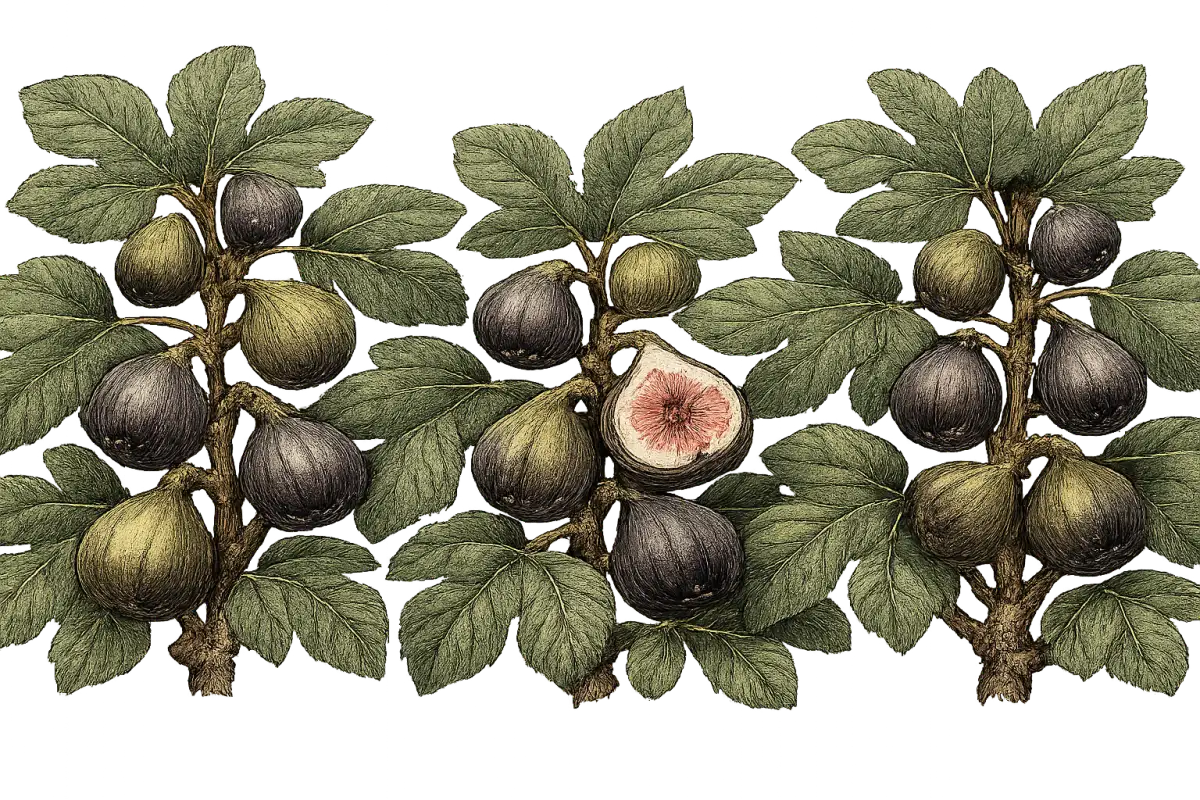
How to grow fig trees — vintage botanical illustration showing the plant in detail

Fig Trees at a Glance

Sun

Sun

8-10+ hours

Soil pH

Soil pH

6.0-6.5

Water

Water

1-1

Spacing

Spacing

10-16 ft

Days to harvest

Days to Harvest

Roughly 90 days from figlet formation to full ripeness; 3-4 years to first significant harvest

Height

Height

15-30 feet unpruned

Soil type

Soil

Loose

Lifespan

Lifespan

perennial

Get your personalized growing data

Enter your zip code for frost dates, growing season, and soil type.

A fig tree planted in the wrong spot against the wrong wall — or worse, in the middle of an open lawn — will give you a fraction of the fruit it could. A fig tree planted in the right spot will outlive you and feed your grandchildren. That is not an exaggeration. Figs are among the most long-lived and low-maintenance fruiting trees you can grow, but the decisions you make in the first season determine whether you get 40 figs a year or 400.

Here is what I keep seeing: gardeners buy a Brown Turkey fig because it is the first one at the nursery, plant it somewhere shaded and exposed, overfeed it with lawn fertilizer all summer, and then spend three years wondering why it looks magnificent and produces nothing. The tree is not broken. The approach is.

What makes figs genuinely rewarding is that they ask for very little once established. An in-ground fig in a good spot is drought-tolerant, largely pest-resistant, and will fruit reliably for decades without much fuss. But there are a handful of decisions — variety selection, site placement, fertility management — where getting it right the first time makes an enormous difference.

This guide pulls together what we know from Clemson Extension, Rutgers, Penn State, and LSU's decades-long fig breeding program. We will tell you exactly which varieties to plant in your zone, why a single wall changes everything north of zone 7, the one fertilizer mistake that stops nearly every new fig grower from getting fruit, and how cold-climate gardeners in zone 5 and 6 are pulling in harvests that most people assume are impossible.

Let's get your fig tree right the first time.


Quick Answer: Fig Tree Growing at a Glance

USDA Zones: 5 through 10 (with the right variety and protection)

Sun: Minimum 6 hours; ideal 8-10+ hours direct sun daily

Soil pH: 6.0-6.5 ideal; tolerant to 8.0 (far more forgiving than most fruit trees)

Drainage: Well-drained soil is non-negotiable — root rot kills quickly

Spacing: 10-16 feet between plants in open ground

Water: 1-1.5 inches per week once established; young trees need more frequent irrigation

Fertilizer: Light feeder — balanced 8-8-8 or 10-10-10; stop by late July

Pollination: None needed — all recommended home varieties are self-fertile Common types

First harvest: Year 3-4 (most varieties); LSU Gold and Tiger can fruit in year 1

Mature yield: 2,800+ figs in a good year on a mature tree (yes, that number is real)

Key cold-climate strategy: South-facing wall placement; container growing for zones 4-6


The South-Facing Wall Strategy (The Single Biggest Yield Decision)

Before we talk varieties, we need to talk about where you are planting, because this one decision matters more than almost anything else.

Trees receiving 10 or more hours of direct sun ripen 2-3 weeks earlier and produce 40-60% more fruit than trees getting 6-7 hours. A south- or southwest-facing wall of brick, stone, or concrete amplifies this further: it acts as a thermal battery, absorbing solar radiation during the day and radiating warmth through the evening, extending the effective growing season and creating a microclimate several degrees warmer than the surrounding garden.

The effect is not subtle. A Brown Turkey fig planted against a dark brick wall in zone 6b will ripen in September. The same variety growing 50 feet away in the open garden stays green until frost takes it. Same tree, same care, same season — the wall is doing real work.

Plant 18-36 inches from the wall. Close enough to capture the radiated heat, far enough to allow air circulation that keeps fungal pressure down. Brick and stone outperform wood fences because of their higher thermal mass. South-facing is optimal; southwest is nearly as good.

For zone 5 and 6 growers especially, espalier training — where you flatten the tree's canopy against the wall — maximizes both heat exposure and space efficiency. It also makes winter wrapping dramatically easier, which is a bonus we will get to shortly.

Other microclimate strategies worth considering: position large rocks, bricks, or water-filled barrels near the base to radiate additional heat overnight. Avoid frost pockets — low-lying areas where cold air pools — and choose slightly elevated sites with natural windbreaks. Wind chill increases cold damage significantly and is an underappreciated threat in zones 5-7.

If you do not have a usable south-facing wall, do not let that stop you. A fig in a sunny open garden is still a productive fig. But if you have the option, use it.


Best Fig Tree Varieties by Zone

Choosing the right variety is the second most important decision you will make. Get your zone right, and a fig can thrive for decades. Get it wrong, and you are fighting the climate every winter.

Every variety we recommend here is a Common-type fig — parthenocarpic plants that set fruit entirely through cell division, with no wasp, no bee, no pollinator, and no second tree required. Avoid Smyrna-type figs (Calimyrna and related varieties) entirely if you garden east of the Rockies. The fig wasp those trees need for pollination does not survive eastern winters. Every fruit will drop before maturity.

What zone are you in?

Enter your zip code for frost dates, growing season, and soil type.

Cold Zones (5-6): More Possible Than You Think

Zone 5 is not beyond the reach of fig growing. It just requires variety discipline and a willingness to either protect the tree in winter or embrace the die-back-and-regrow strategy.

Chicago Hardy is the answer for zones 5 and 6. It is the most cold-tolerant fig available to home gardeners, with stems surviving to 10°F and roots that have documented survival to -20°F — a cold tolerance no other cultivar comes close to. In a hard winter, Chicago Hardy will die back to the ground. This is not a failure. It is the plan. The main crop forms on current-season new wood, so a tree cut to the ground in late winter regrows to a full fruiting canopy and delivers a complete harvest by fall. The only thing die-back costs you is the breba crop — the lighter early-summer first crop — and in zone 5-6 that often doesn't ripen before frost anyway.

The practical implication is freeing: you do not need to achieve the perfect winter wrap. You need the root system to survive, which it will do with heavy mulching at the base. Pile 6-12 inches of straw or shredded leaves around the base and extend it 2-3 feet outward from the trunk. That root protection is the priority. Everything above ground is secondary.

Celeste and Brown Turkey are both viable in zone 6 with consistent protection, surviving to approximately 0°F with good mulching. Violette de Bordeaux is another zone 6 option — compact, prolific, and producing small purple-black fruit with exceptionally deep red pulp that is excellent fresh or dried. Olympian rounds out the zone 6 toolkit with large, tangerine-sized purple figs and reliable two-crop production.

For zone 5 growers without a reliable south wall or winter protection routine, container growing is simply the better strategy. A container fig in zone 5 overwinters in an unheated garage and produces just as well as an in-ground tree — we will cover that in full below.

Middle Zones (7): The Versatile Sweet Spot

Zone 7 growers have access to the widest variety selection and the most forgiving conditions. Most of what works in zones 5-6 works here too, plus the LSU series begins to perform reliably.

Chicago Hardy remains an excellent choice here for anyone who prefers low-maintenance, low-anxiety winters. Brown Turkey is the most widely grown backyard fig in the United States and earns that position — medium to large reddish-brown fruit with bronze pulp, productive on both old and new wood, and well-documented in every extension trial we know of. The range of documented yields is dramatic: Penn State recorded 2,800 figs in a strong year on a mature tree versus 36 in a poor year, underscoring how much weather drives annual outcomes.

Celeste — sometimes called Sugar Fig — is the sweetest of the standard varieties and earns special mention for its closed eye, or tight ostiole, which prevents insects from entering the fruit and causing souring. This is a real practical advantage in humid climates where open-eye varieties like Brown Turkey are more susceptible to fermentation. Clemson Extension specifically recommends Celeste for Piedmont and mountain zones within zone 7.

For zone 7 gardeners who want to explore the LSU series, LSU Gold and LSU Tiger are both reliable here. LSU Gold is the highest-yielding LSU release, producing extra-large yellow-gold fruit with honey flavor and consistent dual-season crops. LSU O'Rourke is worth particular attention for anyone who loves Celeste but wants a larger-fruited, more disease-resistant version — it has a closed eye like its Celeste parent, produces multiple fruiting rounds throughout the warm season, and shows less summer leaf drop than Celeste.

Warm Zones (8-9): Where the LSU Program Shines

Zone 8 and 9 gardeners have the full range available, and the LSU varieties developed at Louisiana State University are where the action is in this range. The program, originally launched in the 1950s by Dr. Ed O'Rourke and revived in the 1990s by Charlie Johnson, used Hunt and Celeste genetics to develop varieties optimized for Gulf South heat and humidity. They consistently outperform classic varieties in hot, humid conditions.

LSU Purple is widely regarded as having the best flavor of all LSU releases. Deep purple, glossy, oblong fruit that beats everything else in blind tastings. It bears fruit on young plants — unlike Celeste's five-year patience requirement — though it establishes slowly and is better suited to zones 8-9 than the colder end of the LSU range. Worth every bit of the wait.

LSU Scott's Black is the one to grow if flavor is your absolute priority and you can accept smaller fruit. Rapid establishment, first-year fruiting documented, and pronounced berry flavors that put it at the top of LSU's own taste rankings.

LSU Champagne produces bell-shaped yellow fruit with a honey interior and expects second-year fruiting. LSU Gold performs excellently here with its massive yields. Alma becomes viable in zone 8-9 — sweet, with a resin-sealed eye for insect resistance, though it is cold-sensitive and confined to the southern end of this range.

Black Mission is the California commercial standard and is viable in zones 8-9, though at approximately 20°F stem hardiness it should be treated as a borderline variety at the colder end of zone 8. It is an excellent container candidate for colder zones.

Hot Zones (9-10): Long Seasons, Minimal Protection

Zones 9 and 10 are fig paradise. Warm winters, long growing seasons, and minimal protection requirements mean in-ground figs can reach their maximum potential size and productivity here. The strategic concern shifts from cold hardiness to souring management — the long, hot, humid seasons in Florida and coastal California create more pressure on open-eye varieties.

Prioritize closed-eye varieties: Celeste, LSU O'Rourke, and Alma all resist souring because insects cannot enter the fruit through the tight ostiole. For maximum yield, Brown Turkey and LSU Gold both perform excellently here, though growers in very humid climates should harvest promptly and keep fruit off the ground to reduce souring pressure.

Kadota is a reliable green-fruited variety for this range with excellent canning and drying qualities. It is also less targeted by birds than dark-fruited varieties — a practical benefit when you are managing heavy crops. Adriatic and Magnolia both perform well and are rated excellent for drying and preserves.

Quick Reference Table: Top Picks by Zone Group

Zone GroupTop 3 VarietiesTypeWhy
5-6Chicago Hardy, Celeste, Violette de BordeauxCommonRoot hardiness; die-back-and-regrow reliable
7Brown Turkey, Celeste, LSU O'RourkeCommonVersatile; proven across all zone 7 subregions
8-9LSU Purple, LSU Gold, LSU Scott's BlackCommonLSU-bred for Gulf South heat and humidity
10Celeste, Brown Turkey, KadotaCommonFull range viable; prioritize closed-eye for souring

When and How to Plant

Timing by Zone

In zones 5-7, plant in spring after hard freezes have passed. Container-grown nursery stock gives you more timing flexibility than bare-root stock and establishes reliably through late spring.

In zones 8-10, fall or early winter planting is perfectly acceptable and gives roots a head start during the mild winter months before the demands of spring growth arrive.

Site Preparation

Choose a site with a minimum of 6 hours of direct sunlight, with 8-10 or more hours preferred. South- and southwest-facing exposures against a wall are ideal for zone 7 and colder. Avoid low-lying frost pockets and sites with poor drainage — root rot from waterlogged soil is entirely preventable and entirely fatal.

Before planting, test your drainage the direct way: dig a hole 12 inches deep, fill it with water, and watch. It should drain within a few hours. If water is still sitting after 12 hours, choose a different site or build a raised bed. There is no amendment that fixes genuinely waterlogged soil for figs; drainage is the answer.

Avoid pure sandy soils if at all possible. Sandy soils harbor root-knot nematodes, microscopic roundworms that damage fig roots by forming swollen galls that block water and nutrient uptake. There is no cure once nematodes are established in a site. If you suspect nematode history in your soil — particularly in old vegetable garden beds in warm climates — conduct a nematode soil test through your county extension service before planting. Sandy-soil gardeners who want certainty should consider container growing, which uses sterile potting mix that eliminates nematode risk entirely.

The Planting Process

Step 1: Dig and site the hole. Make it twice as wide as the root ball and the same depth. Space multiple trees 10-16 feet apart in open ground — more in humid climates where airflow reduces fungal disease pressure.

Step 2: Amend if needed. Figs are not demanding. Loose, loamy soil needs minimal amendment. If you have heavy clay, mix in compost at 25-50% to improve porosity. Do not over-amend with rich materials that drive excessive vegetative growth.

Step 3: Plant at the right depth. Set the tree at the same level it was growing in the nursery container. Do not bury the crown.

Step 4: Cut back hard at planting. Rutgers recommends cutting back to 2-3 feet above ground at planting. The American Fig Company recommends removing approximately 50% of branches. This feels aggressive, but it redirects energy from the canopy into root establishment — exactly where you need it in year one. Select 3-8 vigorous, well-spaced shoots to become your permanent scaffold branches and build from there.

Step 5: Mulch the base. Apply 3-4 inches of organic mulch around the base, keeping it a few inches away from the trunk itself to prevent rot. Mulch buffers soil moisture, suppresses weeds, and moderates soil temperature — all critical for establishment.

Step 6: Water young trees consistently. For the first 1-2 years, water deeply 2-3 times per week during hot weather. Established figs are drought-tolerant; young trees in their first two growing seasons are not. Keep soil consistently moist but never waterlogged.


Fertilization: The Counterintuitive Rule

Here is the rule that surprises every new fig grower: figs are light feeders, and excess nitrogen is the number one reason healthy-looking fig trees produce no fruit.

Nitrogen tells the tree to produce leaves and new branches. When a fig is receiving too much of it, the tree looks spectacular — lush, dark green, vigorous, growing 3 or more feet annually. It also produces few or no figs. The tree is investing everything in vegetative growth. The fruit is an afterthought.

Clemson Extension ranks excess nitrogen as the top cause of non-fruiting figs. The symptoms are almost comically obvious once you know what to look for: magnificent foliage, near-zero harvest. If that describes your tree and you have been fertilizing generously — or if you have lawn fertilizer washing toward the root zone — stop immediately. Reduce watering slightly. Give the tree one full growing season to redirect its energy. Recovery is real, but it takes time.

What to Use

Use a balanced fertilizer: 8-8-8 or 10-10-10 are the standard recommendations, keeping nitrogen equal to or below phosphorus and potassium. A fruiting-emphasis formula like 5-10-10 can be useful mid-season to shift energy toward developing fruit. Slow-release organic fruit tree fertilizer is ideal. Do not use high-nitrogen lawn fertilizer anywhere near fig trees.

Timing and Rates

Feed 2-3 times per year: once as the tree wakes from dormancy in early spring, once in late spring or early summer, and a final application in midsummer. Stop all fertilizing by late July or early August. Late-season feeding stimulates soft new growth that will not harden off before winter, increasing cold injury risk dramatically.

Rutgers provides specific rates by tree age: half a cup of balanced fertilizer the first winter after planting, increasing by half a cup per year until age four. Spread it roughly a foot away from the trunk. Clemson's rates for young trees in Sandhills and Coastal Plain are 1 ounce of 8-8-8 per month from spring through end of July; for mature trees, approximately one-third pound per foot of bush height per application, three times per year, capping at 10 pounds annually. In the Mountains and Piedmont regions, Clemson recommends reducing all rates by half — and near the mountains, no fertilizer at all to maximize cold hardiness.

The simplest rule of thumb: if a mature tree is producing 1-2 feet of new growth per year and setting fruit, it needs nothing.

What zone are you in?

Enter your zip code for frost dates, growing season, and soil type.


Understanding the Two Fig Crops

This is one of the most useful and least-known things about fig trees, and it changes how you manage the plant in cold climates entirely.

Most fig varieties are capable of producing two distinct crops in a single season. The breba crop forms on the previous year's old wood and ripens in early summer — June to July in most zones. Individual breba fruits are often larger than main-crop figs, but the crop is lighter. The main crop forms on the current season's new growth and ripens late summer through fall — typically August through October. It is heavier, more reliable, and critically: it does not depend on winter survival of old wood.

This second fact is the strategic core of cold-climate fig growing. In zones 5-6, the breba crop is often lost to winter die-back — the previous year's fruiting wood gets killed, so there are no figs to develop on it in early summer. But the main crop comes entirely from the new wood the tree puts out that spring. Even a tree cut to the ground in February will produce a full main crop on vigorous new summer growth. Zone 5-6 growers lose the breba but keep the harvest that matters.

Varieties known for reliable breba crops include Brown Turkey, Alma, and LSU Gold. If preserving breba is a goal, leave the previous season's branches long and avoid heavy pruning. If you are cold-climate growing and relying on the die-back-and-regrow strategy, prune aggressively or accept the natural die-back — your main crop will come regardless.

Harvest timing runs roughly 90 days from figlet formation to full ripeness. Trees generally begin significant production at years 3-4. Celeste is the notable slow starter, often taking 5 years to bear significantly. LSU Gold, LSU Tiger, and LSU Scott's Black are at the other end — first-year fruiting from these varieties has been documented.

Knowing When to Pick

Figs do not ripen after picking. They are non-climacteric fruit, like blueberries — a fig pulled off the tree before peak ripeness will soften slightly but will never develop full sweetness or flavor. Pick at peak ripeness, every time.

The clearest ripeness indicators: the fig droops on its stem, bending downward under its own weight. Color shifts to the variety's ripe hue — reddish-brown for Brown Turkey, light brown to violet for Celeste, dark purple to mahogany for Chicago Hardy, yellow-gold for LSU Gold. The fruit is very soft at the neck. A honey-like nectar drop appears at the eye. The fruit separates from the branch with a gentle twist. If you have to pull, wait.

Harvest in the morning when fruit is cool — it handles better and stores longer. Fresh figs are highly perishable; refrigerate immediately and plan to eat them within 2-3 days. For freezing, spread on a baking sheet to freeze individually before transferring to freezer bags — they maintain quality for 6-12 months. For drying, the best varieties are Black Mission, Kadota, Adriatic, and Magnolia — dried figs stored in airtight containers last 6-12 months at room temperature or up to 3 years in the freezer.


Winter Protection: A Practical Zone-by-Zone Guide

Figs die in cold weather in predictable ways. Minimal damage above 15°F; branch tips dying back at 10-15°F; significant branch damage below 10°F; severe damage and potential complete top kill below 0°F. Chicago Hardy roots survive to -20°F, the most cold-tolerant root system of any cultivar. Brown Turkey and Celeste roots typically survive to 0°F with good mulching.

Young trees — those under 3-4 years — can be damaged by early fall frosts at 25-27°F, making fall timing especially important in the first few years.

What Each Zone Actually Needs

In zones 8-10, protection is minimal: a 2-4 inch mulch layer at the base and you are done. In zone 7, add heavier mulching and consider wrapping during the coldest events. Zone 6 calls for full protection: wrapping or a cage. Zone 5 requires either trench burial or container growing.

Begin preparations 4-6 weeks before your area's first hard freeze. For most of zones 5-7, that is late October to early November. Do not apply protection while temperatures are still regularly above 50°F — you risk triggering premature dormancy-breaking during mid-winter warm spells.

Method 1: Heavy Mulching (The Foundation)

Every protection method starts here, regardless of zone. Apply 6-12 inches of straw, wood chips, or shredded leaves around the base of the tree, extending 2-3 feet out from the trunk in all directions. Keep mulch a few inches away from the trunk itself to prevent rot. The mulch insulates the soil, keeping root-zone temperatures significantly warmer than air temperature. Since the root system is the tree's survival mechanism, protecting it is always the first priority.

Method 2: Wrapping (Zone 7 and Colder)

Prune to 3-4 feet tall, or tie branches together with twine into a compact, manageable bundle. Wrap in a multi-layer system: burlap against the tree (breathable, prevents moisture accumulation), bubble wrap or foam insulation board as the middle layer for primary insulation, and an outer burlap layer to protect against wind and sun. Never use plastic sheeting directly against the bark — it traps moisture and promotes rot and fungal disease. An upside-down bucket over the top sheds rain and snow.

Method 3: Chicken Wire Cage with Insulating Fill (Zone 6)

Drive 4-5 stakes around the tree 12-18 inches out from the outermost branches. Wrap chicken wire around the stakes to form a cylinder. Fill loosely with dry straw or fallen leaves. Top with a tarp or plastic sheet anchored at the edges to shed moisture. The loose fill creates an insulating air mass that can keep temperatures inside the cage 15-20°F warmer than ambient during cold snaps.

Method 4: Trench Burial (Zone 5)

The most labor-intensive method and the most protective for zone 5 in-ground trees. After full leaf drop, prune to a flexible form, carefully bend the entire tree toward the ground, and cover with 6-12 inches of mulch topped with a tarp. Chicago Hardy suits this technique especially well because its wood is more flexible and because its main crop does not depend on preserving what was buried. This method requires training the tree's form from the beginning — keep branches low and flexible.

Reading the Damage in Spring

Remove protection when nighttime temperatures consistently stay above 32°F. Before you cut anything, do the scratch test: scrape the bark with your thumbnail. Green, moist tissue underneath means the branch is alive. Brown or black tissue means it is dead. The important caveat: figs can take 4-6 weeks longer than other plants to break dormancy after a hard winter. A branch that appears completely dead in March may show green buds in May. Wait until late spring before declaring anything a loss.

Once regrowth begins, it accelerates quickly. Two to four feet of new growth per month is typical in summer. The main crop will form on that growth; expect a harvest even in the year of complete die-back, just a few weeks later than a tree that did not die back.


Container Growing: The Zone 4-6 Solution

Container growing is not a consolation prize for gardeners who cannot grow figs in the ground. For zones 4-6, it is frequently the superior strategy — more reliable, more controllable, and fully productive. It also eliminates nematode risk entirely, since sterile potting mix contains none.

Most container fig varieties produce fruit within 1-2 years of planting. LSU Gold, LSU Tiger, and LSU Scott's Black all have documented first-year fruiting. The starting pot size matters more than most people expect.

Pot Sizes and Yield Expectations

A 3-5 gallon container is a starting point for young trees, producing approximately 50-75 figs annually — but it limits long-term production. The ideal mature container size is 10-15 gallons, where a healthy tree can produce 100-200 figs per year. A 15-20 gallon container pushes to 150-250 or more figs per year while remaining manageable on a wheeled caddy.

The minimum recommended container diameter is 18 inches. Smaller than that, the root system never develops adequately.

Fabric pots — Smart Pots and similar aeration pots — are the best choice. Permeable fabric keeps soil well-aerated, encourages air-pruning of roots (producing better-branched root structure without the root-circling that chokes plastic-pot trees), and is lighter than ceramic. The tradeoff is that they dry out faster, so monitoring watering frequency is important.

Best Varieties for Containers

Chicago Hardy is the best overall container choice for cold zones — cold-tolerant to 10°F on the stem and a vigorous regrower if top-killed. Celeste is naturally compact (5-10 feet in-ground) and performs excellently in medium containers. Violette de Bordeaux has a compact growth habit, gourmet-quality fruit, and is a prolific container producer. For very small spaces and balconies, Little Miss Figgy is a true dwarf at only 4-6 feet tall and 3-4 feet wide, genuinely suited to small pots. Petite Negra can produce year-round indoors in warm conditions.

Overwintering in Containers

This is the competitive advantage of container growing in cold climates. After the first frost triggers leaf drop, move containers to unheated indoor storage: an unheated garage, basement, root cellar, or insulated shed. Target temperature is 15-50°F, with 30-50°F ideal. The tree does not need light during dormancy. Water once monthly — just enough to prevent complete desiccation. No fertilizer until spring.

When bringing containers back out in spring, do not move a dormant tree directly from dark storage into full sun. Sunscald will damage emerging leaves. Follow a 1-2 week acclimation: full shade for the first few days with limited outdoor time, then progressively increasing sun exposure by 1-2 hours per day until the tree is in its final full-sun position. This gradual transition gives the root system time to reactivate before it is asked to supply full canopy demand.


The Problems That Actually Kill Fig Trees

Based on diagnostic guides from Clemson Extension and other university sources, here are the issues we see most often — ranked by how frequently they cause real damage.

Problem 1: Excess Nitrogen (The Most Common Cause of No Fruit)

We said this in the fertilization section, but it bears repeating because it is the single most frequent cause of frustration we see in fig growing. Lush foliage. Vigorous growth. Zero figs. The solution is counter to gardening instinct: stop feeding the tree. Reduce watering. Give it a full season to recover.

The diagnostic checklist is straightforward. Lots of leaves, no fruit: Is the tree under 3-4 years old? Normal. Are you fertilizing heavily, or has lawn fertilizer been washing toward the roots? Excess nitrogen — stop immediately. Is it a Smyrna-type variety? Replace it with a Common type.

Problem 2: Fruit Splitting

Figs that crack or split on the tree are almost always a watering problem. The mechanism is simple: drought stress followed by a large influx of water causes fruit to expand faster than the skin can accommodate. Split figs immediately attract insects, souring bacteria, and mold, and they drop quickly.

Prevention is straightforward: maintain consistent soil moisture throughout the fruiting period, use drip irrigation or soaker hoses rather than infrequent heavy watering, and apply 3-4 inches of mulch to buffer soil moisture fluctuations. If a dry spell occurs, increase irrigation gradually rather than all at once. Closed-eye varieties — Celeste, Alma, LSU O'Rourke — are less susceptible to the souring that follows splitting, because insects cannot enter through the tight ostiole.

Problem 3: Souring

Souring is what happens when yeasts, bacteria, and fungi enter through an open eye and begin fermenting the fruit while it is still on the tree. The signs are unmistakable: gas bubbles and scummy masses oozing from the eye, a strong fermented odor, inedible fruit. There is no chemical cure once souring begins.

The prevention strategy is threefold: grow closed-eye varieties (Celeste, LSU O'Rourke, Alma) where souring is a persistent problem; harvest promptly, because overripe fruit that stays on the tree is far more susceptible; and keep fallen fruit off the ground. Overhead irrigation that keeps fruit surfaces wet also increases susceptibility.

Problem 4: Root-Knot Nematodes

The most serious long-term threat to in-ground figs in sandy soils, and the one with no solution after the fact. Root-knot nematodes are microscopic roundworms that feed on fig roots, causing swollen galls that block water and nutrient uptake. They protect themselves inside the plant's own tissue and cannot be chemically eradicated. Infected trees show progressive decline over multiple seasons: yellowing foliage, stunted growth, intensified drought and heat stress, and the characteristic root galls visible if you dig and inspect.

There is no cure. The only strategies are prevention: avoid sandy soils and sites with known nematode history, conduct a nematode soil test through your county extension service before planting in any sandy site, and seriously consider container growing if you are in high-risk territory. Container growing in sterile potting mix eliminates nematode risk entirely.

Problem 5: Birds and Squirrels

Birds target ripe fruit, especially dark-colored varieties. Green-fruited varieties are less targeted because they blend with the foliage. The fix is bird netting, applied before fruit begins to soften — once birds find the tree, they return daily. A well-netted tree eliminates virtually all bird damage. The 10-15 minutes to net the tree is the highest-return protection investment for anyone losing significant fruit to birds.

Squirrels are more persistent. Trunk baffles prevent climbing access. Hardware cloth cages around individual fruit clusters work for targeted pressure but are labor-intensive. For significant squirrel pressure, the netting and baffle combination is the most effective practical approach.

Problem 6: Wrong Variety for the Zone (Smyrna Type)

If you bought a Calimyrna or other Smyrna-type fig for an eastern US garden, all the fruit will drop before maturity — every season, without exception. The fig wasp that pollinates Smyrna-type figs was introduced into California for commercial Calimyrna production and does not survive eastern winters. Replace with any Common-type variety: Brown Turkey, Celeste, Chicago Hardy, or any LSU release.

What zone are you in?

Enter your zip code for frost dates, growing season, and soil type.


Frequently Asked Questions

Do I Need Two Fig Trees to Get Fruit?

No. All Common-type figs — Brown Turkey, Celeste, Chicago Hardy, the entire LSU series, Black Mission, Kadota, and most other home garden varieties — are parthenocarpic, meaning they set fruit without any pollination at all. No wasps, no bees, no second tree. A single tree in a good spot produces abundantly on its own. The caveat: if you purchased a Smyrna-type like Calimyrna, it will never fruit reliably in eastern gardens regardless of how many trees you plant. Replace it with a Common type.

Why Is My Fig Tree Full of Leaves But Has No Fruit?

In the vast majority of cases, this is excess nitrogen. Figs are light feeders and respond to over-fertilization by redirecting all energy into vegetative growth at the expense of fruit production. If you have been feeding generously — or if lawn fertilizer is washing toward the tree — stop immediately and reduce watering slightly. It may take a full season to recover. The second possibility: the tree is too young. Most varieties do not bear significantly until years 3-4, with Celeste sometimes taking 5 years. The third possibility: Smyrna-type variety without the required fig wasp pollinator. Clemson Extension ranks these as the three most common causes in order.

Can I Grow Figs in Zone 5?

Yes, with the right approach. Chicago Hardy is the only in-ground variety we recommend for zone 5, and it works best when paired with heavy mulching and either winter wrapping, a chicken wire cage with insulating fill, or trench burial depending on your typical winter severity. The die-back-and-regrow strategy is your friend here: accept that the top may die back in hard winters and focus on protecting the root system. The main crop — which is the larger, more reliable of the two annual crops — forms on new wood each season, so complete top kill does not mean a lost harvest. For gardeners without a strong south-facing wall or reliable protection routine, container growing with garage overwintering is the more predictable path in zone 5.

How Do I Know When Figs Are Ready to Pick?

Ripe figs droop on the stem, bending downward under the weight of the fruit. The skin shifts to the variety's ripe color — reddish-brown for Brown Turkey, light brown to violet for Celeste, dark purple to mahogany for Chicago Hardy, yellow-gold for LSU Gold. The fruit is very soft at the neck, a honey-like nectar drop appears at the eye, and the fruit separates from the branch with a gentle twist. If it resists, wait. Figs do not ripen after picking — they will soften slightly at room temperature but will never develop the flavor of a tree-ripened fruit. Picking at peak ripeness is non-negotiable if you want the full experience of fresh figs. Store immediately in the refrigerator; fresh figs keep for 2-3 days at most.

What Is the Best Fig Variety for Small Spaces?

LSU Tiger reaches half the size of Celeste at maturity and is the best LSU variety for small gardens. Violette de Bordeaux has a naturally compact habit, produces prolific crops of small purple-black fruit with deep red pulp, and is an excellent container performer. Little Miss Figgy is a true dwarf — only 4-6 feet tall and 3-4 feet wide — ideal for patios, balconies, and very small pots. For container growing in a limited space, Celeste is naturally more restrained than most varieties and can be maintained at a manageable size with annual pruning.

What Happens If I Over-Water My Fig?

Established figs are drought-tolerant — they developed this resilience in the Mediterranean and have extensive root systems suited to dry periods. Over-watering is a more serious risk than under-watering for established trees. Yellowing leaves, soft or mushy fruit, a fermented smell from fruit, and root rot (caused by Phytophthora and related organisms) are the signs. Root rot from persistently waterlogged soil kills fig trees rapidly. If you see these symptoms, improve drainage immediately and reduce watering frequency. For young trees in their first two seasons, consistent moisture is genuinely important — but even then, soil should be moist, not saturated.


The Bottom Line

Figs are not finicky. They are specific. Give them a sunny site — ideally against a south-facing wall with good thermal mass — choose a variety that fits your zone, resist the urge to over-fertilize, and manage winter protection appropriately in zones 5-7. Do those things, and you will have a productive tree for decades.

The payoff is real and measurable. A mature fig tree can produce thousands of figs in a strong season. The fruit is better than anything you will find in a grocery store, picked at a ripeness that grocery store logistics never allow. And unlike many fruiting plants that demand constant intervention, a well-sited fig tree mostly just wants to be left alone.

Start with variety selection. Pick a variety built for your zone from the recommendations above. Find your sunniest wall. Plant in spring. Cut back hard at planting. Mulch the base. Then step back and let the tree do what figs have done in home gardens for centuries.

Research for this guide was synthesized from university extension publications including Clemson Extension (South Carolina), Rutgers Cooperative Extension, Penn State Extension, and the Louisiana State University AgCenter, including documentation of LSU's decades-long fig breeding program under Dr. Ed O'Rourke and Charlie Johnson. Variety data reflects published cultivar trial results and field performance records from those institutions.

Where Fig Trees Grows Best

Fig Trees thrives in USDA Zones 7, 8, 9, 10. Explore each zone's complete guide for growing tips, companion plants, and seasonal advice.

Also possible in: Zone 6 (challenging but possible with the right conditions).

Not sure of your zone? Look it up by zip code →