Perennials

Bird of Paradise: The Complete Growing Guide for a Plant That Demands to Be Seen

Margaret Chen

Margaret Chen

Flower & Ornamental Specialist · Updated April 2026

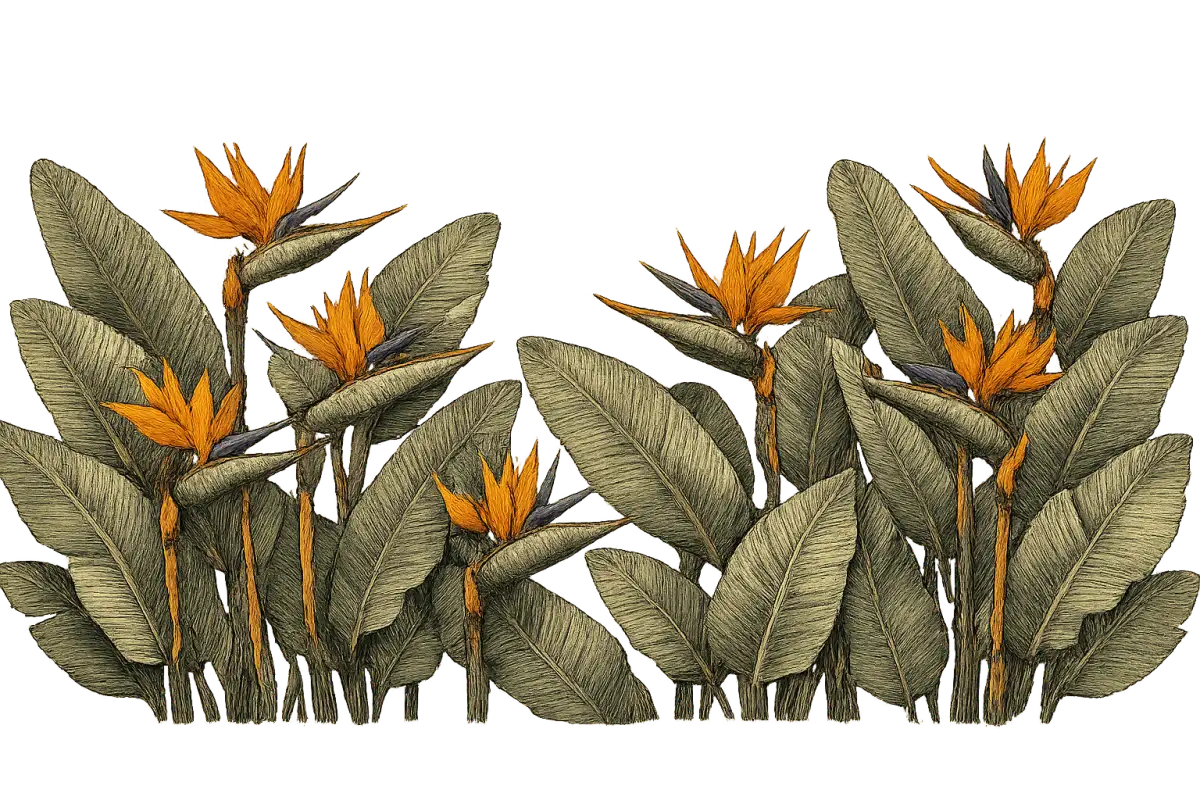
How to grow bird of paradise — vintage botanical illustration showing the plant in detail

Bird of Paradise at a Glance

Sun

Sun

6+ hours direct sun daily

Soil pH

Soil pH

6.0-7.0

Water

Water

Water when top 1-2 inches of soil are dry

Spacing

Spacing

6 ft

Height

Height

S. reginae: 3-5 ft

Soil type

Soil

Well-draining potting mix with perlite and orchid bark

Lifespan

Lifespan

perennial

Get your personalized growing data

Enter your zip code for frost dates, growing season, and soil type.

There is a moment in almost every bird of paradise conversation where someone says, "I had no idea it would get that big." They bought what they thought was a manageable tropical accent — lush paddle leaves, maybe an occasional exotic bloom — and it grew to the ceiling. Or they waited three years for those famous orange-and-blue flowers, then discovered they had accidentally bought the wrong species entirely.

Bird of paradise is one of the most visually arresting plants you can grow. The flame-colored blooms of Strelitzia reginae are so distinctive that a single clump stops people mid-step. Strelitzia nicolai, the giant species, transforms a room with banana-like leaves the size of a small surfboard. When you get it right, there is genuinely nothing else like it.

Getting it right, though, means understanding what kind of plant this actually is. Not the soft, dim-light-tolerant tropical of magazine styling shoots. Not the plant that blooms the first summer in your border. Bird of paradise rewards gardeners who understand its real needs: blazing light, sharp drainage, and — counterintuitively — a degree of deliberate neglect that keeps the roots slightly cramped and the plant reaching toward bloom.

This guide covers everything from choosing the right species for your zone and space (a decision that matters enormously and that nurseries routinely make confusing), to the drainage imperative that separates thriving plants from dying ones, to the specific sequence of conditions that coaxes those extraordinary flowers from an indoor plant. We have also mapped out the mistakes that end most bird of paradise stories prematurely — and most of them are preventable.


Quick Answer: Bird of Paradise Growing at a Glance

USDA Zones (Outdoor): 9-11 for S. reginae and S. juncea; 10-12 for S. nicolai

Indoor Growing: All zones — select species for space and bloom priority

Sun (Indoor): 6+ hours of bright, direct sunlight daily; south- or west-facing window

Sun (Outdoor): Full sun for best flowering; part shade tolerated

Temperature: 65-80°F ideal; minimum 50-55°F; S. reginae survives brief dips to 24°F outdoors

Humidity: 50%+ preferred; brown edges signal dry air damage

Soil: Well-draining potting mix with perlite and orchid bark; pH 6.0-7.0

Watering: Deeply and infrequently; let top 1-2 inches dry between waterings; roughly weekly in spring/summer, every 10-14 days in winter

Fertilizer: Balanced liquid fertilizer monthly (March-August); stop entirely December-February

Repotting: Every 2-3 years; go up only 1-2 inches in pot diameter

Time to Bloom (Indoors): 3-5+ years of maturity required; only S. reginae blooms realistically indoors

Outdoor Bloom Season: Peak blooming in spring and summer; established clumps bloom repeatedly


First, Which Bird of Paradise Are You Actually Growing?

This question matters more than almost anything else in this guide. The nursery tag often just says "bird of paradise." That is approximately as helpful as a restaurant menu that only says "food."

Three species dominate US cultivation, and they have meaningfully different sizes, bloom prospects, and zone tolerances. Buying the wrong one is one of the most common — and most disappointing — mistakes in ornamental gardening.

Strelitzia reginae (Orange Bird of Paradise) is the species most people picture: compact at 3-5 feet, with stiff, paddle-shaped, blue-green leaves and those iconic orange-and-blue flowers that look like a tropical bird caught mid-flight. It is the only species with a realistic chance of blooming indoors. Outdoors, it is reliably hardy in zones 9-11, surviving brief dips to 24°F with some leaf damage. This is your plant if flowers are the point.

Strelitzia nicolai (Giant White Bird of Paradise) is the design world's darling — and with good reason. Its leaves are enormous, architectural, and softly banana-like, and a mature plant grows 20-30 feet outdoors and pushes toward ceiling height indoors. The flowers, when they appear, are white and blue-purple rather than orange, and they are dramatically beautiful. The critical detail: nicolai almost never blooms indoors. Grow it for the foliage, and let the leaves be the feature. It is only reliably winter-hardy in zones 10-12, making it more cold-sensitive than reginae.

Strelitzia juncea (Narrow-leaved Bird of Paradise) is the architectural oddball that earns its place through sheer distinction. Its leaves lack the broad blade entirely — instead, rush-like cylindrical stems rise to 4-6 feet in a striking, almost sculptural silhouette. The flowers are orange and blue like reginae, and drought tolerance exceeds both other species. For xeriscaping, Southern California inland gardens, and low-water landscapes, juncea is an exceptional choice. Zones 9-11 outdoors.

At the nursery: If the tag does not specify the species, look at the leaves. Reginae has smaller, stiffer, distinctly paddle-shaped leaves with a blue-green cast. Nicolai has larger, softer, banana-like leaves and is usually the larger plant even when young. Juncea is unmistakable — narrow cylinders, no broad blade. If you cannot tell, ask for the Latin name before committing.

What zone are you in?

Enter your zip code for frost dates, growing season, and soil type.


Best Bird of Paradise by Zone

Zone is not the only factor in choosing a bird of paradise — space, bloom ambition, and indoor versus outdoor growing all shape the decision. But zone sets the boundaries, and planting outside them is one of the clearest routes to losing a plant you spent real money on.

Warm Outdoor Zones (9-11): Where Bird of Paradise Belongs in the Ground

Southern California, the coastal Gulf states, central and south Florida, Hawaii, and the desert Southwest with irrigation

This is the native element for Strelitzia. Plants in the ground reach full size, bloom reliably with adequate sun, and require surprisingly little attention once established.

S. reginae is the primary outdoor flowering species across all of zones 9-11. Established plants bloom repeatedly through spring and summer, and a mass planting in full flower — all those orange-and-blue crests opening at once — is a genuinely show-stopping landscape moment. Space plants 6 feet apart to allow each clump to mature without crowding.

In zone 9, the coldest edge of reginae's outdoor range, siting matters. Plant near south-facing walls that absorb heat during the day and radiate it overnight. Frost cloth during freeze warnings provides meaningful protection, and established plants typically recover from brief dips to 24°F with leaf damage but intact crowns.

S. juncea occupies the same zone range as reginae and earns its place in any water-conscious garden. In Southern California inland valleys and the desert Southwest, where irrigation is expensive and sometimes restricted, juncea's drought tolerance after establishment makes it the most practical choice. It needs no more water than the surrounding landscape once roots are established.

S. nicolai reaches its full, dramatic potential in zones 10-12. At 20-30 feet outdoors, it functions as a specimen, a privacy screen, and a landscape presence that earns every inch of space it occupies. Dense mature clumps create genuine enclosure — effective and beautiful at the same time. Plant nicolai 8-10 feet apart for screening applications. It is considerably less cold-hardy than reginae, sustaining leaf damage below 32°F and serious injury when temperatures stay below 25°F for extended periods. Zone 9 is outside its comfort zone for in-ground planting.

Zone 9 Borderline and Zone 8: Container Strategy Is the Answer

Zone 9 is manageable territory for reginae and juncea in sheltered spots, but it is genuinely borderline — particularly in the interior and higher-elevation areas of the zone where frost events are harder and longer. Zone 8 minimum temperatures (10-20°F) are well below what any Strelitzia species survives outdoors.

The solution in both zones is containers. Growing S. reginae in a pot that moves outdoors from May through October — when temperatures are safely above 50°F — and comes indoors for winter dramatically expands the plant's light exposure and makes blooming far more achievable than indoor-only growing. This is not a compromise; for reginae, it is actually the best of both worlds.

Zones 3-8: Indoor Growing, Species Choice Becomes Critical

Anywhere north of reliable zone 9 conditions, bird of paradise is a houseplant. The indoor environment changes the decision framework significantly, because what you prioritize — flowers versus foliage — determines which species will serve you.

If you want flowers, and you are prepared to commit to the conditions they require, choose S. reginae. A south-facing window delivering 6+ hours of direct sunlight is non-negotiable. The plant needs 3-5 years of maturity. It needs to be slightly root-bound — a pot that is, intentionally, just a little too snug. None of this is especially complicated, but all of it must be in place simultaneously. Miss any one element and the flowers simply will not come. Many well-cared-for indoor reginae plants never bloom, and that is not a failure — the foliage is genuinely lovely on its own terms.

If you want drama without the waiting game, choose S. nicolai. Its large, architectural, split-prone banana leaves are extraordinary in a spacious room with high ceilings and good light. Understand from day one that indoor blooms are effectively off the table — the foliage is the entire show, and it is more than enough.

Quick Reference: Top Picks by Zone

Zone GroupRecommended SpeciesOutdoor/IndoorWhy
9-11S. reginaeOutdoorClassic flowering landscape species; zones 9-11 hardy
9-11 (low water)S. junceaOutdoorMost drought-tolerant; excellent for xeriscape
10-12S. nicolaiOutdoorFull size potential; specimen and screening use
9 borderline / 8S. reginaeContainer (moves outdoors)Best light exposure; overwintered indoors
3-8 (flowers)S. reginaeIndoorOnly species with realistic indoor bloom potential
3-8 (foliage)S. nicolaiIndoorUnmatched tropical drama; accepts foliage-only role

Light: The Variable Everything Else Depends On

If there is a single truth about bird of paradise that separates the gardeners who succeed from the ones who end up with a slowly yellowing disappointment near a bookshelf, it is this: this plant needs more light than you think it does.

Six hours of bright, direct sunlight daily is the minimum for a healthy indoor bird of paradise. Not ambient light. Not the soft brightness near a window. Direct sunlight, falling on the plant, for six or more hours. A south-facing or west-facing window with nothing blocking the sky is the right position. East-facing windows can maintain foliage health but are rarely sufficient to produce blooms. North-facing windows are simply inadequate for any Strelitzia species — full stop.

The design world has done bird of paradise a particular disservice here. The plant appears constantly in styled interiors: beautifully lit, artfully placed, seemingly thriving in atmospherically dim rooms. What the photographs do not show is that those plants were recently purchased (still living off stored energy), supplemented with grow lights not visible in the frame, or quietly declining between shoots. The plants in those images are not evidence that bird of paradise tolerates low light — they are evidence that recently stressed plants can look healthy for a while.

What happens without adequate light is predictable and cumulative: growth slows, then stops. Leaves pale and thin. Stems lean and elongate toward the nearest source of brightness. And blooms — if you were hoping for them — never come. Insufficient light is the single most common reason bird of paradise fails to flower indoors. No amount of careful watering, premium soil, or monthly fertilizer substitutes for the hours of direct sun that the plant needs.

For indoor growers without adequate natural light, LED grow lights positioned 6-12 inches above the canopy and run 10-14 hours daily can help maintain foliage health. They rarely trigger blooming on their own, but they are meaningfully better than nothing during dark winter months.

Outdoors, full sun produces the best flowering and most compact, vigorous growth. In the hottest parts of zones 10-11 — Phoenix, inland Southern California — afternoon shade prevents leaf scorch. Everywhere else, full sun is the target.

Rotation tip: Indoor plants inevitably grow toward their light source. Rotate the pot a quarter turn every one to two weeks to maintain balanced, symmetrical growth rather than a plant that lists heavily toward the window.


The Drainage Imperative (Why Most Bird of Paradise Problems Start Here)

Root rot kills more bird of paradise plants than every pest and disease combined. That is not a dramatic statement — it is the consistent conclusion across every source of bird of paradise cultivation knowledge. And root rot has one primary cause: water sitting in the root zone too long.

Strelitzia species evolved in the subtropical coastal regions of South Africa, where soils are well-drained and rainfall moves through quickly. Their roots are thick, fleshy, and built for a wet-dry cycle: a thorough soaking, then a complete dry-down. Those same roots, sitting in saturated soil for extended periods, have no tolerance for it. Oxygen is displaced from the root zone, the roots suffocate, and fungal pathogens — Phytophthora, Pythium, Fusarium — colonize the damaged tissue. The rot spreads inward from root tips toward the rhizome. By the time you see the symptoms — yellowing leaves, wilting that does not respond to watering, a mushy and foul-smelling stem base — the damage is usually severe.

Prevention is the entire game. Three elements must all be in place: a well-draining soil mix, drainage holes in every container, and the watering discipline to let soil dry between waterings.

Building the Right Soil Mix

Standard all-purpose potting mix is too dense for bird of paradise. It retains too much moisture and compacts over time, reducing oxygen at the roots. The right indoor mix balances moisture retention with drainage:

Recommended: 2 parts high-quality peat- or coir-based potting mix, 1 part perlite, and 1 part orchid bark or coarse pine bark. The perlite creates drainage and aeration; the bark creates air pockets and prevents the compaction that eventually turns any potting mix into a moisture trap.

What to avoid: garden soil in containers (too dense, harbors pathogens), pure peat moss (holds excessive moisture), mixes with water-retaining crystals (designed for the opposite of what bird of paradise needs), and the persistent folk advice to put gravel in the bottom of the pot "for drainage." Gravel at the bottom creates a perched water table — a zone of saturated soil above the gravel layer that is actually worse for roots than no gravel at all. Fill the entire pot with well-draining mix.

Bird of paradise tolerates a wide pH range but performs best in slightly acidic to neutral soil: pH 6.0-7.0. The combination of peat and perlite in the mix above naturally falls within this range without amendment.

Drainage Holes Are Non-Negotiable

Every bird of paradise pot must have drainage holes. Decorative containers without holes are cache pots — place the plant in a nursery pot with drainage inside the decorative pot, and either remove the nursery pot to water or empty the cache pot within 30 minutes of watering to eliminate standing water. Leaving any bird of paradise sitting in water, even briefly, starts the clock on root damage.

For Outdoor Planting

In-ground bird of paradise in zones 9-11 is adaptable to sandy loam, loam, and sandy soils as long as drainage is adequate. Heavy clay is the one soil type that requires real intervention: amend generously with compost and perlite before planting, or build raised beds. Avoid low-lying areas where water collects after rain entirely — the plant will not survive persistently wet conditions regardless of how good everything else is.


Watering: Deep and Infrequent, Without Exception

The core watering rule for bird of paradise is simple enough to state in a sentence: water deeply and infrequently, letting the top 1-2 inches of soil dry completely between waterings. The execution, though, requires resisting some common instincts.

How to water: Before you water, check the soil. Insert a finger 1-2 inches into the surface — if it feels moist, do not water regardless of how many days have passed. When the soil is dry at that depth, water thoroughly, pouring slowly and evenly until water runs freely from the drainage holes. This ensures the entire root ball is moistened, not just the surface layer. Then let it drain completely, and empty any saucer that has collected water within 30 minutes.

What not to do: Do not water on a rigid calendar schedule without checking soil moisture first. Do not water lightly and frequently — this wets only the surface while the lower root zone alternately desiccates and floods. Do not use ice cubes (a trend borrowed from orchid care that delivers cold water in a tiny, unhelpful volume). Do not mistake misting for watering — misting raises leaf surface humidity temporarily but does not reach the root zone.

Seasonal adjustment: Water needs shift significantly through the year. Spring and summer — the active growing season — typically mean watering every 5-7 days for indoor plants. As growth slows through fall, reduce to every 7-10 days. In winter, when light is reduced and growth is minimal, every 10-14 days is appropriate. The plant's actual conditions matter more than the calendar: a bird of paradise in a sunny south-facing window in a dry climate will dry faster than the same plant in a shadier, more humid room. Pot material matters too — terracotta dries significantly faster than plastic or glazed ceramic.

Diagnosing problems: Overwatering and underwatering can look similar — both produce wilting and drooping — and treating the wrong one accelerates the problem. The diagnostic is the soil. If the soil is wet and the plant is wilting, the problem is overwatering and root damage. If the soil is bone dry, it is underwatering. An underwatered plant generally recovers within 24 hours of a thorough watering. A plant that does not recover, or worsens, likely has root damage from overwatering — in which case inspecting the roots and potentially repotting into fresh dry mix is the next step.

For outdoor plants: The first 1-2 years in the ground require weekly watering during dry weather to establish the root system. After that, established bird of paradise is genuinely drought-tolerant — one of its underappreciated virtues as a landscape plant. In zones 9-11 with regular rainfall, supplemental watering is often minimal or unnecessary for established plants. S. juncea requires the least supplemental water of the three species once established.


The Root-Bound Bloom Trigger (The Most Counterintuitive Fact About This Plant)

Here is the piece of bird of paradise knowledge that changes everything for indoor growers: being slightly root-bound promotes blooming.

When roots fill a pot and begin to circle, the plant interprets that constriction as a signal to shift from vegetative growth — more leaves — to reproductive growth — flowers. This is why experienced growers deliberately keep S. reginae in pots that seem a touch too small. And it is why the instinct to "give the plant more room" by repotting into a larger container so often results in a year or two of no flowers — the plant has been reset, and it must fill its new container before the bloom signal triggers again.

The balance point matters: mildly root-bound is the goal, not severely root-bound. A plant that has completely displaced its soil, needs watering every two or three days even in winter, and is physically tipping the pot has gone past mildly root-bound into stressed. That plant needs repotting. But a plant whose roots fill the pot and are just starting to show at the drainage holes, and which dries in a reasonable 5-7 days — that plant is exactly where you want it.

Repotting protocol: Repot only when truly necessary. The signals are roots breaking out of drainage holes, soil drying within hours of watering, the plant physically tipping over, or the pot cracking from root pressure. When you do repot, go up only 1-2 inches in diameter — never more. Repotting in spring (March through May) gives the plant the entire growing season to establish in its new container before winter.

After repotting, expect the plant to pause blooming for 1-2 seasons. It is not doing anything wrong — it is filling its new root space before the bloom trigger fires again. Allow 4-6 weeks before resuming fertilization, because damaged and disturbed roots are vulnerable to fertilizer burn.

Propagation note: Division is the only reliable vegetative propagation method — bird of paradise cannot be grown from leaf or stem cuttings. Divide in April or May, ensuring each section has its own roots, at least 2-3 leaves, and a piece of rhizome. Each division will not bloom for 1-2 years after separation. Frequent division keeps the plant in perpetual recovery mode and prevents flowering indefinitely. Do not divide plants younger than 3-4 years.

What zone are you in?

Enter your zip code for frost dates, growing season, and soil type.


Fertilizing: Monthly in Season, Nothing in Winter

Bird of paradise is a moderately hungry feeder during the growing season, and the schedule is simple to follow. From March through August, fertilize monthly with a balanced liquid fertilizer — a 10-10-10 or 20-20-20 formulation works well. In fall (September through November), reduce frequency to every 6-8 weeks and cut the concentration in half. From December through February, stop entirely. The plant's nutrient uptake drops with reduced light and growth, and fertilizing during dormancy causes salt accumulation in the soil that damages roots and produces brown leaf tips — sometimes visible as a white crust on the soil surface.

If you see that white crust, flush the pot thoroughly: run water through the drainage holes continuously for 1-2 minutes to leach out the accumulated salts.

For established outdoor plants in zones 9-11, fertilize 3-4 times per year with a balanced granular fertilizer — in early spring, late spring, midsummer, and early fall — and water in thoroughly after each application.

Do not fertilize for 4-6 weeks after repotting. Fresh potting mix contains adequate nutrients, and disturbed roots are particularly vulnerable to fertilizer burn in the weeks after a repot.


Temperature and Humidity: Getting the Indoor Environment Right

Bird of paradise thrives in the same temperature range humans find comfortable — 65-80°F is the ideal band, and standard home conditions are perfectly suitable. Below 50-55°F, growth stops and tissue damage begins. Keep plants away from cold drafts near exterior windows and doors, and away from heating and air conditioning vents, all of which create localized temperature extremes that stress the plant.

Humidity is where most indoor environments fall short. Strelitzia species evolved in the subtropical coastal climate of eastern South Africa, where humidity runs consistently moderate to high. Indoor air in heated or air-conditioned homes typically sits at 30-40% — below the 50%+ the plant prefers. The result is the most common cosmetic complaint in bird of paradise growing: brown, crispy leaf edges that start at the margins and work inward.

The fix, ranked by effectiveness: a humidifier running in the same room is the most reliable solution. Grouping the plant with other tropical houseplants creates a shared humidity microclimate as they transpire. A pebble tray — a wide, shallow tray filled with pebbles and water, with the pot sitting on the pebbles above the water line — provides some benefit. Misting with room-temperature water is the least effective option but is better than nothing.

One important note about brown edges: they are permanent. Once leaf tissue dies at the margin, it does not regenerate. Improved humidity protects new leaves from developing the same damage, but existing brown edges will remain. Trim them with clean scissors if the appearance bothers you, cutting in a gentle arc that follows the natural leaf shape.


Pests and Diseases: What to Watch For

Bird of paradise is not especially pest-prone when its environmental conditions are right. A plant in good light with proper watering and adequate humidity is surprisingly resistant to infestation. Most pest problems are a symptom of underlying environmental stress — fix the environment, and pest pressure drops dramatically.

Root rot remains the most serious threat, addressed in depth above. It is not a pest, but it kills more plants than every pest combined.

Mealybugs are the most common pest on indoor bird of paradise — soft-bodied insects covered in white, cottony wax that cluster at leaf joints, along the midrib undersides, and at the base of the plant. They produce sticky honeydew that can attract sooty mold. For a mild infestation, dab individual bugs with a cotton swab dipped in 70% isopropyl alcohol — this dissolves their waxy coating and kills on contact. For moderate infestations, spray the entire plant with a neem oil solution (2 tablespoons neem oil, 1 teaspoon liquid dish soap per quart of water) applied weekly for 3-4 weeks. Severe cases may warrant a systemic insecticide as a last resort, with the infested plant isolated from the rest of your collection.

Spider mites thrive in exactly the conditions that bird of paradise commonly encounters indoors during winter: hot, dry air with low humidity. The first sign is usually fine webbing between leaves or at leaf-stem junctions, followed by stippled, speckled leaves with a dull, grayish appearance. Confirm by tapping a leaf over white paper — moving dots are mites. The first-line treatment is a strong spray of water over all leaf surfaces, especially undersides, repeated every 3-4 days for two weeks. Neem oil applied weekly is effective for persistent infestations. Maintaining humidity above 40% is the most effective prevention strategy.

Scale appears as small round or oval brown bumps on stems and leaf surfaces, looking more like a plant lesion than an insect. Physical removal — scraping with a fingernail or old toothbrush — is surprisingly effective for small infestations, followed by isopropyl alcohol on a cotton swab for remaining individuals. Neem oil disrupts the life cycle of juvenile scale crawlers over 4-6 weeks. Horticultural oil smothers scale at all life stages.

The most effective pest management for bird of paradise is passive and environmental: proper watering, adequate humidity, strong light, monthly leaf cleaning, quarantining new purchases before adding them to your collection, and checking leaf undersides and joints during each watering. Catching any infestation in its first week makes treatment almost trivially simple.


The Top Mistakes That Cost Bird of Paradise Growers Their Plants

These are ranked by the frequency with which they cause real harm — not beginner anxieties but actual plant losses.

Mistake 1: Overwatering

The number one killer of bird of paradise, indoors and out. The plant looks tropical and lush; it evolved in a well-drained subtropical environment. Water when the top 1-2 inches of soil are dry. Water thoroughly, then let it drain completely. Never let the pot sit in standing water. In winter, water every 10-14 days or less — the plant's needs drop significantly with reduced light and growth.

The insidious version: once root rot is advanced, symptoms look like drought stress — wilting, drooping, yellowing. The gardener waters more. The rot accelerates. Check the soil and inspect the roots before adding more water to a struggling plant.

Mistake 2: Insufficient Light

The single most common reason bird of paradise does not bloom. The plant needs 6+ hours of direct sunlight daily from a south- or west-facing window. East-facing windows may maintain foliage health; north-facing windows are insufficient for any Strelitzia. No watering improvement, soil upgrade, or fertilizer can compensate for inadequate light. If you cannot provide adequate natural light, LED grow lights can help maintain foliage health — but accept that they rarely trigger blooming on their own.

Mistake 3: Buying the Wrong Species

It happens constantly: a gardener buys what the nursery calls "a bird of paradise" wanting the iconic orange flowers, brings home a S. nicolai, and waits for flowers that will effectively never arrive indoors. Or they expect a compact plant and watch it grow toward the ceiling in two years. Always check the Latin species name before purchasing. Reginae for flowers; nicolai for dramatic foliage. Both are magnificent — they are just magnificent in different ways.

Mistake 4: Repotting Too Often or Into Too-Large Pots

Bird of paradise performs better when mildly root-bound. Repotting into a much larger pot stops blooming for 1-2 seasons and creates excess soil volume that holds moisture the roots cannot yet reach — setting up conditions for rot. When you do repot, go up only 1-2 inches in pot diameter. Repot only when the plant signals the need, not on a routine schedule.

Mistake 5: Expecting Indoor Blooms from S. nicolai

Nicolai is sold and marketed as a houseplant. Its flowers require conditions that are effectively impossible to replicate indoors — extreme root maturity, years of intense light exposure, and a root-bound state impractical in any living room. Expecting nicolai to bloom indoors is setting up for years of disappointment. If indoor blooms matter to you, grow S. reginae. If you already have a nicolai and love it: the leaves are the gift. Embrace them.

Mistake 6: Fertilizing in Winter

Monthly fertilization through the active season is correct. Continuing it through winter is not. The plant's nutrient uptake drops with reduced light; fertilizer accumulates in the soil; salt buildup damages roots and produces brown tips. Stop fertilizing entirely from December through February.

Mistake 7: Planting Outdoors in Cold Zones

Zone 8 minimum temperatures (10-20°F) kill all Strelitzia species. Even in zone 9, nicolai is a container plant — its cold sensitivity is meaningfully greater than reginae. Planting in the ground in the wrong zone produces a plant that thrives through summer and dies in its first real winter. For borderline zones, containers that move indoors are the solution.


Frequently Asked Questions

Why Is My Bird of Paradise Not Blooming?

The causes, in order of likelihood: insufficient light (by far the most common), insufficient maturity (plants need 3-5 years before blooming indoors), growing S. nicolai instead of S. reginae, pot recently enlarged (resetting the root-bound bloom trigger), or inconsistent fertilization during the growing season. Work through this list systematically. Light is almost always the answer.

Why Are the Leaves Splitting?

This is not a problem, a care failure, or something to fix. Leaf splitting is an evolutionary adaptation from the plant's South African habitat, where broad, intact leaves act as wind sails and can uproot the plant in storms. The leaves are designed to split along lateral veins to reduce wind resistance. It is especially pronounced outdoors and in S. nicolai with its very large leaves. Embrace it — the split leaves are part of the plant's irreducible character.

Why Are the Leaf Edges Turning Brown?

Low humidity is the most common cause — indoor air during heating season typically sits at 30-40%, well below the 50%+ that bird of paradise prefers. Run a humidifier in the same room, or use a pebble tray. Important: brown edges on existing leaves will not heal. Focus on protecting new growth from developing the same damage. Trim existing brown edges with clean scissors if the appearance bothers you.

Can I Grow Bird of Paradise in a Container and Move It Outside in Summer?

Yes — and in zones 7-9, this is genuinely the best approach. Moving a S. reginae outdoors from May through October dramatically increases its light exposure and makes indoor blooming far more achievable than growing it indoors year-round. Bring it back in when temperatures approach 40°F. Even in zone 8, this strategy produces healthier, more vigorous plants than indoor-only growing.

How Do I Know When to Repot?

Roots growing from drainage holes, soil drying within hours of watering, the plant physically tipping over, or the pot cracking from root pressure are the signals. The typical interval is every 2-3 years for younger plants. When you do repot, go up only 1-2 inches in diameter, repot in spring, and do not fertilize for 4-6 weeks afterward.

How Long Does It Take to Bloom Indoors?

S. reginae needs to be at least 3-5 years old before it will bloom indoors — and that assumes adequate light (6+ hours of direct sun), slightly root-bound conditions, and consistent fertilization during the growing season. Even with all of these in place, some indoor plants never bloom. The foliage of a healthy reginae is genuinely attractive on its own terms, and many growers come to appreciate it regardless of flowers.


The Bottom Line

Bird of paradise asks for three things in particular: blazing light, sharp drainage, and the patience to let it mature on its own timeline. Give it those, and it rewards you with one of the most arresting presences in ornamental gardening — whether that means the stop-traffic orange flowers of S. reginae on a sun-drenched California border, or the soaring, split-leafed drama of S. nicolai filling the corner of a well-lit room.

Choose your species before you buy. Get the soil right before anything else. Water less than your instincts tell you to. Let the roots find the edge of the pot before you offer them more room. And if you are growing for flowers, give the plant the years it needs — the bloom, when it finally comes, looks like nothing else in your garden.

Research for this guide was drawn from wiki sources synthesizing cultivation data on Strelitzia reginae, S. nicolai, and S. juncea, covering indoor care and flowering, outdoor landscape use across zones 9-12, repotting and propagation, and common problems and troubleshooting.

What zone are you in?

Enter your zip code for frost dates, growing season, and soil type.

Where Bird of Paradise Grows Best

Bird of Paradise thrives in USDA Zone 10. Explore each zone's complete guide for growing tips, companion plants, and seasonal advice.

Also possible in: Zone 9 (challenging but possible with the right conditions).

Not sure of your zone? Look it up by zip code →